Finding an affordable home with several acres of land, a large workshop, and room for a small farm can be challenging, especially for buyers trying to stay below $150,000.
However, a property at 25250 Highway 114, Bruceton, Tennessee 38317, offers an interesting combination of residential space, usable acreage, and outbuildings.
Currently advertised for $127,999, this Tennessee property includes a three-bedroom house, approximately seven acres of land, a substantial detached garage and workshop, fenced yard space, and a small pond.
The property also comes with an important consideration: the home needs repairs and improvements, and the seller has indicated that no repairs will be made before the sale.
For buyers searching for affordable Tennessee homes with acreage, a small homestead, or a renovation opportunity with additional land, this property deserves a closer examination.
Rather than focusing only on the asking price, it is important to understand what the property offers, how its price has changed, and what additional expenses a buyer might encounter.
Property Overview: What Does $127,999 Include?
According to the supplied listing information, the property has the following characteristics:
| Property Detail | Information |
|---|---|
| Address | 25250 Highway 114, Bruceton, TN 38317 |
| Asking Price | $127,999 |
| Bedrooms | 3 |
| Bathrooms | 1 |
| Living Area | 1,672 square feet |
| Land Area | Approximately 7 acres |
| Year Built | 1941 |
| Property Type | Single-family residence |
| Roof | Metal |
| Water Supply | Private well |
| Sewer | Private sewer |
| Heating | Central propane |
| Cooling | Central air |
| Garage/Workshop | Approximately 30 × 30 feet enclosed |
| Additional Garage Area | Approximately 30 × 30 feet of open bays |
| Annual Property Tax | $514 reported for 2025 |
| HOA | None reported |
| Listing Source | RealTracs MLS #3529242 |
The property offers something that many similarly priced houses do not: substantial outdoor space alongside an existing residence.
However, its age, physical condition, and financing restrictions mean the asking price should be evaluated alongside the cost of necessary improvements.
A $22,000 Price Reduction: Understanding the Listing History
One of the most interesting details is the property’s recent price history.
The home was originally listed for $149,999 on August 30, 2026.
The asking price was subsequently reduced twice.
| Date | Asking Price | Change |
|---|---|---|
| August 30, 2026 | $149,999 | Original listing |
| September 15, 2026 | $144,999 | -$5,000 |
| October 5, 2026 | $127,999 | -$17,000 |
The total reduction from the original asking price is $22,000, or approximately 14.7%.
That is a meaningful adjustment over a relatively short period.
A lower asking price may make a property more attractive, but it does not automatically mean the home is undervalued.
Price reductions can reflect several circumstances, including buyer feedback, property condition, market competition, seller motivation, or an initial asking price that was above what buyers were prepared to pay.
The listing does not establish which factor caused these reductions.
For a potential buyer, the useful question is whether the new asking price leaves sufficient room for repairs, closing costs, and ongoing maintenance.
Price Per Square Foot and Price Per Acre
At $127,999, the asking price works out to approximately $76.55 per square foot of reported living space.
That is consistent with the rounded $77-per-square-foot figure shown in the listing.
Another calculation divides the total asking price by the seven acres:
$127,999 ÷ 7 acres = approximately $18,286 per acre.
However, this should not be interpreted as the market value of the land alone.
The purchase includes a house, garage, open storage bays, fencing, utility infrastructure, and other improvements.
A more meaningful valuation would compare the property against recent sales of similar homes with acreage in Carroll County and surrounding areas.
Buyers should pay particular attention to the condition of the buildings, usable acreage, road frontage, and available utilities when comparing properties.
Seven Acres With Pasture, Woods and a Small Pond
The land may be the property’s most distinctive feature.
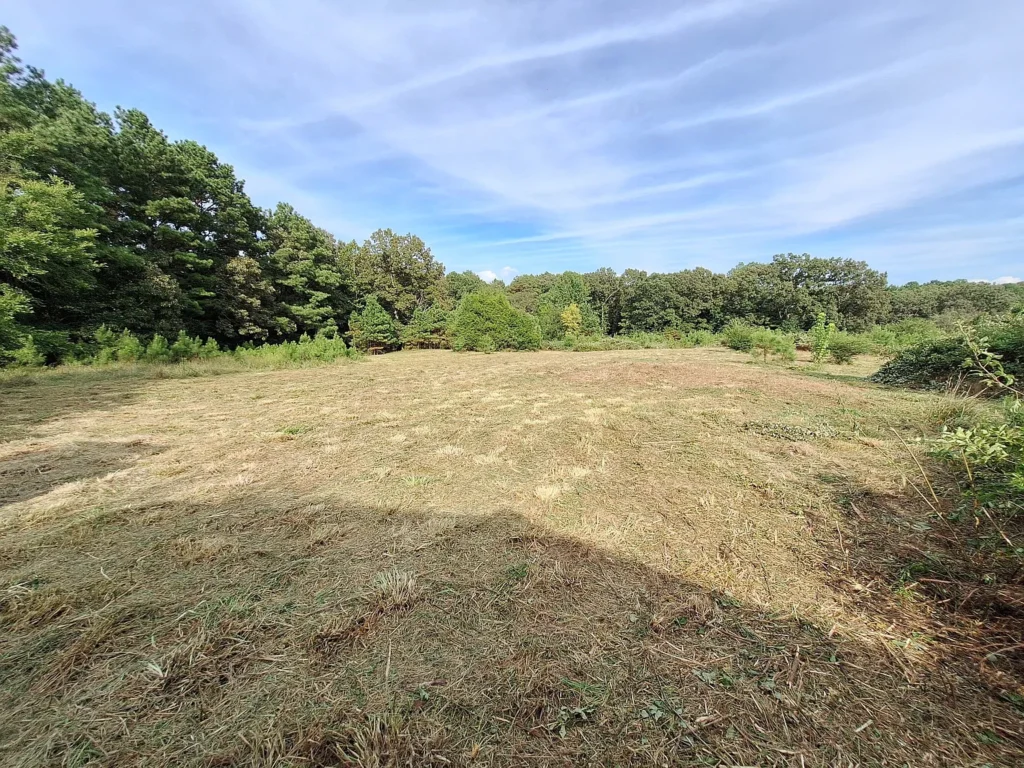
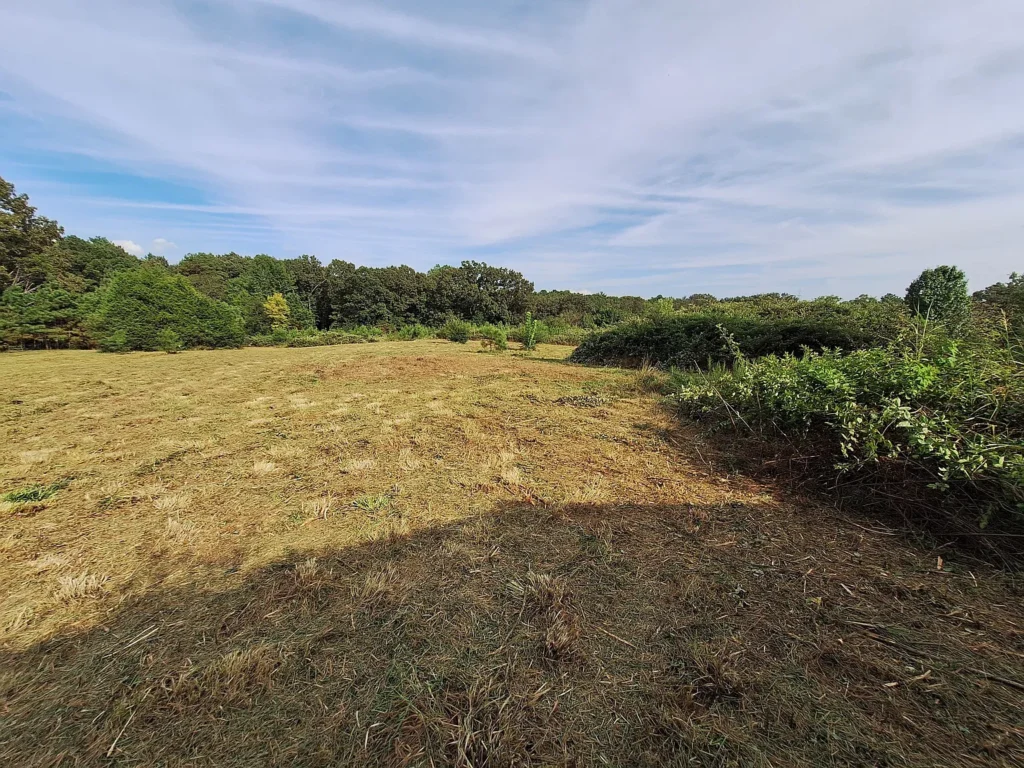
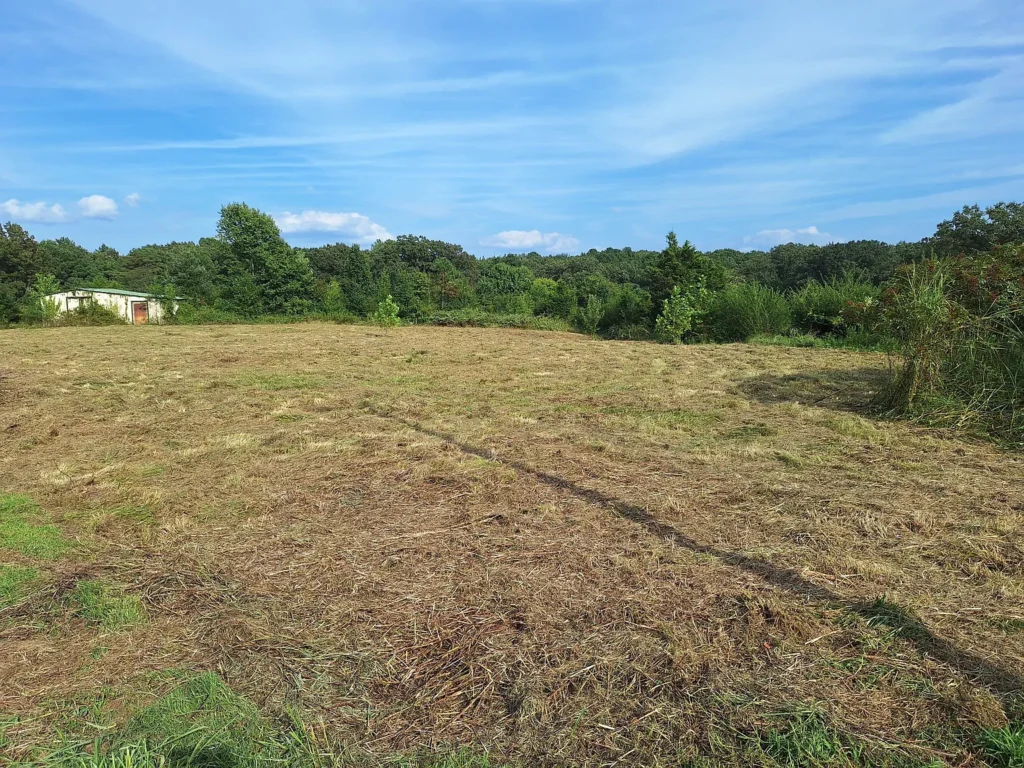
According to the listing, approximately two-thirds of the acreage is pasture, while the remaining third is wooded.
If those proportions are accurate, that would translate to roughly:
- 4.67 acres of pasture
- 2.33 acres of wooded land
These are approximate calculations, not surveyed land-use measurements.
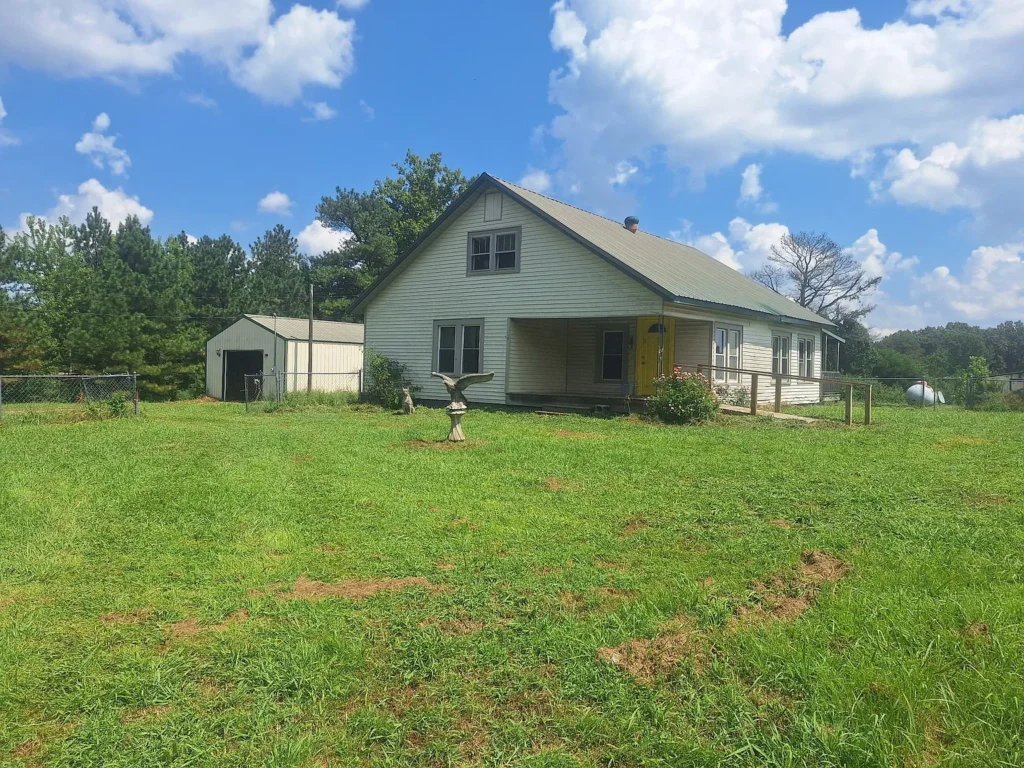
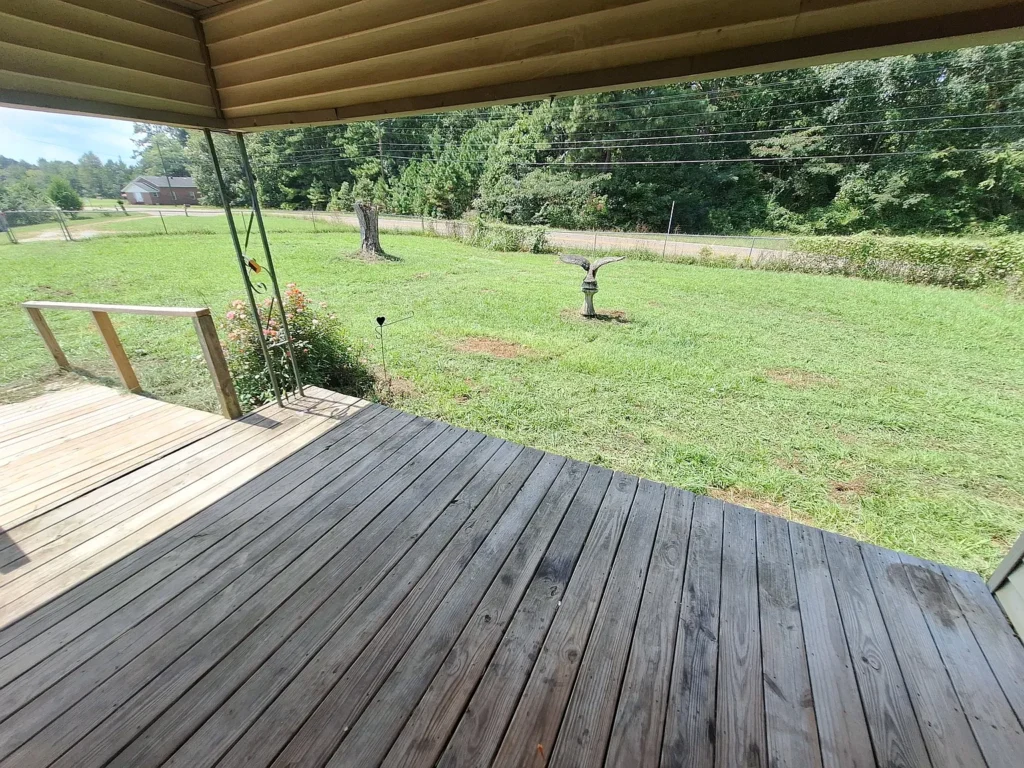
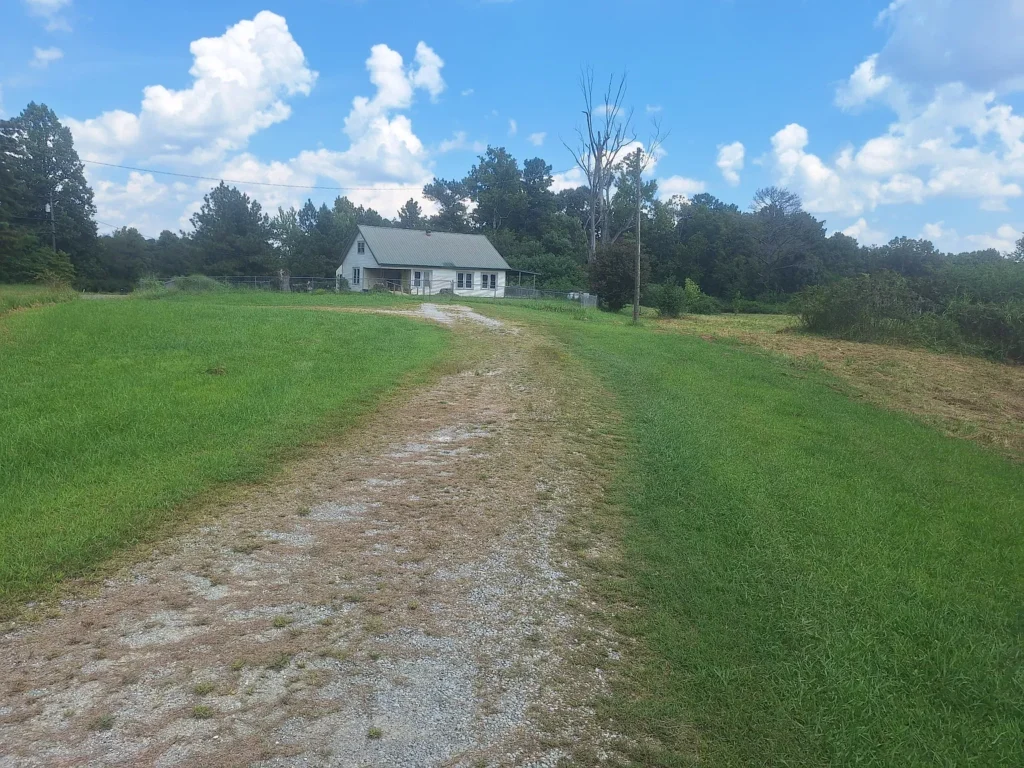
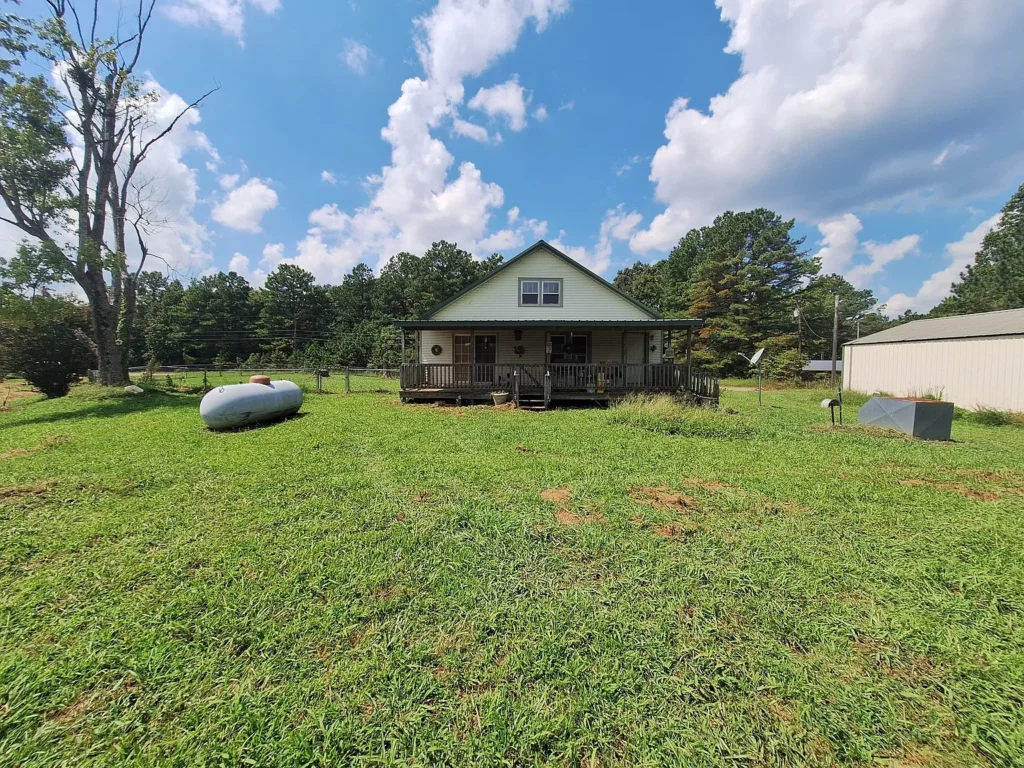
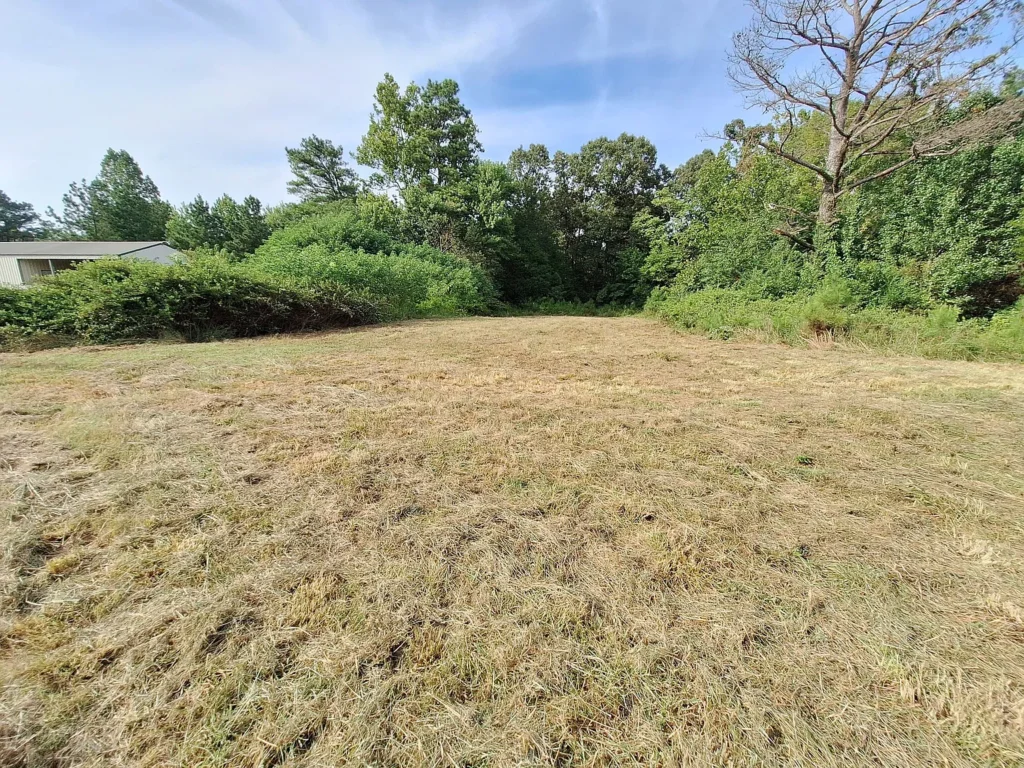
The supplied photographs show broad grassy areas, tree-lined boundaries, and relatively open ground near the house.
This combination could appeal to someone who wants more outdoor space than a conventional residential lot provides.
Potential Uses for the Pasture
Depending on soil conditions, drainage, fencing, and applicable regulations, the open acreage could potentially support:
- A large vegetable garden or orchard
- Small-scale livestock activities
- Recreational space
- Additional fencing and paddocks
- Hobby farming
- Equipment storage or other permitted agricultural uses
The listing describes the acreage as unrestricted, but buyers should verify the exact legal meaning of that claim.
Even land without private deed restrictions may still be subject to local regulations, setbacks, environmental requirements, or permitting rules.
What About the Wooded Acreage?
Wooded land can provide privacy, shade, wildlife habitat, and recreational value.
It may also require maintenance, especially where vegetation grows close to fences, structures, or utility lines.
Buyers should inspect the tree condition, drainage, and property boundaries before assuming all wooded sections can be cleared or developed.
The Small Pond
A small pond is another feature mentioned in the listing.
It may add visual appeal and recreational interest, but buyers should confirm its size, seasonal water levels, drainage, maintenance requirements, and whether any permits or restrictions affect its use.
A pond should not automatically be treated as a dependable irrigation or livestock water source without further investigation.
The 1941 House: Space and Renovation Considerations
The existing residence was reportedly built in 1941 and offers approximately 1,672 square feet of living space.
It has three bedrooms and one full bathroom.
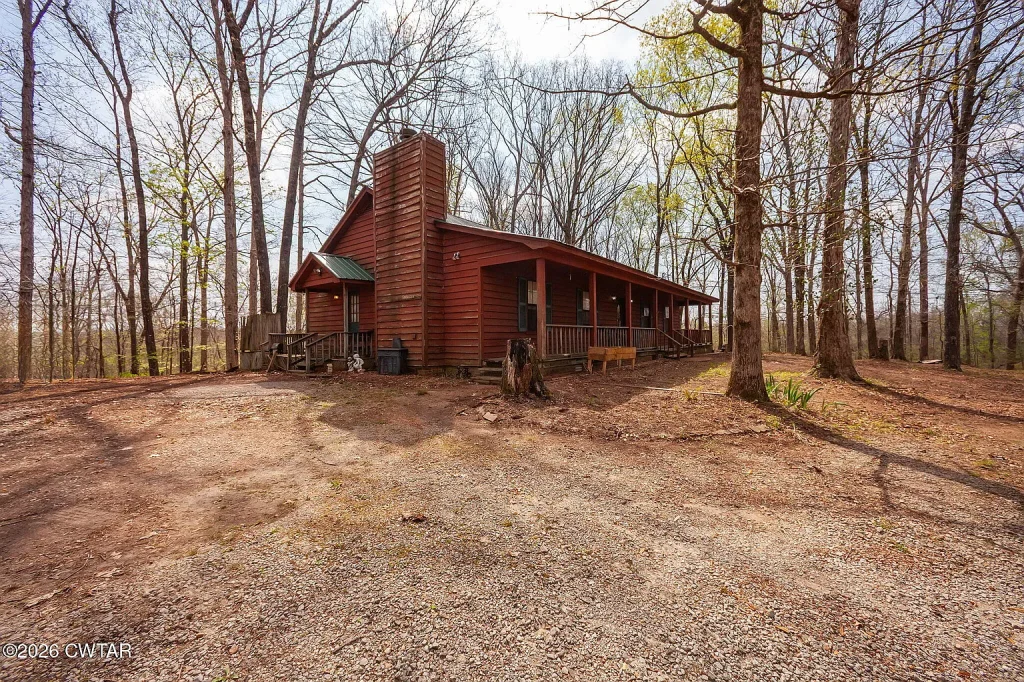
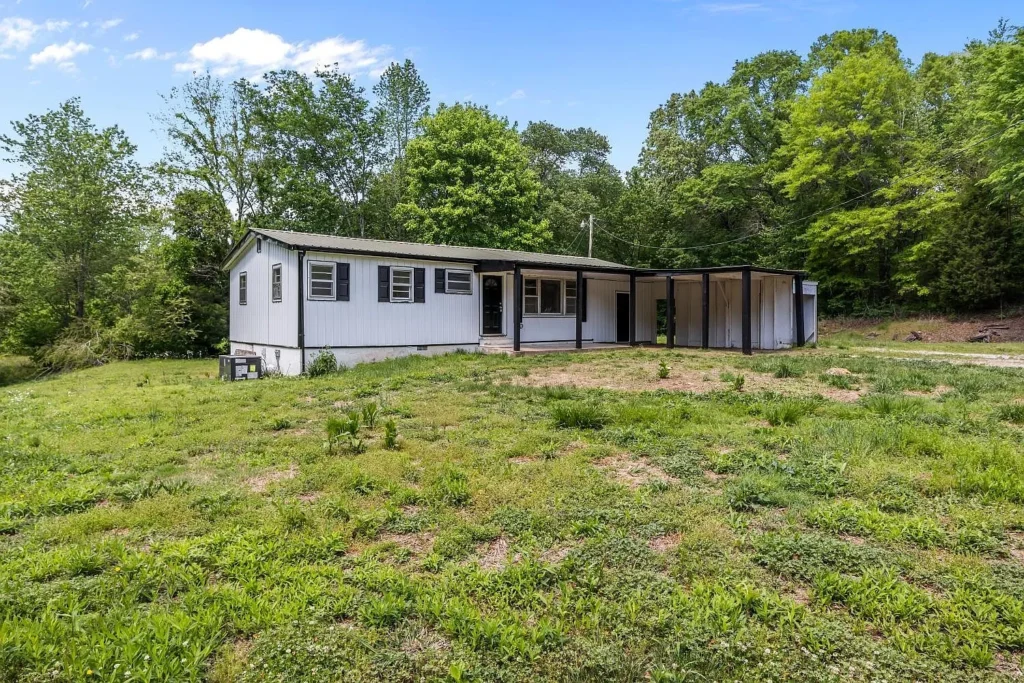
The supplied photographs show a house with a traditional appearance, a pitched metal roof, light-colored exterior siding, and a covered porch.
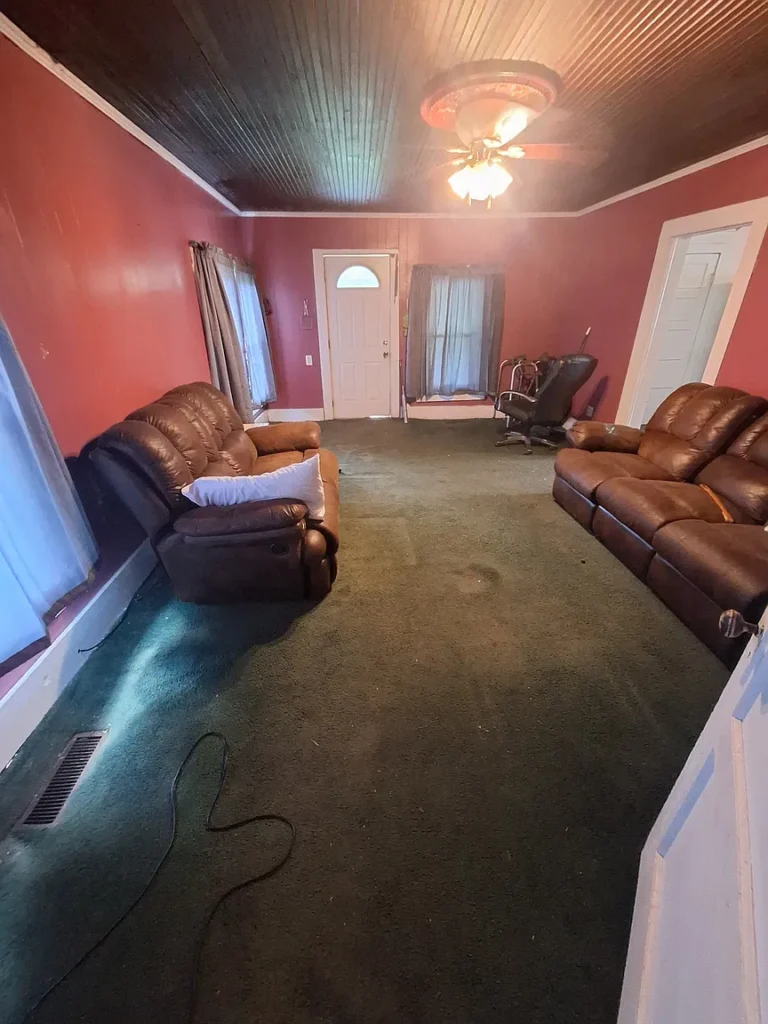
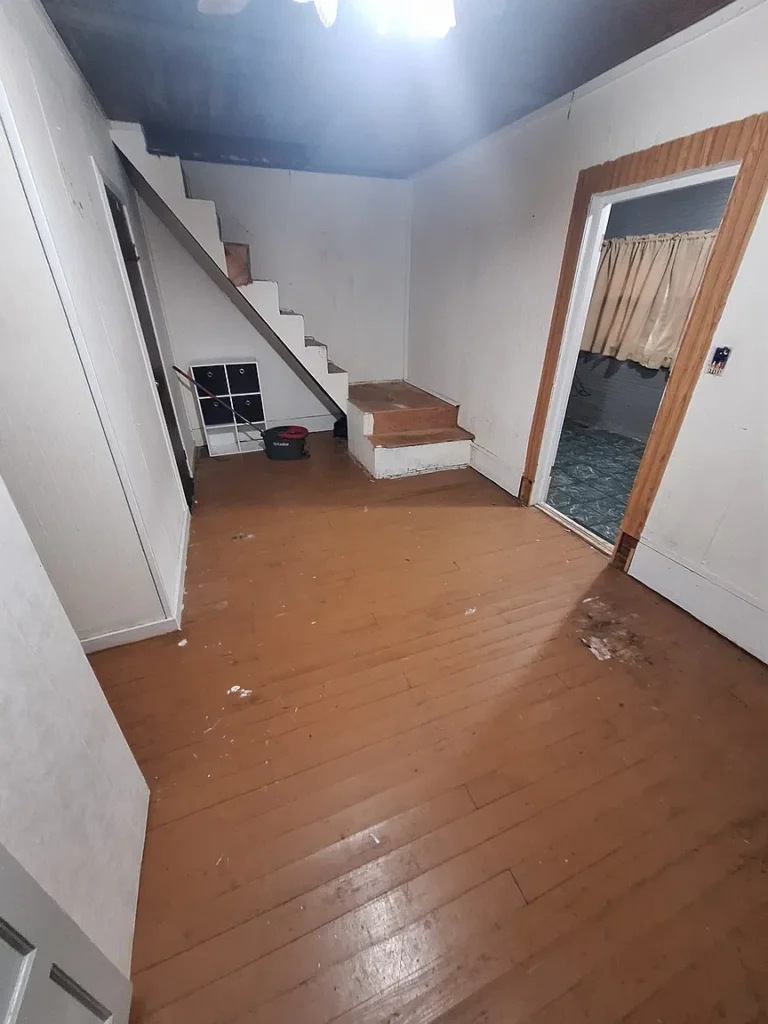
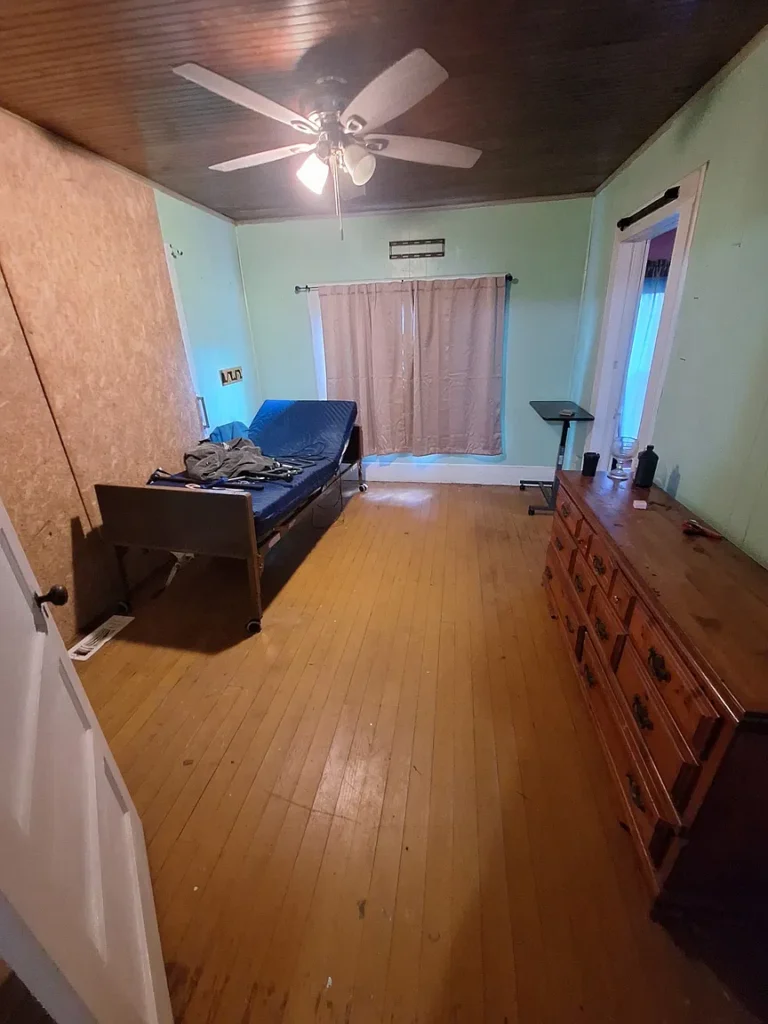
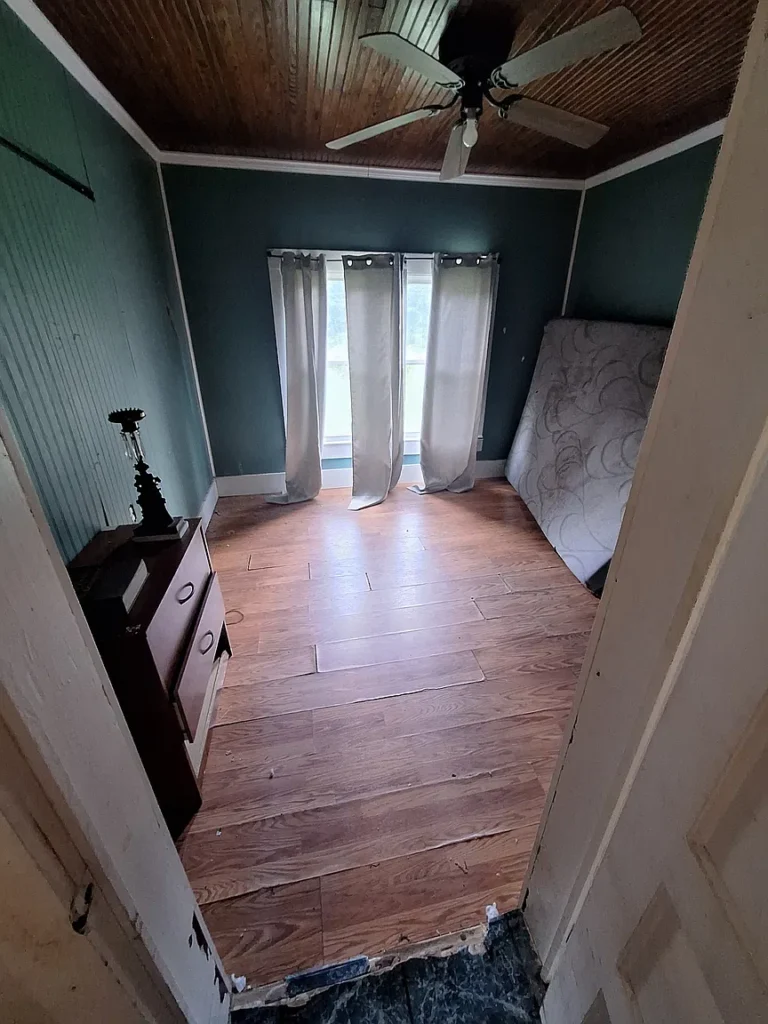
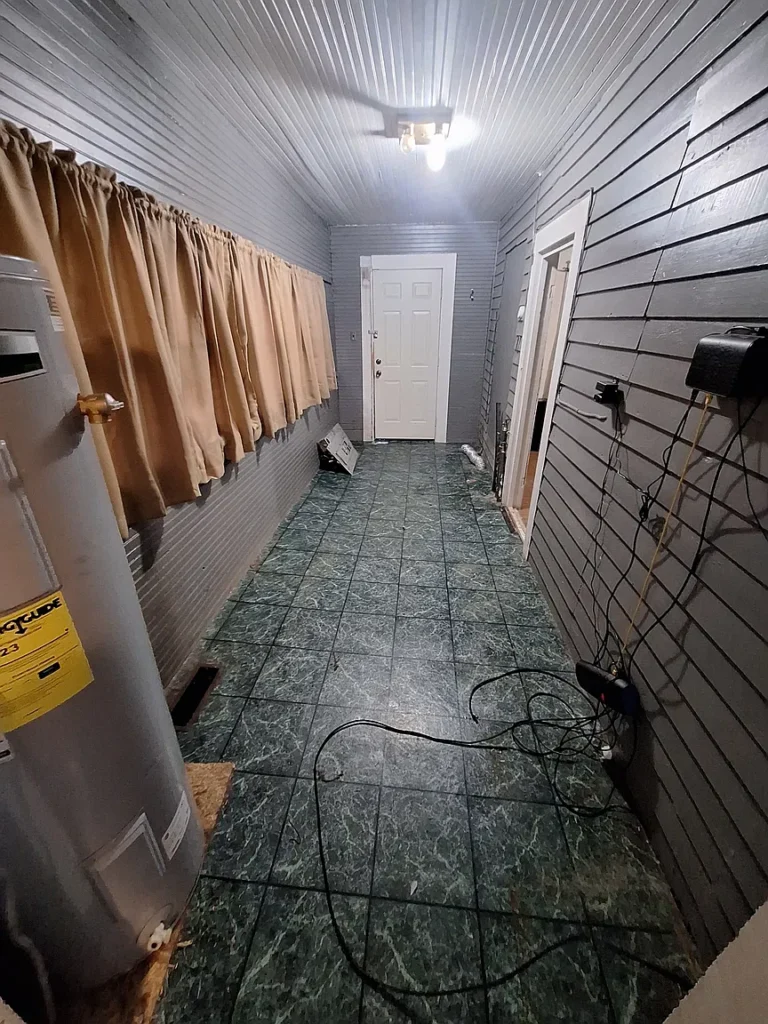
Inside, the home features a mix of wood-style flooring, carpet, paneled walls, and older finishes.
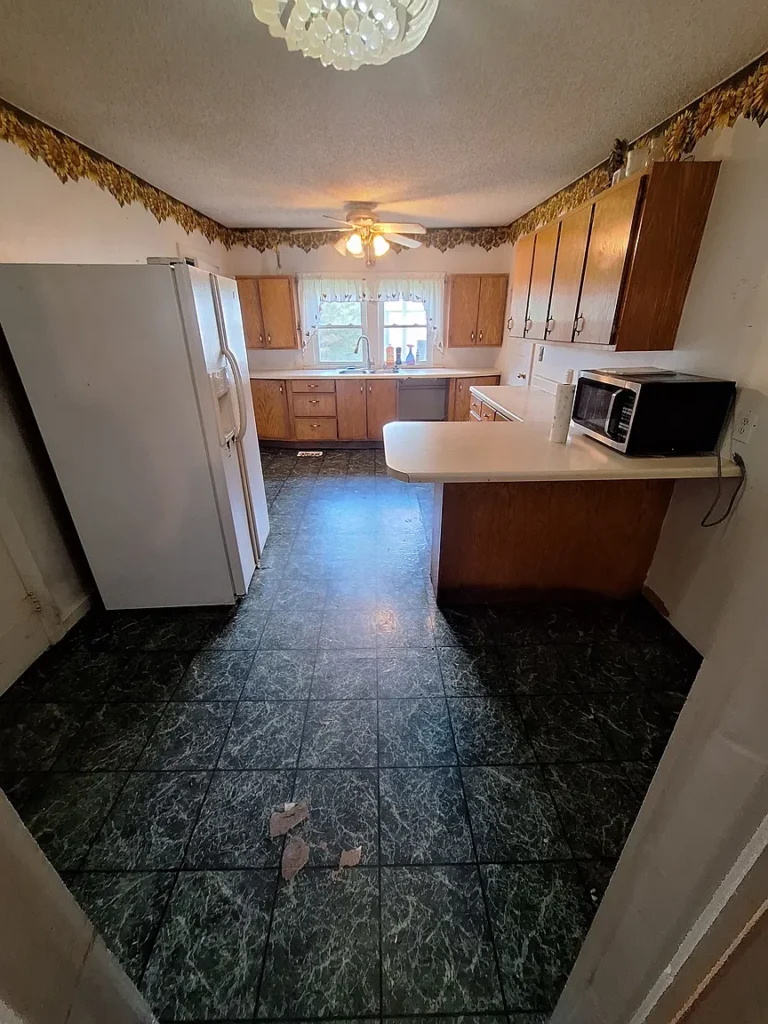
The kitchen appears to retain conventional cabinetry, a large refrigerator area, countertop space, and a peninsula-style work surface.
Several rooms show ceiling fans and wood-paneled ceilings.
While these features may appeal to buyers interested in older rural homes, the photographs also suggest that interior improvements may be necessary.
The property is explicitly described as needing some TLC.
That description is important because cosmetic repairs and major structural repairs can have very different financial implications.
Interior Condition and Possible Improvements
Based on the photographs, a prospective buyer may want to evaluate:
Flooring: Some flooring surfaces appear worn, uneven, or in need of finishing work. A professional inspection would help determine whether the issues are cosmetic or related to the underlying subfloor.
Walls and ceilings: Older finishes may be suitable for repainting or restoration, but moisture damage and concealed deterioration should be ruled out.
Kitchen: The existing layout appears functional in photographs, but cabinetry, plumbing fixtures, electrical outlets, and appliances should be inspected individually.
Bathroom: The listing identifies one full bathroom, although the supplied photographs do not provide enough information to evaluate its condition thoroughly.
Stairs and transitions: The interior images show stair access and several floor transitions that should be checked for safety and code-related concerns.
Electrical systems: Older homes can contain wiring installed or modified over many decades. An electrician should evaluate the system before major renovations.
The goal should be to establish the home’s actual repair requirements rather than assuming that a low asking price will translate into a low total project cost.
A Large Detached Garage and Workshop
One of the property’s strongest practical features is the detached garage and workshop.
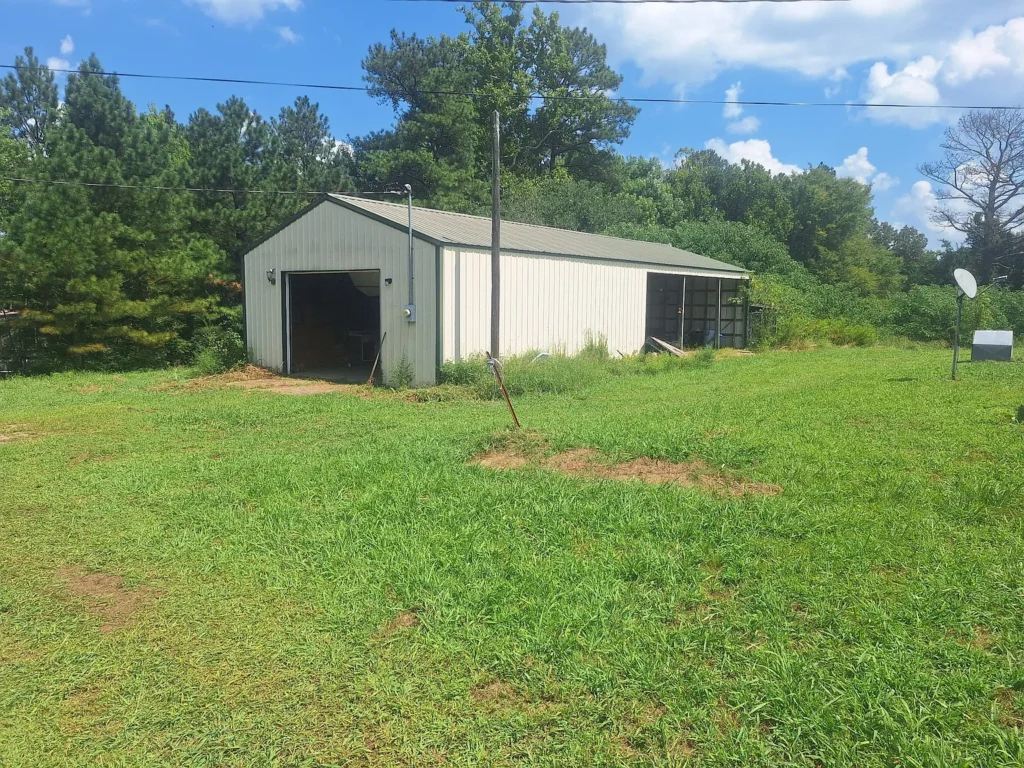
According to the listing, the structure includes an approximately 30-by-30-foot enclosed section.
That equals around 900 square feet of enclosed space.
Behind it is another approximately 30-by-30-foot area with three open bays.
If both areas match the advertised dimensions, the combined covered footprint could approach 1,800 square feet, although buyers should verify measurements and the actual usable layout.
For someone who works on vehicles, maintains farm equipment, or needs room for tools and machinery, this could be a meaningful advantage.
Possible uses, subject to permits and structural suitability, include vehicle storage, a personal workshop, lawn-equipment storage, hobby projects, or agricultural equipment shelter.
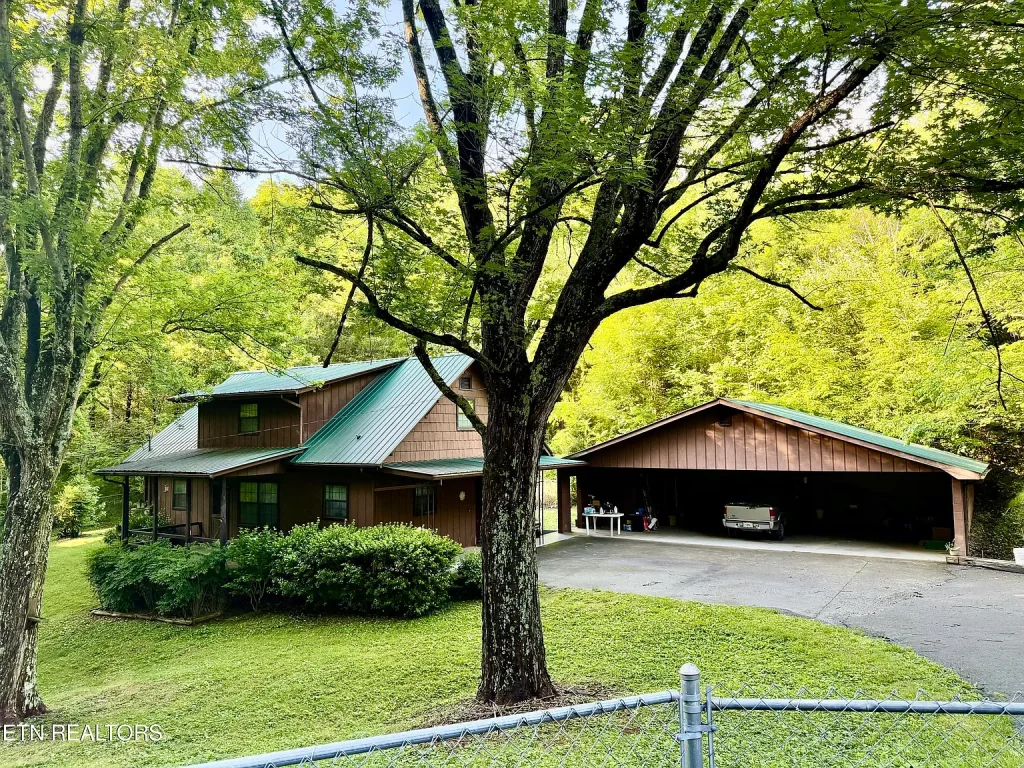
The photos show a metal-sided structure with a metal roof and large access openings.
Before assigning significant value to it, buyers should inspect the foundation, roof condition, electrical service, drainage, door operation, and structural integrity.
The listing reports five garage or parking spaces, but the physical arrangement and suitability for different vehicle sizes should be confirmed.
Could This Be a Mini-Farm or Homestead?
For buyers interested in a Tennessee mini-farm, the combination of pasture, fencing, a well, and existing outbuildings is appealing.
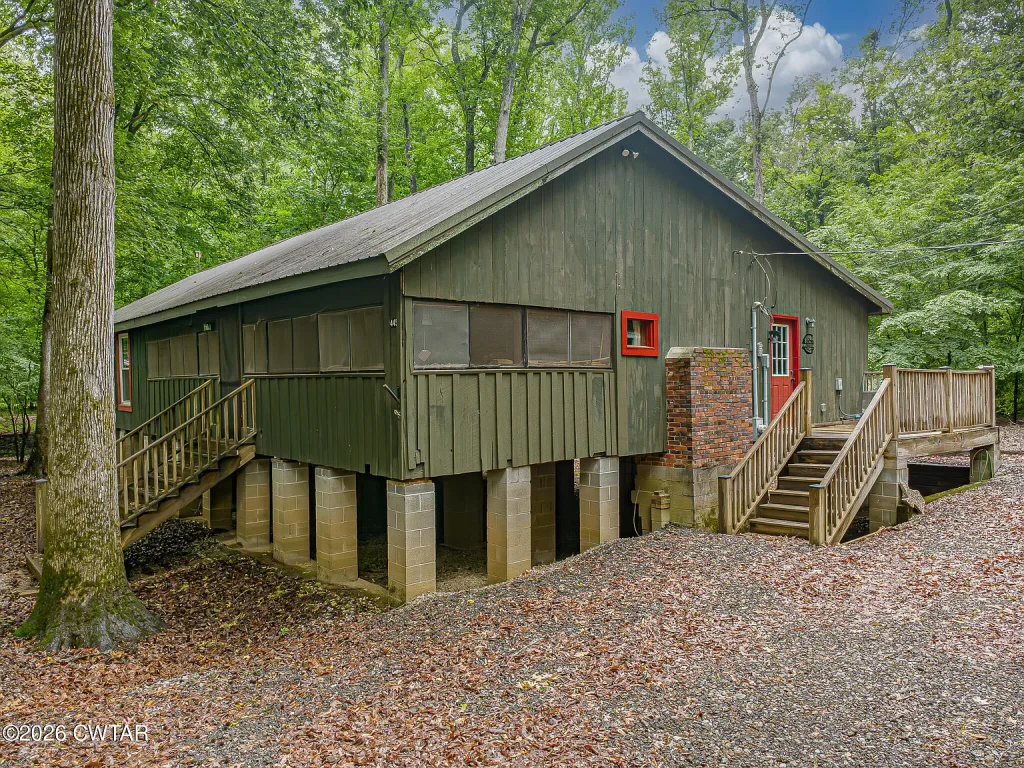
The property reportedly includes an older chicken coop or horse-stall structure.
These features may reduce the amount of new construction needed for certain hobbies or agricultural activities.
However, their condition and suitability for animals are unknown.
Before using the property as a homestead, a buyer should investigate the following:
Land productivity: A soil test can help determine whether the pasture and garden areas are suitable for planned crops.
Water reliability: The private well should be tested for water quality, flow rate, and mechanical condition.
Fencing: Existing chain-link fencing around the yard may be useful for pets but should not be assumed suitable for livestock.
Animal facilities: Existing shelters should be evaluated for safety, ventilation, drainage, and structural condition.
Local rules: Confirm any animal-keeping, building, or land-use requirements with the appropriate authorities.
Operating costs: Feed, fencing, equipment, veterinary care, and land maintenance can create substantial recurring expenses.
The property may provide the physical space for a small homestead, but the cost and practicality depend on the buyer’s intended use.
Utilities: Private Well, Propane and Internet Availability
The listing identifies a private well, private sewer, central propane heating, and central air conditioning.
It also states that natural gas and high-speed internet are available.
These details deserve particular attention because utilities can affect both monthly expenses and the property’s long-term usability.
Private Well Water
A private well can eliminate a conventional municipal water bill, but ownership comes with responsibility for water quality, equipment maintenance, and repairs.
Buyers should consider a well inspection and laboratory water testing before closing.
The age and condition of the pump, pressure tank, and related components should also be established.
Private Sewer System
The property is listed as having private sewer service.
The exact system type, condition, permitting records, and maintenance history should be verified.
If the property uses a septic system, a dedicated septic inspection may identify problems that a standard home inspection would miss.
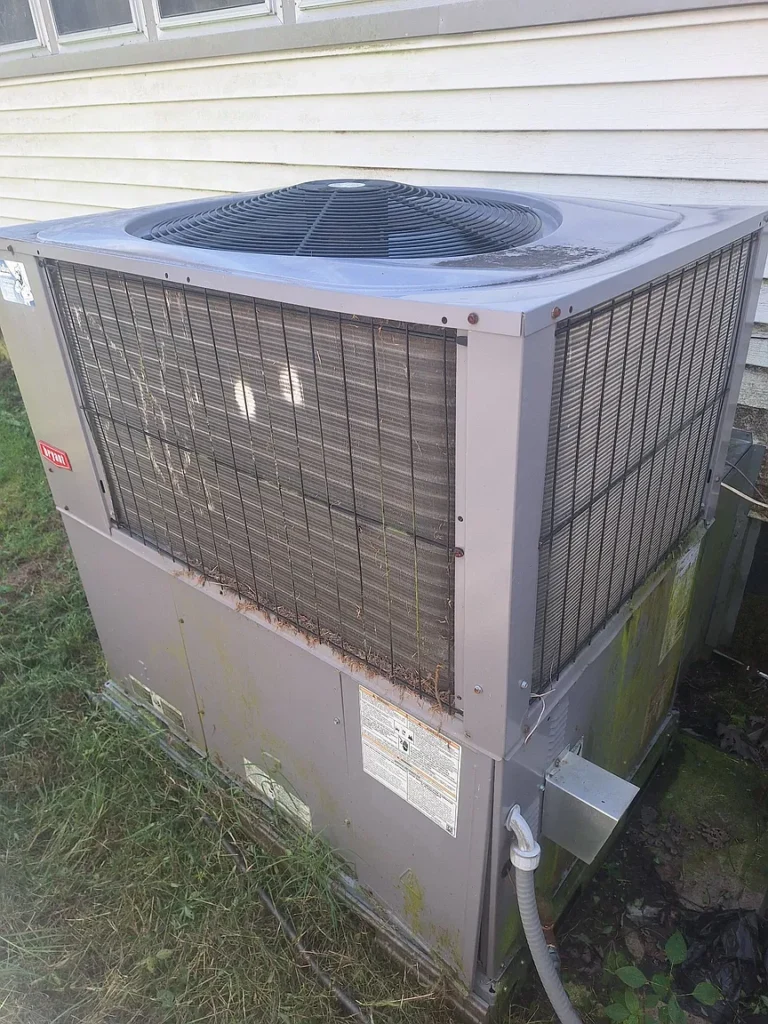
Propane Heating and Central Air
The property reportedly has central propane heating and central air conditioning.
A photograph shows an outdoor HVAC unit, but the presence of equipment does not prove that the entire system is operating correctly.
Buyers should request professional heating and cooling inspections, including confirmation of system age, efficiency, and repair history.
Natural Gas and High-Speed Internet
The listing’s statement that natural gas and high-speed internet are available is encouraging.
However, availability may mean that service exists nearby rather than that a working connection is already installed.
A buyer should contact the relevant providers to confirm installation eligibility, connection charges, available speeds, and ongoing service costs.
For remote workers or buyers planning to operate a home-based business, internet reliability could be especially important.
Property Taxes and Ownership Costs
The reported annual property tax for 2025 was $514.
That equals approximately $42.83 per month when divided across twelve months.
Historical figures supplied with the listing include:
| Tax Year | Reported Property Tax |
|---|---|
| 2021 | $445 |
| 2022 | $445 |
| 2023 | $445 |
| 2024 | $445 |
| 2025 | $514 |
The increase from $445 to $514 represents approximately 15.5%.
While the reported tax amount is relatively modest in absolute terms, it should not be treated as a guarantee of the future tax bill.
Property assessments, ownership changes, exemptions, and local tax rules can affect future obligations.
The listing also reports a tax assessed value of $121,200 and a separate historical tax-assessment figure of $30,300 for 2025. Those figures should not be treated as interchangeable without checking the county’s assessment records and terminology.
Buyers should obtain current tax information directly from the relevant county office.
Other ownership expenses may include homeowners insurance, propane, electricity, well maintenance, private sewer maintenance, mowing, fencing, pest control, and repairs.
For a seven-acre property, maintenance expenses can differ considerably from those of a small residential lot.
Financing Challenges: Why the Property May Not Qualify for Certain Loans
The listing contains an important statement:
The property will not qualify for 100% financing, and the seller will not make repairs.
This does not necessarily mean that every mortgage option is unavailable.
However, it does indicate that buyers should discuss the property’s condition and financing eligibility with lenders before making assumptions.
Certain mortgage programs require homes to meet minimum property standards.
Problems involving safety, structural condition, utilities, roofing, or other essential systems may affect eligibility.
Potential financing paths to discuss with a qualified lender include conventional financing, renovation financing, or a cash purchase.
Eligibility will depend on the buyer, lender, property appraisal, and inspection results.
The listing’s estimated monthly payment should also not be confused with a guaranteed financing offer. Actual payments depend on loan terms, down payment, interest rate, taxes, insurance, and other costs.
A buyer who plans to renovate the property should ideally secure a realistic repair budget before deciding how much to offer.
Renovation Budget: What Could the Real Cost Be?
A house priced below $130,000 may initially appear inexpensive.
However, the total acquisition cost is what ultimately matters.
Consider three purely illustrative repair scenarios:
| Scenario | Purchase Price | Hypothetical Repairs | Combined Amount |
|---|---|---|---|
| Light improvements | $127,999 | $10,000 | $137,999 |
| Moderate renovation | $127,999 | $30,000 | $157,999 |
| Extensive renovation | $127,999 | $60,000 | $187,999 |
These figures are examples, not estimates of the repairs this particular property needs.
They also exclude closing costs, inspections, financing charges, insurance, taxes, carrying costs, and unexpected expenses.
The key lesson is that even a relatively modest renovation budget can change the economics of an affordable property.
For example, a buyer spending $30,000 on repairs would have approximately $157,999 invested before transaction and carrying expenses.
At that point, it becomes important to compare the finished property’s likely market value with the total project cost.
A local contractor’s written estimate and comparable-sales analysis would provide a much stronger basis for a purchase decision.
Location: Living Near Bruceton, Tennessee
The property is located along Highway 114 in the Bruceton area of Tennessee.
According to the listing, it is minutes from town and school and approximately 20 minutes from Paris, Tennessee.
Those travel-time claims should be verified for the buyer’s actual destinations and driving conditions.
The setting may appeal to buyers seeking a rural lifestyle without complete isolation.
Unlike some remote acreage properties that require lengthy drives along private or unmaintained roads, this home is advertised with a highway address.
However, highway frontage can introduce its own considerations, including traffic noise, driveway safety, and privacy.
The photographs show a front yard near the road, with fencing and vegetation providing some separation.
Prospective buyers should visit at different times of day to evaluate traffic conditions, noise, and accessibility.
School assignments, emergency services, shopping options, and healthcare access should also be independently confirmed.
Is This Property a Good Real Estate Investment?
The answer depends heavily on the buyer’s objectives and the property’s actual condition.
There are several possible investment perspectives.
1. Primary Residence With Acreage
For someone who wants to live in the home and use the land, the property could offer lifestyle value beyond the square footage of the residence.
A workshop, open pasture, and wooded sections may be useful even if they do not generate direct income.
The biggest concern would be whether the house can be repaired to an acceptable standard within the buyer’s budget.
2. Renovation and Resale
A renovation-focused buyer might be interested in the price reduction and existing improvements.
However, the potential resale value should be established using comparable renovated properties, not assumptions about future appreciation.
A profitable resale would need to account for purchase expenses, renovations, holding costs, selling fees, and unexpected repairs.
3. Long-Term Rental
The home could potentially be evaluated as a rental property after necessary repairs.
However, rental demand, achievable rent, landlord insurance, property management costs, and local regulations would need to be researched.
The seven-acre lot may appeal to some tenants while creating additional maintenance responsibilities for the owner.
4. Hobby Farm or Owner-Occupied Homestead
This may be one of the more natural potential uses because the property already combines a residence, pasture, and outbuildings.
For an owner-occupant, the benefits could include gardening, recreational land use, equipment storage, and greater separation from neighboring homes.
Whether it is financially attractive would depend on the buyer’s personal priorities rather than rental yield alone.
Advantages and Potential Drawbacks
The property’s main advantages include its seven-acre lot, existing three-bedroom residence, substantial workshop space, pasture and wooded areas, private well, and reported lack of HOA fees.
The recent price reduction may also make it worth comparing with other homes in the region.
On the other hand, there are meaningful risks.
The home dates to 1941, needs improvements, and is being offered without seller repairs. Financing may be more complicated than for a fully renovated home.
The well, private sewer, HVAC system, roof, and outbuildings all require careful inspection.
Additionally, the value of seven acres depends on its condition, accessibility, drainage, and permitted uses—not simply its size.
The right buyer may see opportunity in these characteristics, while someone seeking a move-in-ready home may find them unsuitable.
Buyer Due Diligence: What to Verify Before Purchasing
Before purchasing a rural property like this one, a buyer should complete a thorough investigation.
Home inspection: Hire an independent inspector to assess the foundation, crawl space, roof, structure, electrical systems, plumbing, and visible moisture concerns.
HVAC inspection: Confirm the operating condition, age, and maintenance history of the propane heating and central cooling systems.
Well testing: Check water quality, flow rate, equipment condition, and available records.
Private sewer inspection: Determine the type of system, permitted capacity, and maintenance condition.
Boundary survey: Verify the actual seven-acre boundary, road frontage, fences, easements, and any encroachments.
Land-use verification: Confirm the listing’s unrestricted-acreage claim and whether intended farming or building activities are permitted.
Workshop inspection: Evaluate the garage’s foundation, roofing, framing, electrical service, and usable space.
Flood and drainage research: Check official flood maps and inspect low-lying areas, the pond, and any signs of standing water.
Insurance quotations: Obtain coverage estimates before closing, particularly because older homes and rural outbuildings can present different underwriting considerations.
Financing preapproval: Ask a lender to evaluate the property’s condition-related financing limitations before committing to a purchase.
Comparable sales: Review recent local sales to assess whether the asking price is reasonable relative to the condition and acreage.
A buyer should also confirm that all advertised structures, utilities, and land rights are included in the sale.
Frequently Asked Questions
How much does the Bruceton, Tennessee property cost?
The supplied listing shows an asking price of $127,999 following a price reduction on October 5, 2026. Pricing and availability may change.
How much land comes with the house?
The property is advertised with approximately seven acres, described as roughly two-thirds pasture and one-third wooded.
Does the property have a garage or workshop?
Yes. The listing describes a detached structure with approximately 900 square feet of enclosed garage space and an additional open-bay area of similar size.
Is the property suitable for a small farm?
It may have potential for hobby farming or homesteading because of its pasture, existing outbuildings, and water infrastructure. Buyers must verify land-use rules, soil conditions, fencing, and the suitability of the buildings.
Does the home need renovation?
The listing indicates that the property needs TLC and that the seller will not make repairs. The full scope and cost of improvements require professional inspections.
What are the annual property taxes?
The supplied records show $514 in property taxes for 2025. Future taxes should be verified with the county.
Can the property be purchased with a mortgage?
Potentially, but the listing indicates that it will not qualify for 100% financing. Eligibility for any specific mortgage depends on the property’s condition, lender requirements, and buyer qualifications.
Final Thoughts: Is This $127,999 Tennessee Property Worth Considering?
The property at 25250 Highway 114 offers a combination that may be difficult to find in a conventional suburban home: seven acres, a three-bedroom residence, a substantial garage and workshop, open pasture, wooded space, and a small pond.
The reduction from $149,999 to $127,999 makes the asking price particularly relevant for buyers researching affordable homes with land in Tennessee.
However, the most important issue is not simply how much the seller has reduced the price.
It is whether the house, utilities, garage, and acreage are in sufficiently good condition to justify the purchase price plus any necessary repairs.
For a buyer seeking a turnkey residence, the renovation requirements may be a significant obstacle.
For someone comfortable managing repairs and interested in a small homestead or workshop property, it may warrant further investigation.
The strongest purchasing decision would be based on an independent inspection, realistic repair estimates, financing confirmation, and recent comparable sales.
A low purchase price can create an opportunity, but only when the total costs and risks are properly understood.
Original Property Listing
Property: 25250 Highway 114, Bruceton, TN 38317
Source: RealTracs MLS #3529242, as reflected in the supplied listing information.
For updated photographs, listing status, and agent information, search the address on Zillow or consult the listing agent.
Disclaimer: This article is provided for educational and informational purposes only. It is an independent property analysis, not a real estate advertisement, appraisal, investment recommendation, or representation by the property owner or listing agent. Property details, pricing, taxes, availability, and conditions may change. Information has not been independently verified. Readers should consult qualified real estate, legal, financial, and inspection professionals before making a purchase decision.