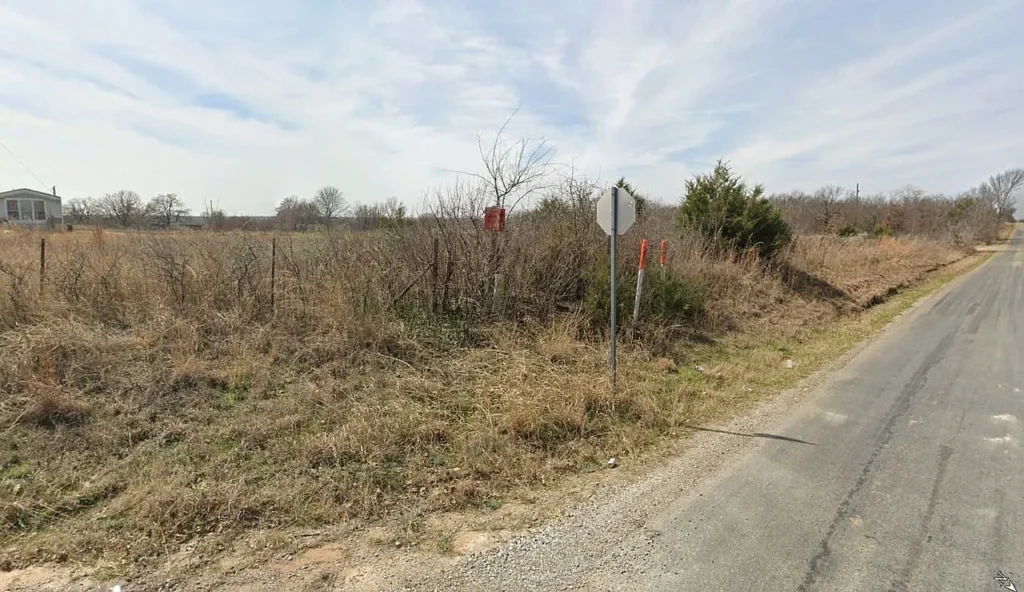
The American real estate market is undergoing a profound transformation. As investors seek tangible, inflation-resistant assets, the demand for high-yield, multi-use agricultural land has skyrocketed. Savvy investors, commercial farmers, and ambitious homesteaders are actively seeking properties that offer diverse income streams, massive spatial scale, and existing infrastructure. Ohio, specifically the fertile Scioto River Valley region of Ross County, has emerged as a premier destination for these land acquisitions.
Today, we are conducting an exhaustive, multi-layered real estate investment analysis of a truly remarkable listing: 1600 Little Creek Rd, Frankfort, OH 45628. This property is not a standard retail sale; it is part of the highly anticipated Edgington Trust Farm Auction, scheduled for Thursday, October 8th. Featuring a massive 127.42-acre footprint, a 1,664-square-foot ranch home, equipment outbuildings, a grain bin, and tillable creek bottom land, this estate represents a generational land banking opportunity.
Perhaps the most staggering metric is the pricing strategy: the entire 127.42-acre multi-use farm is entering the auction with a Total Minimum Bid of $150,000.
In this comprehensive, data-driven investment guide, we will deconstruct every physical, financial, and logistical aspect of this farm. We will conduct a rigorous Comparative Market Analysis (CMA) against Ross County land values, explore the specific monetization strategies for the three separate tracts, detail the infrastructure replacement costs, and provide a masterclass in auction due diligence. Whether you are looking to expand an active farming operation, establish a hunting lodge, or secure a deeply discounted asset for long-term equity growth, this article will equip you with the exact data needed to make a highly profitable decision.
Part 1: Property Snapshot & Core Specifications
Before delving into the macroeconomic arbitrage and regional market data, it is critical to outline the exact physical parameters and municipal classifications of the asset. The following table translates the raw listing data into an actionable investment context.
Key Property Data & Specifications
| Property Attribute | Specification Details | Strategic Real Estate Takeaway |
| Total Minimum Auction Bid | $150,000 | An astonishingly low baseline entry price for triple-digit acreage in Ohio. |
| Total Deeded Acreage | 127.42 Acres | Massive spatial scale ensuring agricultural yields, privacy, and wildlife security. |
| Price Per Acre (at Min Bid) | $1,177 / Acre | A phenomenal wholesale-level pricing metric for retail land buyers. |
| Location & Zip Code | 1600 Little Creek Rd, Frankfort, OH 45628 | Located in Ross County; globally known for fertile soils and trophy whitetail deer. |
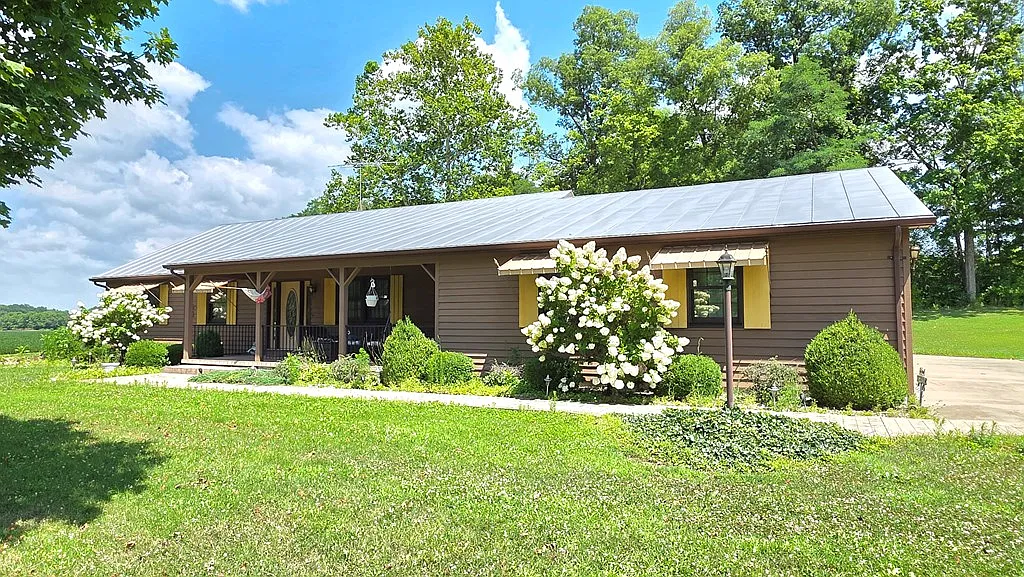
| Primary Residence | 1,664 Sq. Ft. (2 Bed / 2 Bath) | Built in 1988; A fully functional ranch home offering immediate, turnkey shelter. |
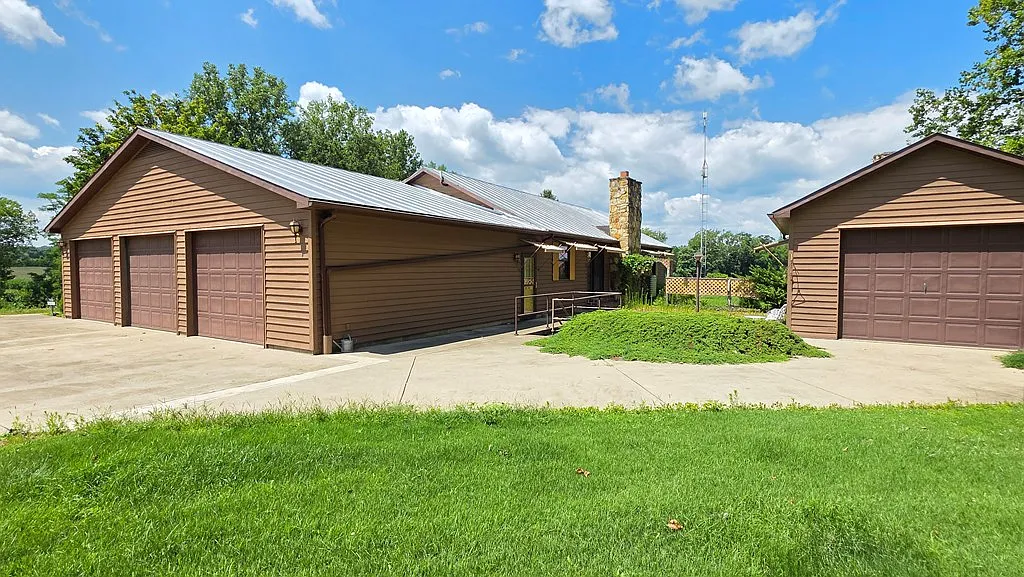
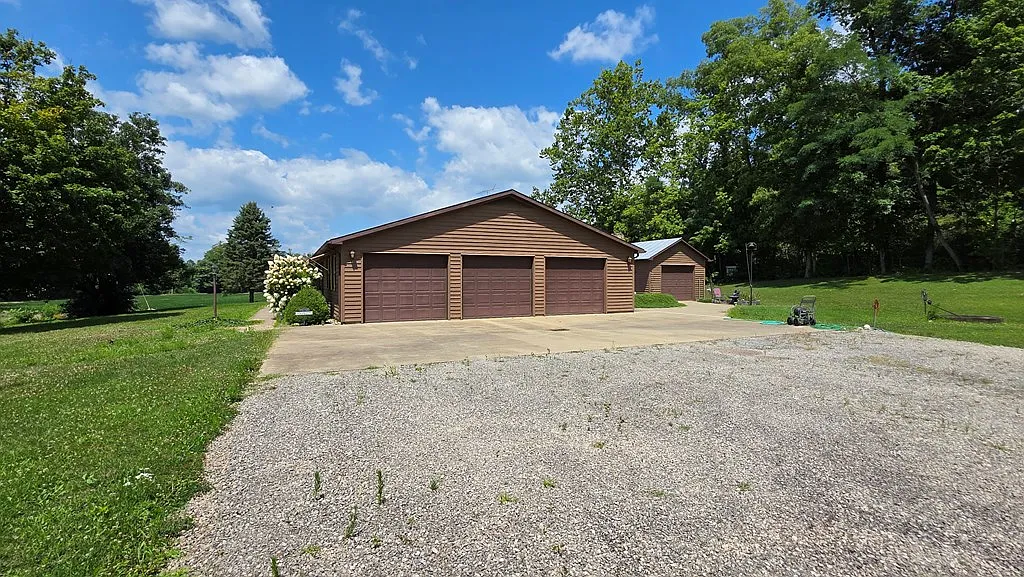
| Garage & Storage | 4 Covered Parking Spaces | Features an attached 3-car garage and a detached 1-car garage. |
| Agricultural Infrastructure | Grain Bin & Outbuildings | Includes a 3-sided equipment building and a shop building with a lean-to. |
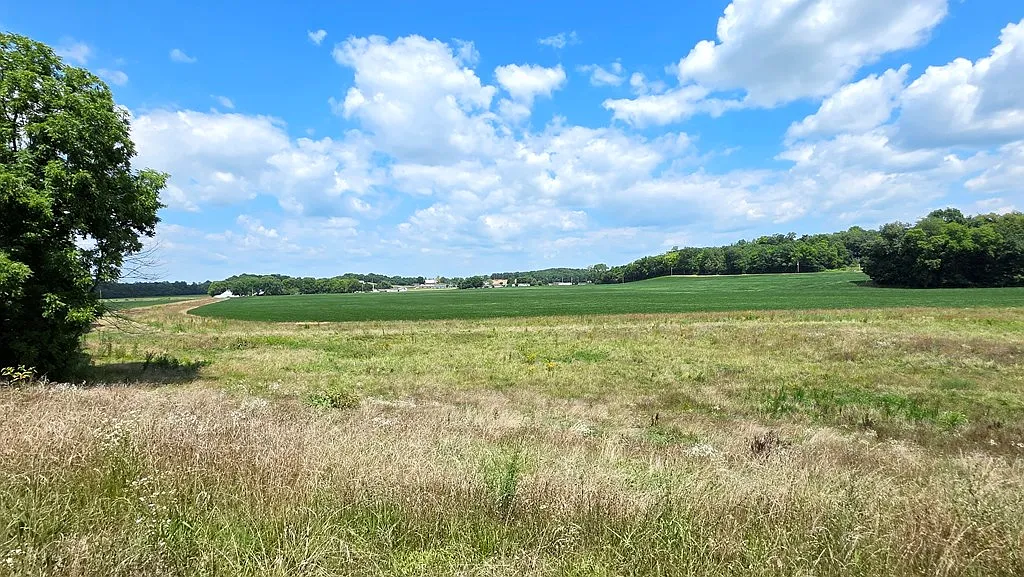
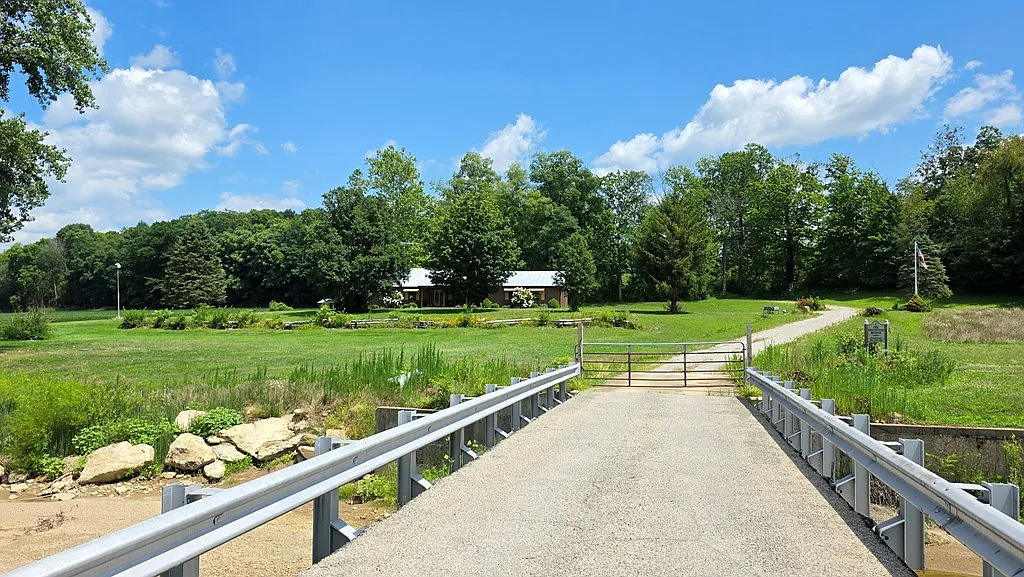
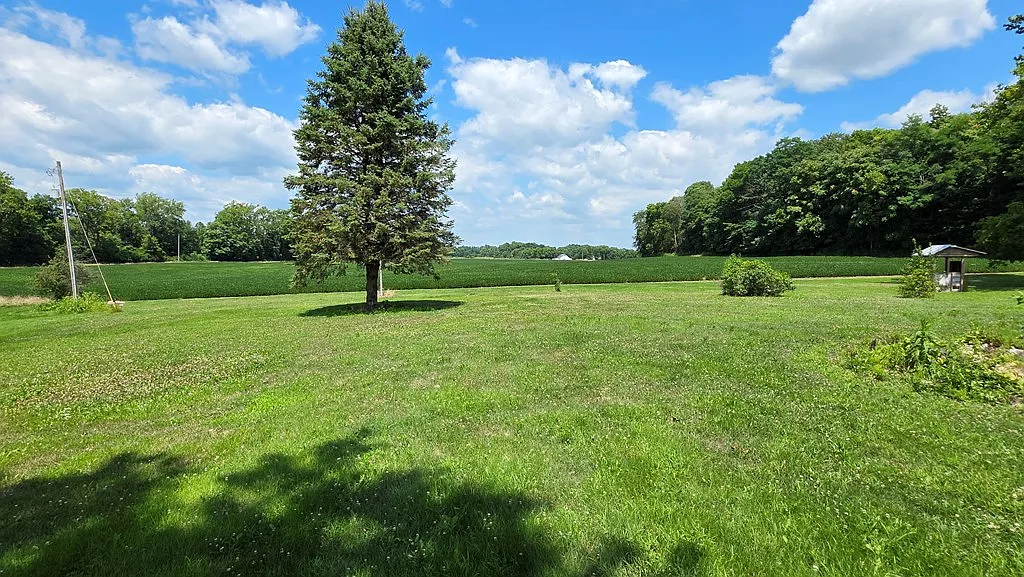
| Topography & Terrain | Tillable Creek Bottom & Wooded | Dynamic terrain offering highly fertile crop land and natural funnels for wildlife. |
| Auction Layout | Offered in 3 Tracts | Bidders can target the home, the farm fields, the commercial lot, or the entire estate. |
| Zoning Classification | Farm / Agricultural | Highly flexible zoning, ideal for commercial farming, timber harvesting, or homesteading. |
| Road Frontage | Frontage on 3 Sides | Abundant road access heavily increases future subdivision and developmental potential. |
| Annual Tax Burden | $4,337 / Year (~$361 / Month) | Exceptionally manageable fixed holding costs for a massive, heavily improved property. |
Part 2: Deconstructing the Multi-Tract Auction Strategy
To maximize the final hammer price, the Edgington Trust Farm Auction plans to offer this 127.42-acre estate in three distinct tracts. This is a common and highly strategic move in large farm auctions, allowing buyers with different goals such as residential homebuyers, commercial farmers, and aggregate businesses to bid only on the parcels that suit their specific needs.
However, buyers also have the opportunity to bid on the entirety of the estate. Let us break down the distinct value drivers of each individual tract.
Tract 1: The Residential Headquarters (+/- 10 Acres)
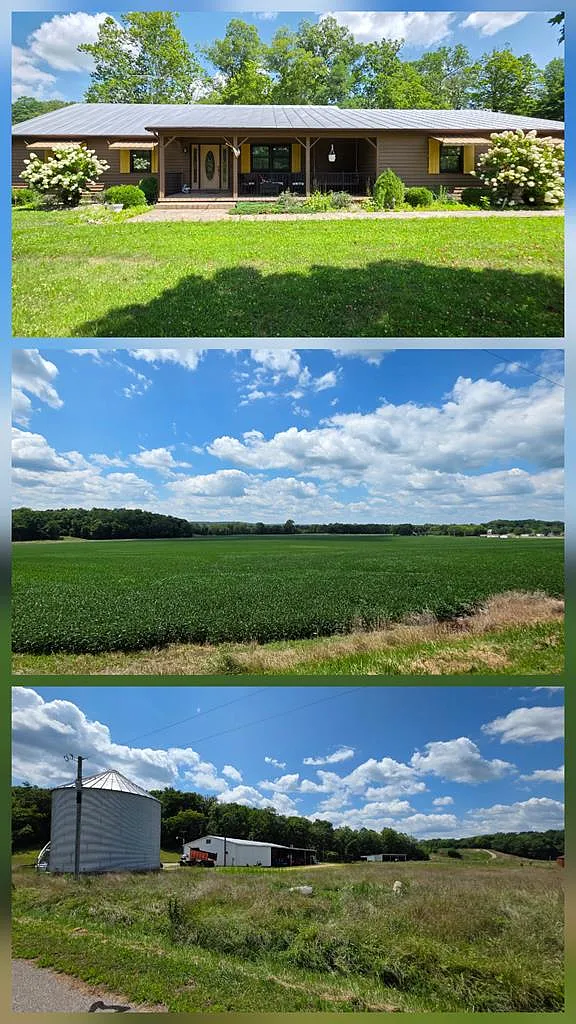
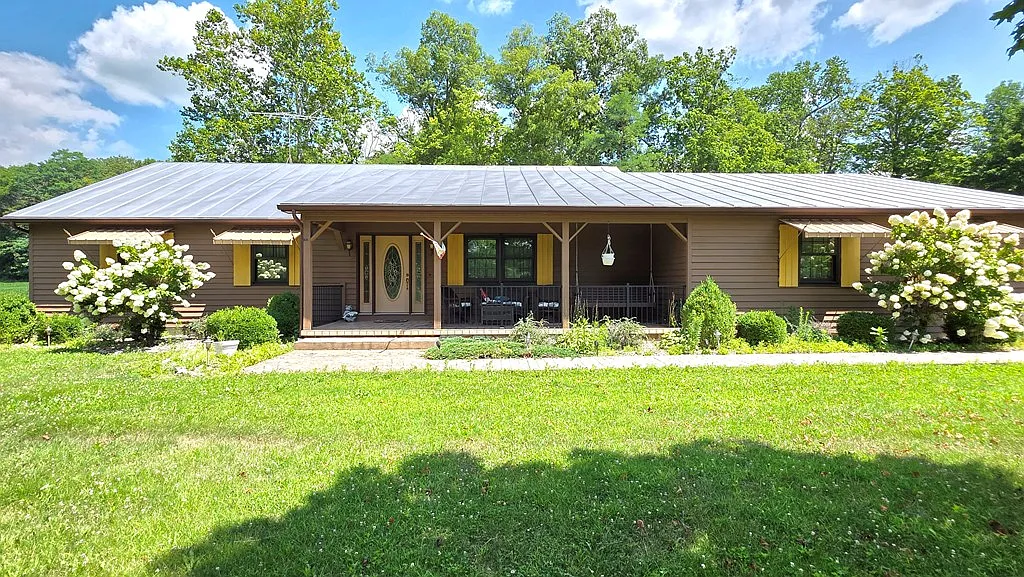
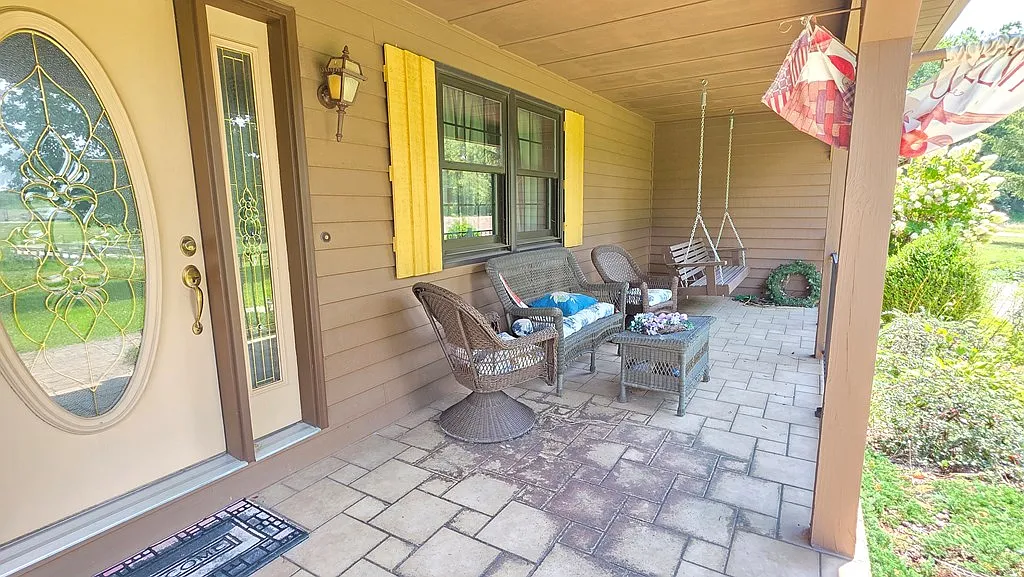
Tract 1 serves as the nerve center of the property. It features approximately 10 acres of land anchored by a well-built 1988 Ranch Home.
- The Dwelling: The home offers 1,664 square feet of main-level living space, featuring 2 bedrooms, 2 full bathrooms, a living room, a dining room, and a kitchen.
- The Basement Expansion: The property features a partially finished basement with a large recreational area. Basements in Ohio farmhouses are vital for secure storage, storm sheltering, and doubling the functional living footprint of the home.
- Vehicle & Equipment Storage: The tract includes an attached 3-car garage and an additional detached 1-car garage. This provides ample space for personal vehicles, ATVs, and workshop tools without encroaching on the heavy agricultural equipment sheds.
- Strategic Value: For a buyer looking for a beautiful country home with enough acreage for horses, a large garden, or extreme privacy, Tract 1 is a perfect standalone acquisition.
Tract 2: The Agricultural Engine (60 Acres)
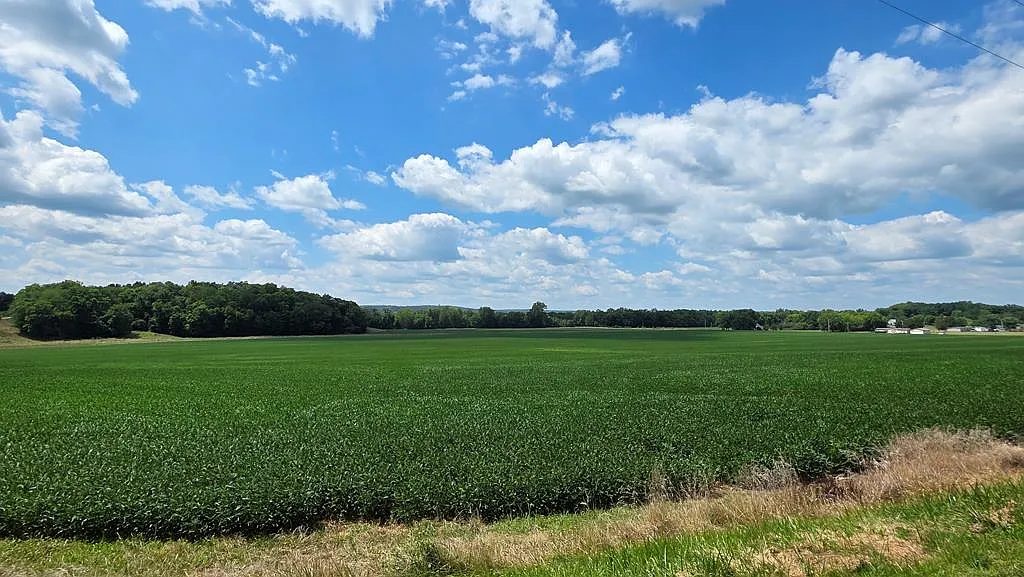
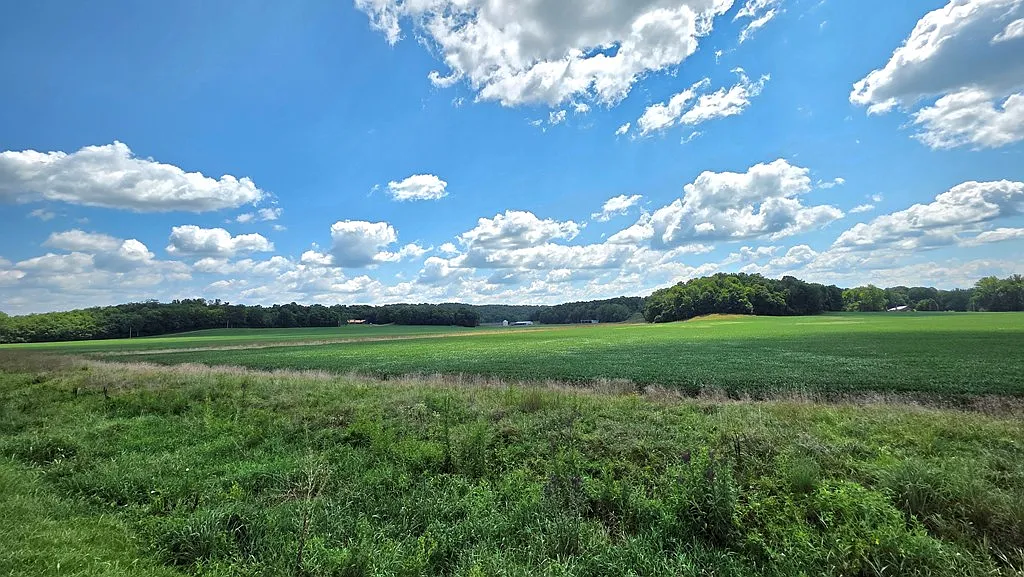
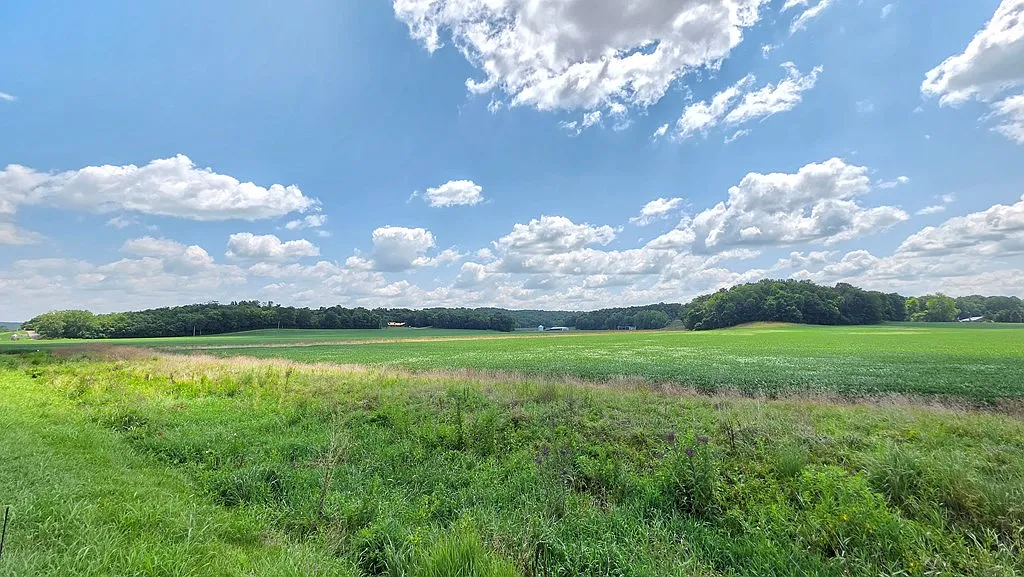
Tract 2 is the primary cash-flowing asset of the estate. It consists of 60 acres of “Tillable Creek Bottom Land”.
- Soil Quality: In the world of agronomy, creek bottom land (alluvial soil) is the holy grail. Over centuries, floodwaters deposit nutrient-rich silt, clay, and organic matter into the valley bottoms. This soil is deep, incredibly fertile, and retains moisture exceptionally well during summer droughts.
- Yield Potential: This 60-acre tract is primed for high-yield row crops like corn, soybeans, or winter wheat. Because it is highly tillable and largely unobstructed, heavy modern farm machinery can navigate the fields with maximum efficiency.
Tract 3: Commercial Heritage & Infrastructure (+/- 55 Acres)
Tract 3 offers a unique blend of commercial history, storage infrastructure, and recreational woodland.
- The Gravel Business: The listing notes that a past owner operated a long-time gravel business from these lands. This indicates the presence of valuable subterranean aggregate deposits.
- Heavy Infrastructure: This tract houses the core farming outbuildings, including a massive 3-sided Equipment Building, a Shop Building with a lean-to for additional covered equipment storage, and a Grain Bin.
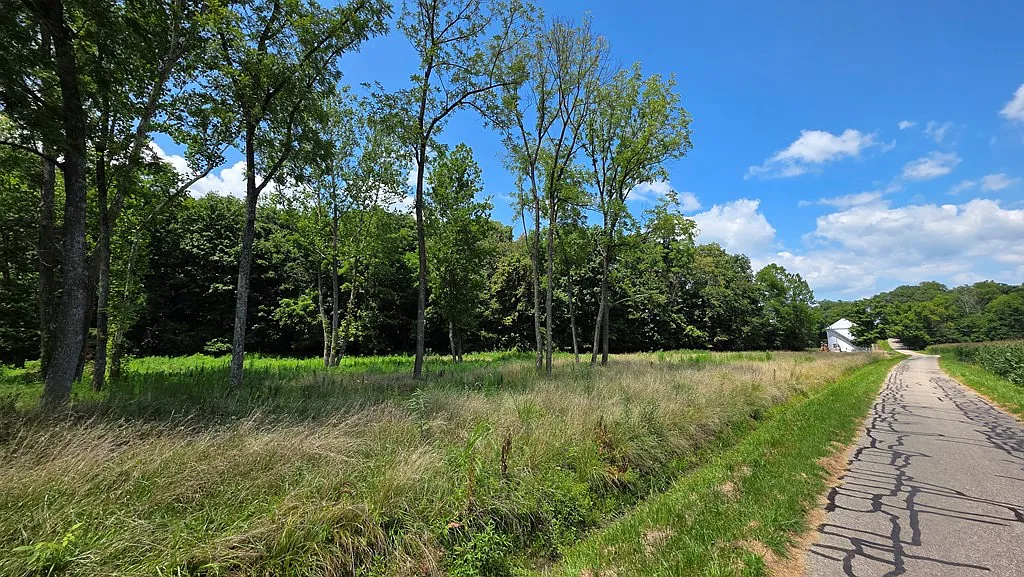
- Wooded Acreage: Beyond the commercial footprint, this tract features substantial wooded acreage, providing premier timber value and heavy cover for local wildlife.
Part 3: Comparative Market Analysis (CMA) – The Valuation Disconnect
In commercial land investment, the “Price Per Acre” is the ultimate, unfiltered metric for determining true market value. To understand the sheer magnitude of the opportunity presented by the $150,000 Total Minimum Bid, we must contextualize this listing against the current macro-level real estate data in Ross County, Ohio.
The Macro Data on Ross County Farmland
Ross County is widely recognized as one of the most productive agricultural regions in Southern Ohio. The county boasts a vibrant farming economy, robust infrastructure, and high demand from both local operators and out-of-state land investors.
Recent market insights reveal a highly elevated pricing structure in this region. The median price per acre across all raw land and farm listings in Ross County, OH, currently sits at a staggering $11,699.Furthermore, data indicates that the average listing price for a full farm operation in Ross County hovers around $1.58 Million, breaking down to an average cost of $13,385 per acre.
The Arbitrage Opportunity: The $1,177/Acre Minimum Bid
If we apply the conservative Ross County median valuation of $11,699 per acre to this 127.42-acre parcel, the raw land alone should theoretically carry an implied market value of approximately $1,490,686.
However, the Total Minimum Bid for the entire estate is just $150,000.
When dividing the $150,000 starting bid by the 127.42 acres, the baseline acquisition cost equates to merely $1,177 per acre.
Chart Analysis: Regional Valuation Comparison
| Valuation Metric | Price Per Acre | Total Implied Value (127.42 Acres) | Premium/Discount of Subject Property |
| Edgington Auction (Minimum Bid) | $1,177 / Acre | $150,000 | Baseline Auction Starting Point |
| Ross County Median Land Price | $11,699 / Acre | ~$1,490,686 | Minimum bid is priced 89.9% BELOW the county median. |
| Ross County Average Farm Price | $13,385 / Acre | ~$1,705,516 | Minimum bid is priced 91.2% BELOW the county farm average. |
| Estimated Tax Assessed Value | $3,275 / Acre | $417,340 | Even the county tax appraiser values the farm significantly higher than the starting bid. |
The CMA Verdict: From a purely mathematical standpoint, a minimum bid of $150,000 is an extreme wholesale discount. It is crucial for buyers to understand that $150,000 is the starting point of the auction, not the final guaranteed sale price. In competitive farm auctions, the final hammer price will likely rise significantly. However, even if bidding pushes the final sale price to $600,000 ($4,708 per acre), the buyer is still acquiring premium Ross County farmland at less than half of the county median price per acre. This provides an immense margin of safety and near-instant equity for the winning bidder.
Part 4: Infrastructure Replacement Cost Analysis
Developing a heavy agricultural property from scratch is an exhausting, capital-intensive process. The true value of 1600 Little Creek Rd lies not just in the fertile dirt, but in the existing heavy infrastructure that a buyer will inherit on day one. Let us calculate the estimated replacement costs of these assets in today’s construction market.
1. The 1988 Ranch Home (1,664 Sq. Ft.)
While built in 1988, a 1,664-square-foot ranch home with a partially finished basement offers incredible utility. To build a comparable single-story farmhouse today, factoring in modern labor rates, foundation pouring, plumbing, and electrical, costs roughly $150 to $200 per square foot.
- Estimated Replacement Cost: $250,000 – $330,000.
2. The Garage Infrastructure (4 Covered Spaces)
The property features an attached 3-car garage and a detached 1-car garage. Pouring concrete slabs, erecting framing, and installing heavy-duty garage doors for four vehicle bays is a massive expense.
- Estimated Replacement Cost: $60,000 – $80,000.
3. The Agricultural Outbuildings (Tract 3)
Farming requires massive storage. The property includes a 3-sided Equipment Building (crucial for keeping combines and tractors out of the rain) and a fully enclosed Shop Building with an attached lean-to. Erecting commercial-grade steel or pole-barn structures of this size is a six-figure endeavor.
- Estimated Replacement Cost: $80,000 – $120,000.
4. The Grain Bin
Grain bins are the lifeblood of row-crop farming, allowing the farmer to store their harvest and wait for optimal commodity market prices before selling, rather than being forced to sell immediately at harvest time. A concrete foundation, the corrugated steel bin, and the internal aeration/auger systems represent serious capital.
- Estimated Replacement Cost: $25,000 – $40,000.
Infrastructure Summary: To replicate the buildings on this property from scratch on a piece of raw land, an investor would face out-of-pocket capital requirements of $415,000 to $570,000. By purchasing this established farm, the winning bidder is acquiring half a million dollars worth of infrastructure at a steep discount.
Part 5: Multiple Income Streams & Monetization Strategies
The most appealing aspect of 1600 Little Creek Rd is its diverse economic profile. A savvy investor can utilize this 127.42-acre estate to generate multiple simultaneous streams of passive and active income, effectively forcing the property to pay for itself.
Strategy 1: Cash Renting the Tillable Acreage (Tract 2)
You do not have to be a farmer to make money on farmland. If you purchase the estate as an investor, you can execute a “Cash Rent” lease with a local commercial farmer. The farmer pays you a fixed annual fee per acre to plant and harvest crops on your 60 acres of tillable creek bottom land.
- Income Potential: In highly productive Ohio counties, creek bottom land can easily command cash rents of $200 to $300+ per acre annually. Leasing 60 acres could generate $12,000 to $18,000 in passive annual income, which completely covers the $4,337 property tax bill with a massive profit margin left over.
Strategy 2: Reviving the Aggregate/Gravel Business (Tract 3)
The listing explicitly notes that a past owner successfully operated a long-time gravel business from Tract 3.
- Income Potential: Gravel and aggregate are foundational materials for local road construction, driveway grading, and concrete production. A new owner could conduct a geological survey to determine the remaining aggregate reserves. You could either self-operate a boutique gravel pit or lease the mining rights to a local excavation company, securing royalty payments for every ton of gravel removed from the site.
Strategy 3: Premier Hunting Leases
Ross County is globally famous among the hunting community for producing massive, Boone & Crockett class whitetail deer. The combination of dense “Wooded acreage and crop land create great hunting,” according to the listing.
- Income Potential: A mix of high-calorie agricultural food sources (corn/soybeans) and thick wooded bedding areas creates the ultimate whitetail habitat. An owner could lease the exclusive hunting rights of the non-tillable acreage (roughly 60+ acres) to a syndicate of high-paying out-of-state hunters. Premium hunting leases in Southern Ohio regularly yield $3,000 to $5,000+ annually.
Strategy 4: Residential Rental (Tract 1)
If you are buying the farm purely as an investment or hunting retreat, you do not need to leave the 1,664-square-foot ranch home empty.
- Income Potential: The 2-bedroom, 2-bathroom home with a large basement and 4 garage spaces could easily be rented to a local family or farm manager. In the Frankfort rental market, a rural home with acreage access could generate $1,200 to $1,600+ per month, yielding an additional $14,000 to $19,000 in gross annual revenue.
Part 6: Geographical Advantages & Abundant Road Frontage
The physical layout of a farm dictates its long-term viability and developmental potential. 1600 Little Creek Rd possesses a geographical attribute that developers actively hunt for: Abundant road frontage on 3 sides of the farm.
The Subdivision Value of Road Frontage
When a massive 127-acre farm is completely landlocked behind a single, narrow driveway, it is very difficult to subdivide and sell off smaller pieces in the future. Because this property fronts on three distinct sides (including Lagerham Lane and Little Creek Road), the logistical options are limitless.
- A future owner could easily carve out several 5-acre or 10-acre “mini-farm” residential lots along the perimeter road frontage, sell them to retail homebuilders for $70,000 to $100,000 each, and retain the massive agricultural core of the property entirely for themselves.
- This immense road frontage also ensures that massive agricultural machinery (like 12-row combine harvesters and semi-trucks) can access the 60 acres of tillable fields without having to navigate tight residential driveways.
Part 7: Financial Proforma, Holding Costs, and CAUV
Real estate wealth is generated by holding tangible assets over the long term. The success of a land-banking strategy depends entirely on the “carrying costs” the ongoing expenses required to maintain ownership.
The Property Tax Breakdown
The tax assessed value of the property is currently $417,340. Despite this high assessment, the actual annual property tax bill is listed at an incredibly manageable $4,337 per year.
Let us break down the holding costs for a cash buyer:
- Annual Property Taxes: $4,337
- HOA Fees: $0
- Farm/Liability Insurance (Estimated): $1,200 / year
- Total Annual Overhead:~$5,537 (or roughly $461 per month).
The CAUV Advantage in Ohio
The relatively low property tax bill on a 127-acre estate is likely due to Ohio’s CAUV (Current Agricultural Use Value) program. Under CAUV, farmland is taxed at its value for commercial agriculture, rather than its “highest and best” potential market value (such as a sprawling residential subdivision).
- To maintain this massive tax break, the new buyer must ensure that the tillable acreage remains in active commercial agricultural production (hence the strategy of cash-renting the 60 acres to a local farmer). As long as the land is farmed, the holding costs remain highly suppressed, allowing the underlying land value to appreciate year over year.
Part 8: Auction Due Diligence & Bidding Strategy
Purchasing a massive multi-use farm at a live auction requires a fundamentally different strategy than buying a standard retail home. The Edgington Trust Farm Auction on October 8th is a high-stakes environment. If you plan to bid on the $150,000 minimum threshold, you must complete rigorous due diligence beforehand.
1. Understand the Multi-Tract Bidding System
In a multi-tract auction, the auctioneer will likely take bids on Tract 1, Tract 2, and Tract 3 individually. Then, they will open the floor for bids on the “Entirety” (all 127.42 acres combined). If a bidder places a bid on the Entirety that exceeds the combined total of the individual tract bids, the Entirety bidder wins the whole farm. Determine your strategy early: Do you only want the 60 acres of tillable land, or are you aggressively pursuing the whole estate?
2. Pre-Qualify for Specialized Financing
If you are not paying in cash, do not assume you can get a standard 30-year residential mortgage (like an FHA or conventional loan) for a 127-acre commercial farm. Traditional banks often refuse to lend on properties where the agricultural land value vastly exceeds the residential home value.
- You must seek pre-approval from a specialized agricultural lender (such as Farm Credit Mid-America). Furthermore, farm auctions typically require a non-refundable cash deposit (often 10% of the purchase price) on the day of the sale, with the balance due at closing within 30 to 45 days.
3. Inspect the Gravel Pit and Outbuildings
Tract 3 features a former gravel business. While lucrative, former mining and aggregate operations can carry environmental or topographical baggage. Have a local agronomist or surveyor walk Tract 3 to ensure there are no unstable high-walls, deep water-filled quarries, or buried debris that would complicate future development. Additionally, inspect the 1988 home’s foundation and the grain bin’s auger systems to calculate your immediate deferred maintenance budget.
Part 9: Pros vs. Cons Analysis
To synthesize this exhaustive real estate analysis, here is an objective, unfiltered breakdown of the strengths and weaknesses of the 1600 Little Creek Rd estate.
The Pros (The Upside)
- Unbeatable Baseline Price: A minimum auction bid of $150,000 ($1,177 per acre) offers the potential for acquiring land at an extreme 85%+ discount compared to the Ross County median.
- Multiple Income Streams: The ability to cash-rent 60 acres of tillable creek bottom land, lease the residential home, and lease the hunting rights makes this a highly lucrative cash-flowing asset.
- Massive Infrastructure Value: You are acquiring a 1,664 sq ft home, 4 garage bays, massive equipment sheds, and a grain bin, saving over half a million dollars in replacement construction costs.
- Abundant Road Frontage: Frontage on three sides of the property guarantees unmatched logistical access and profound future subdivision potential.
- World-Class Hunting: Southern Ohio genetics combined with wooded creek bottoms creates a premier whitetail deer hunting sanctuary.
The Cons (The Risks)
- Auction Uncertainty: $150,000 is the minimum bid, not the guaranteed purchase price. Fierce competition among local farmers could drive the final hammer price significantly higher.
- The 1988 Construction: A home built in 1988 may require cosmetic updates, a new roof, or modern HVAC upgrades, requiring a secondary capital renovation budget.
- Commercial History: The former gravel operation on Tract 3 requires careful physical inspection to ensure the land remains usable and safe for heavy equipment or livestock.
Part 10: Final Investment Verdict & Next Steps
The Real Estate Verdict: A STRONG BUY FOR COMMERCIAL FARMERS, STRATEGIC LAND BANKERS, AND HOMESTEADERS.
The 127.42-acre multi-use farm at 1600 Little Creek Rd in Frankfort, OH, represents a quintessential, top-tier Midwestern agricultural investment. The offering of this estate via the Edgington Trust Farm Auction creates a rare window of opportunity to acquire a fully functioning, cash-flowing agricultural engine at a potentially massive discount.
Whether your vision is to dominate the local grain market by cultivating the 60 acres of creek bottom soil, resurrect the lucrative gravel business on Tract 3, or simply establish a sprawling, self-sufficient family compound anchored by the 1988 ranch home, the intrinsic value of this dirt is undeniable. By leveraging the multiple passive income streams cash rent, hunting leases, and residential rental an investor can comfortably service any debt on the property while allowing the underlying Ross County land values to appreciate.
Next Steps for Buyers:
The live auction is scheduled for Thursday, October 8th at 11 AM. Do not wait until October to prepare. Immediately contact a specialized agricultural lender to secure a line of credit. Schedule a private walkthrough of the 1,664-square-foot home and inspect the equipment outbuildings. By entering the auction tent with a rock-solid valuation strategy and liquid capital, you stand to secure one of the most dynamic real estate assets currently available in Southern Ohio.
Listed on Zillow