Finding 80 acres of wooded mountain land in California with an existing cabin, water infrastructure, and off-grid features for under $140,000 is worth a closer look. But properties like this can come with important limitations that are easy to overlook.
At 5300 Cabin Gulch Road in Douglas City, California, an approximately 80-acre recreational property is advertised for $139,000. The listing describes a small sleeping cabin, two solar-powered wells, water storage tanks, a developed spring, outdoor cooking facilities, and fenced garden areas.
For someone interested in a private recreational getaway, hunting retreat, or future homestead project, those features may sound appealing. However, the property is listed as unimproved land, and the existing cabin is described as non-conforming.
That distinction matters. Buyers should evaluate the land, the legality of the structures, and the reliability of the infrastructure separately before making a decision.
Property Overview
| Feature | Listing Details |
|---|---|
| Address | 5300 Cabin Gulch Rd, Douglas City, CA 96024 |
| Asking price | $139,000 |
| Land area | 80 acres |
| Property classification | Unimproved land |
| Existing structure | Non-conforming sleeping cabin |
| Cabin features | Loft, wood stove, metal roof, covered porch |
| Water | Two solar-powered wells, storage tanks, developed spring |
| Terrain | Steep, gentle, and level areas |
| HOA | None reported |
| Financing terms | Cash, cash to new loan, owner may carry |
| Parcel number | 015160018000 |
| Listing date | October 13, 2026 |
These details reflect the supplied listing information and may change. Buyers should verify current pricing, availability, acreage, permits, and infrastructure with the listing agent and relevant authorities.
The Main Attraction: 80 Acres of Private Mountain Land
The biggest feature of this Douglas City property is its acreage.
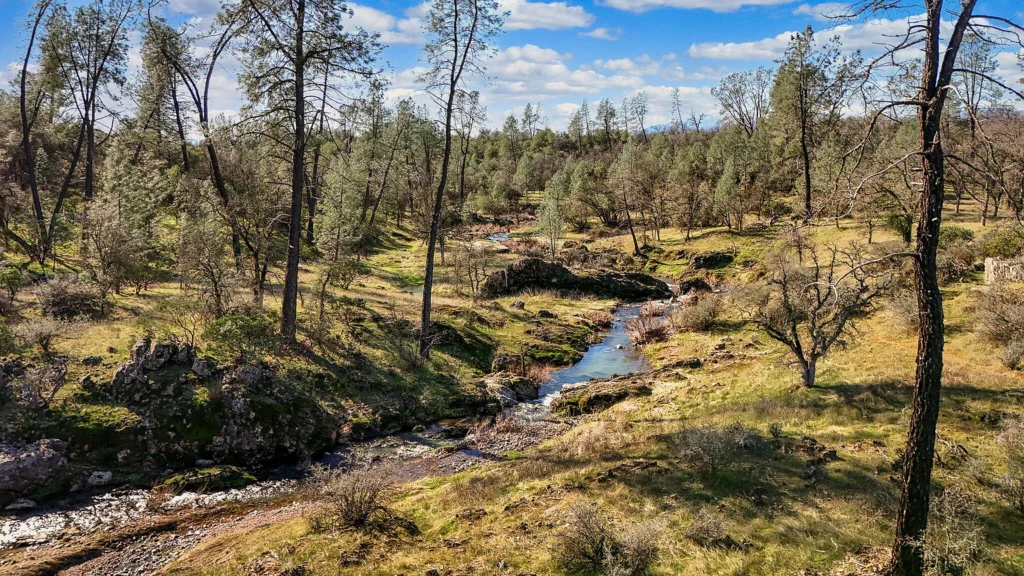
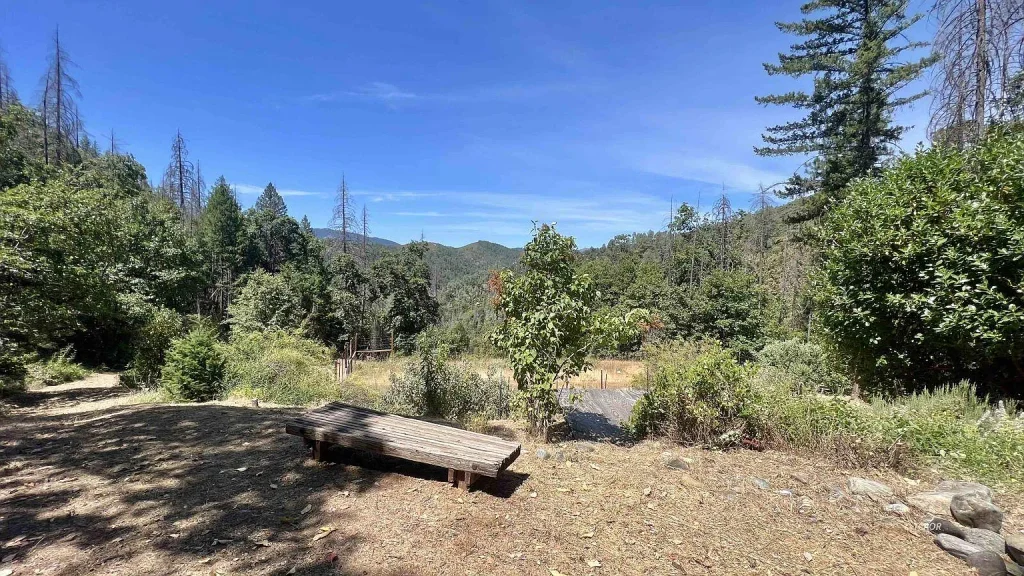
Eighty acres provides substantially more space than a typical rural residential parcel. According to the listing, the land includes a mixture of steep, gently sloping, and level terrain, along with secluded wooded surroundings and mountain views.
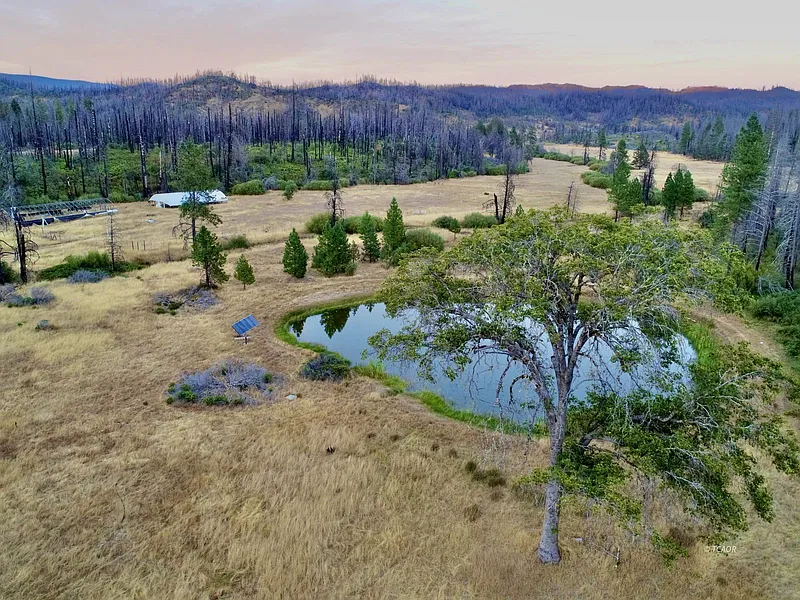
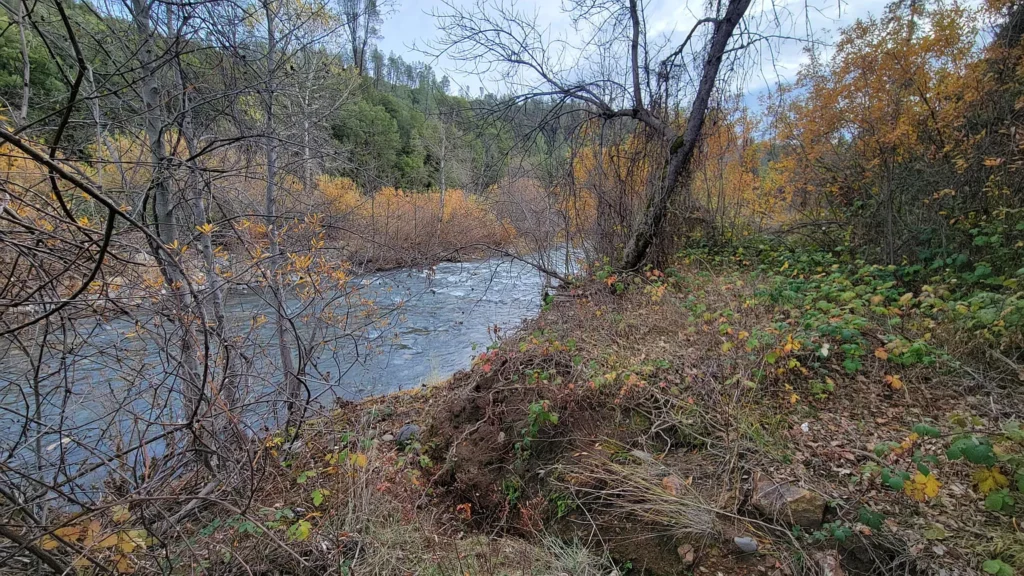
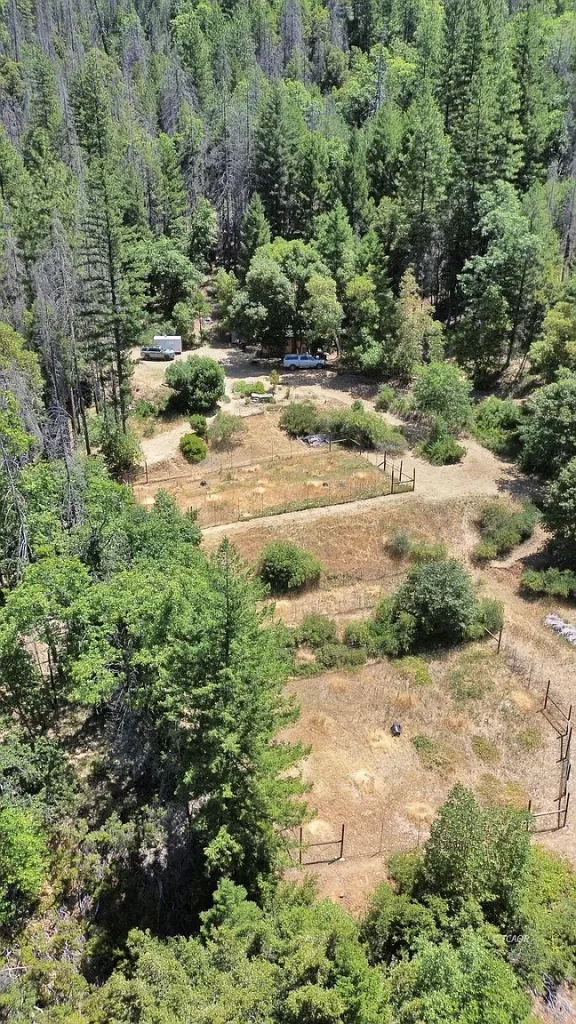
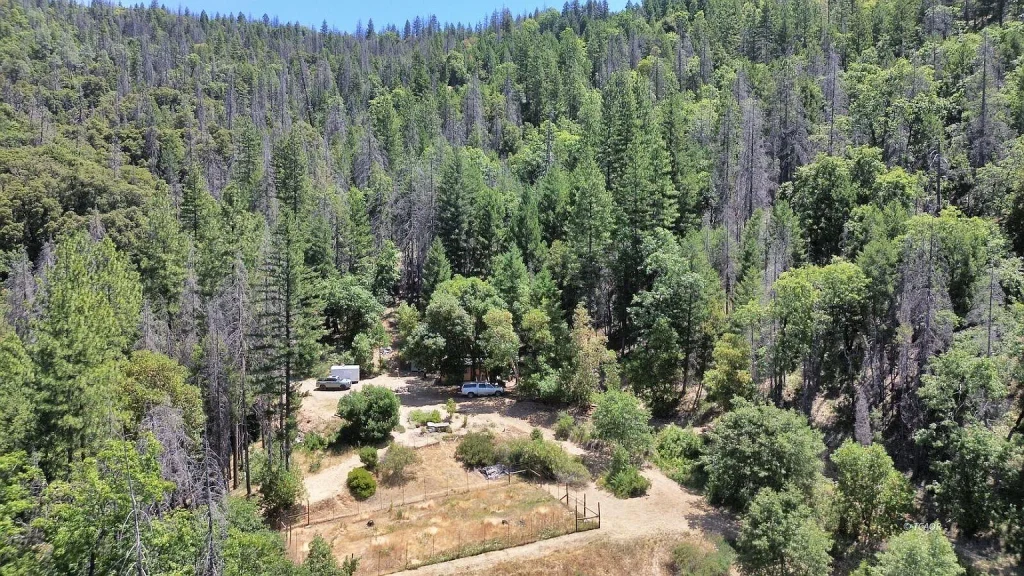
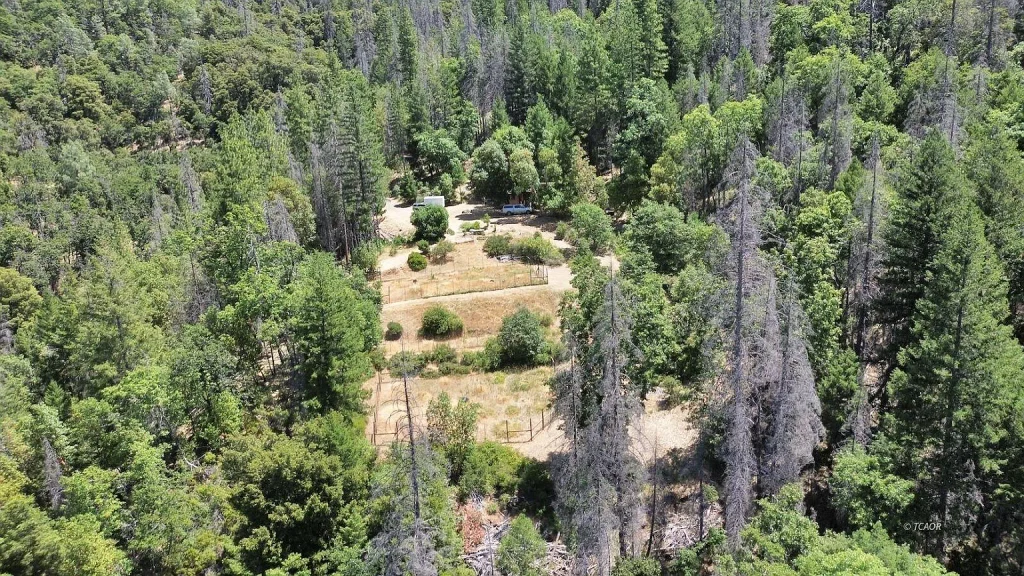
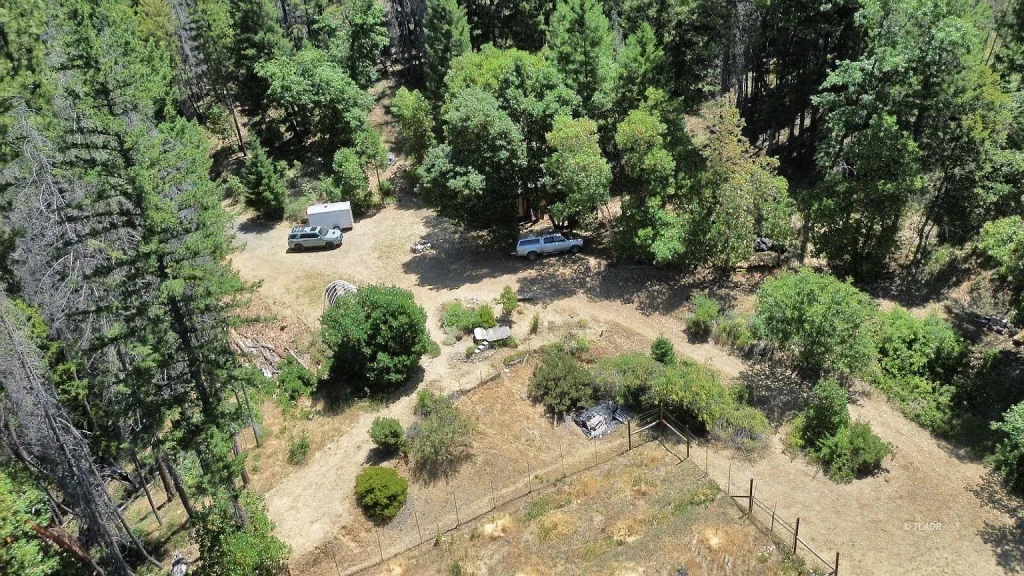
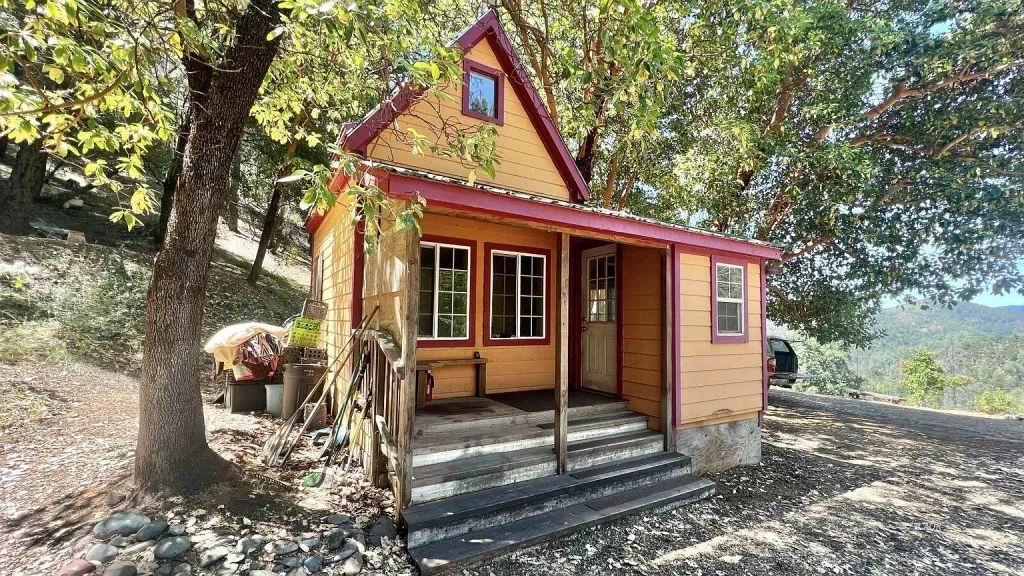
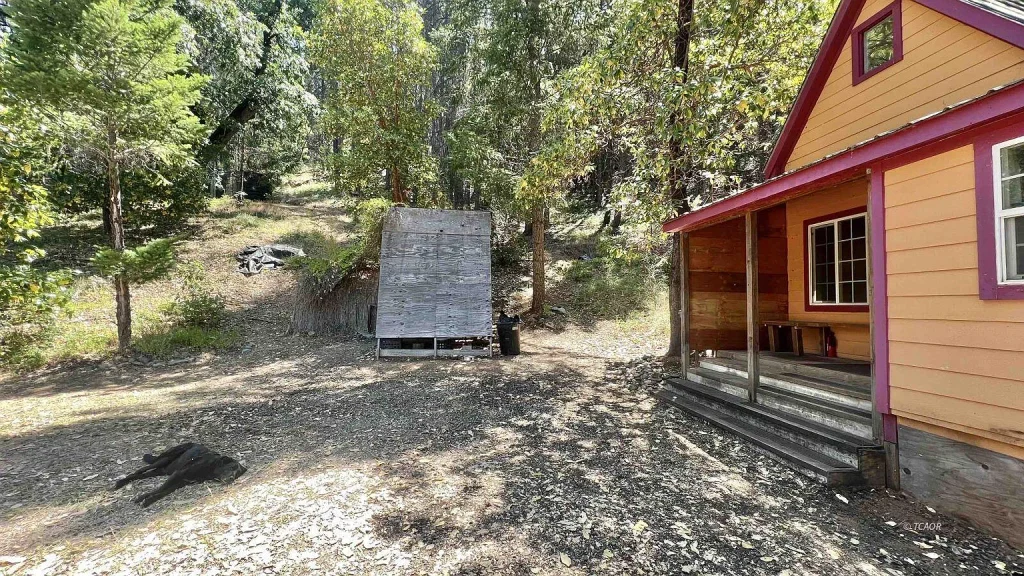
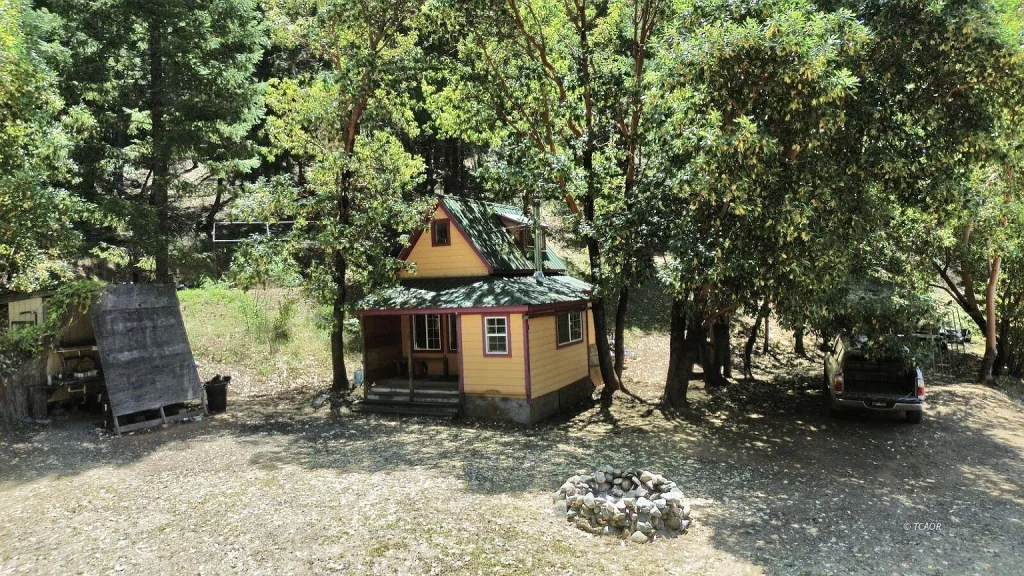
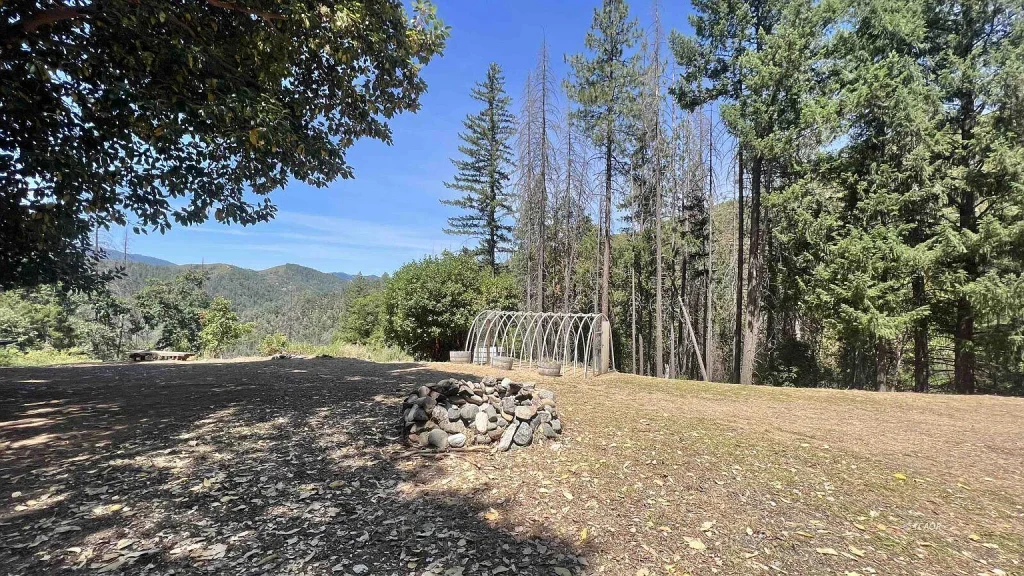
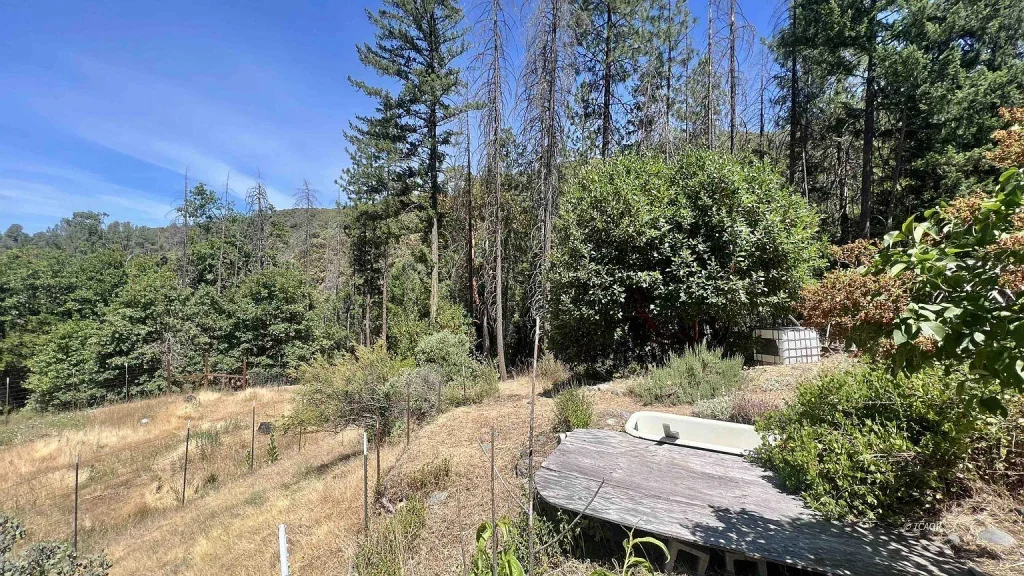
The property photographs show dense tree cover, hillside terrain, dirt access routes, and some cleared areas around the existing improvements.
That combination could appeal to buyers seeking outdoor recreation, a private campsite, or a place to spend time away from more developed areas.
However, 80 acres does not necessarily mean 80 acres of easily usable land.
Steep slopes can limit vehicle access, gardening, construction, and the placement of additional structures. A prospective buyer should review a topographic map, walk the accessible portions of the property, and determine how much of the land is practical for their intended use.
It is also important to verify the legal property boundaries rather than assuming that existing fences, roads, or clearings follow the surveyed parcel lines.
A Small Off-Grid Cabin Is Already on the Property
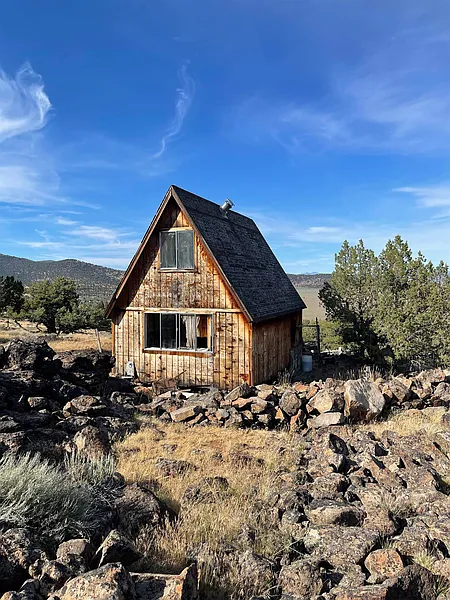
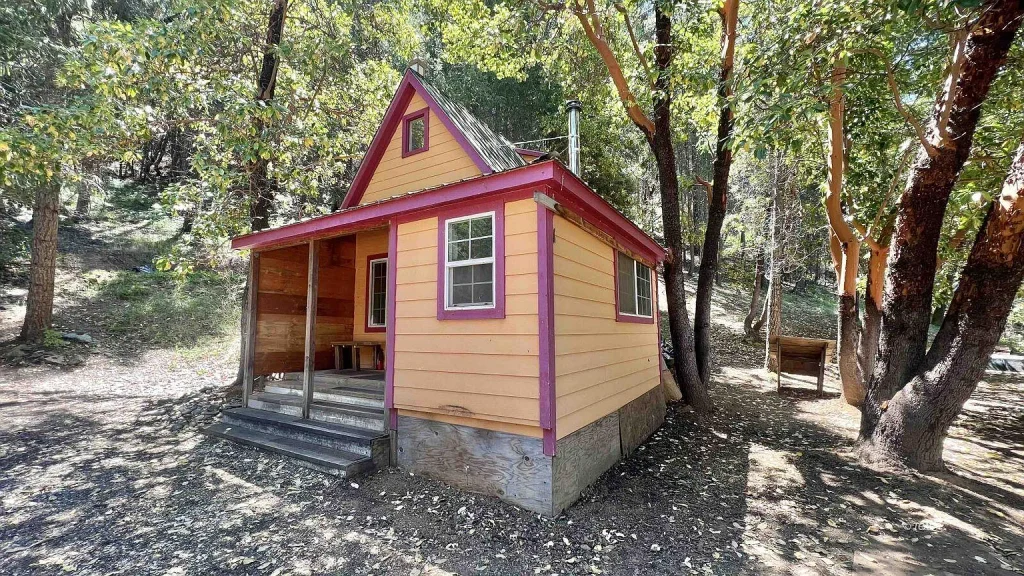
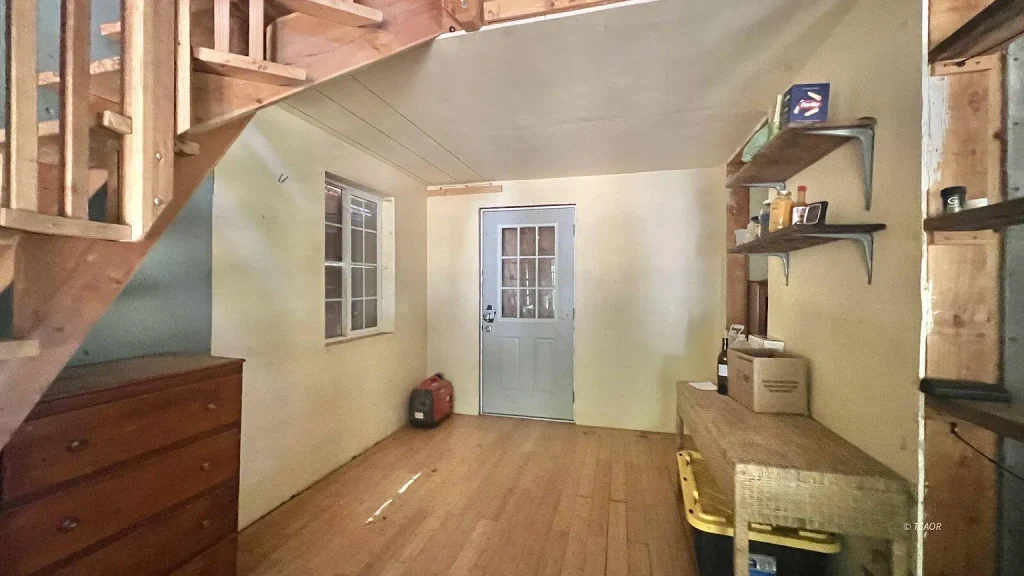
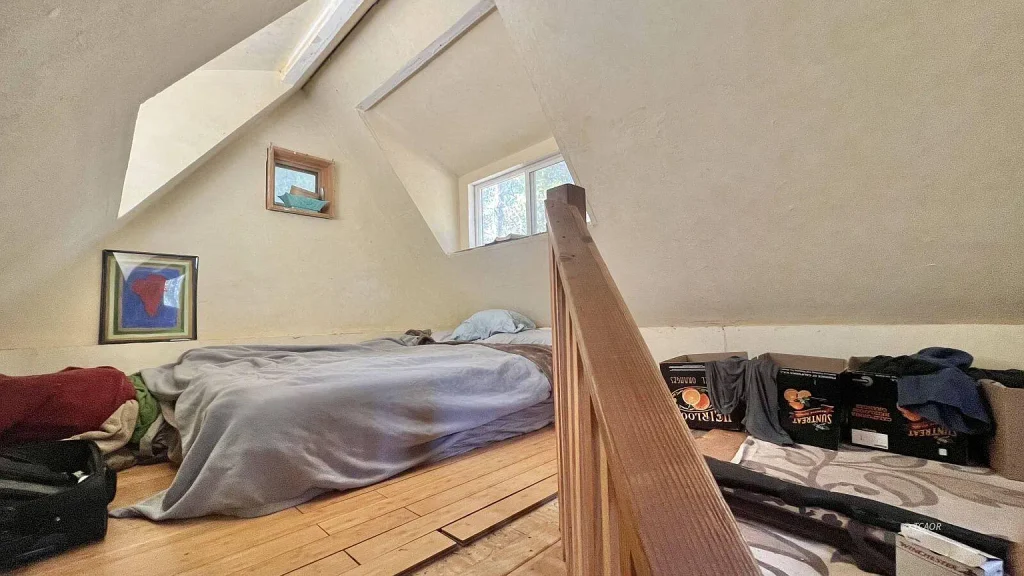
The listing describes an existing sleeping cabin with several practical features:
- Hardieboard-style exterior siding
- Dual-pane windows
- Metal roofing
- Sleeping loft
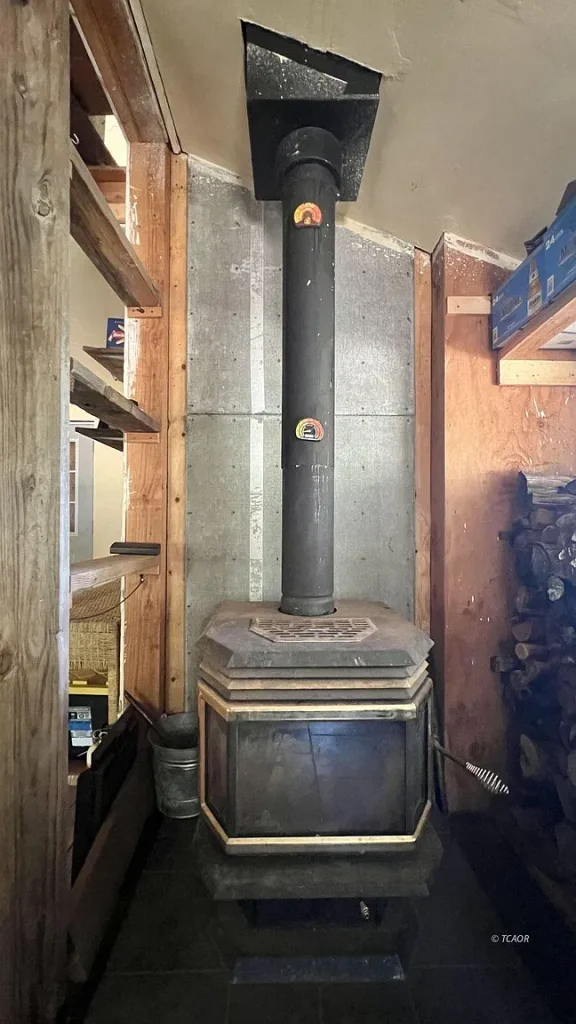
- Wood-burning stove
- Propane refrigerator
- Covered front porch
The photographs show a compact, cottage-style structure surrounded by mature trees.
For recreational use, having a weather-protected structure already on the property could be more convenient than starting with completely vacant land.
The wood stove may provide a source of heat, while the propane refrigerator offers an alternative to relying entirely on grid electricity.
But there is a critical detail: the cabin is described as non-conforming.
That means buyers should not assume it is a legally permitted residence, suitable for year-round occupancy, or eligible for conventional residential financing.
Before purchasing, ask the county building department whether the structure was permitted, what uses are legally allowed, and whether modifications would be required for residential occupancy.
A professional inspection should also evaluate the roof, foundation, framing, loft access, wood stove installation, chimney or flue, and any electrical or plumbing systems.
Water Infrastructure: A Valuable Feature That Needs Verification
Water is one of the most important considerations when buying remote California acreage.
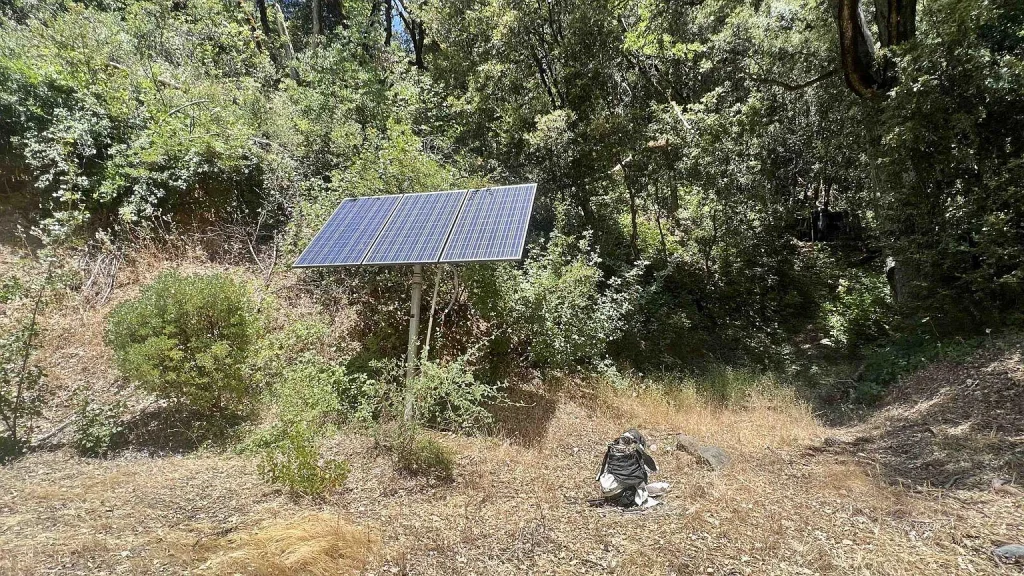
According to the seller’s description, this property has two solar-powered wells, each reportedly producing approximately 4 gallons per minute.
The listing also mentions five water storage tanks, buried water lines serving garden areas, and a developed spring.
If these systems are operational and legally usable, they could provide meaningful infrastructure for recreational visits, gardening, and other permitted activities.
Still, seller-reported water production should never be treated as a guarantee.
Well output can change with the season, groundwater conditions, pumping duration, and equipment performance. The advertised figures also do not establish drinking-water quality.
Buyers should request:
- Well permits, construction records, and pump information.
- A current professional flow or yield test for each well.
- Laboratory testing for drinking-water suitability.
- The capacity and condition of all five storage tanks.
- Inspection of solar panels, controllers, pumps, and buried water lines.
- Documentation of the developed spring and any associated water rights.
The presence of a spring does not automatically establish unrestricted rights to divert or use its water.
For additional guidance, the U.S. Environmental Protection Agency’s private wells resources explain important testing and maintenance considerations.
Solar Power and Off-Grid Living: What Is Actually Included?
The property is marketed as an off-grid recreational retreat, and the listing specifically identifies solar-powered well equipment.
However, solar-powered wells are not the same as a complete residential solar-electric system.
The listing information does not establish whether the cabin has a functioning whole-property solar array, battery storage, inverter, backup generator, or sufficient electrical capacity for normal household use.
Buyers interested in extended stays should confirm how lighting, refrigeration, communications, cooking equipment, and other electrical needs are supplied.
They should also ask whether the existing solar equipment and batteries are included in the sale and obtain an inspection of the system.
A realistic off-grid budget may need to account for additional electrical equipment, backup power, replacement batteries, and ongoing maintenance.
Outdoor Kitchen, Garden Areas, and Other Improvements
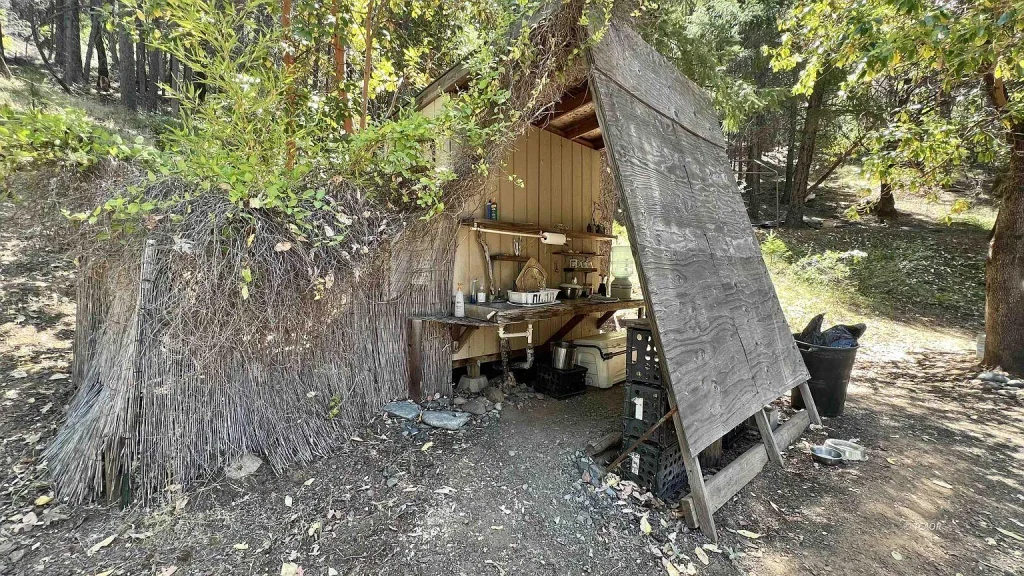
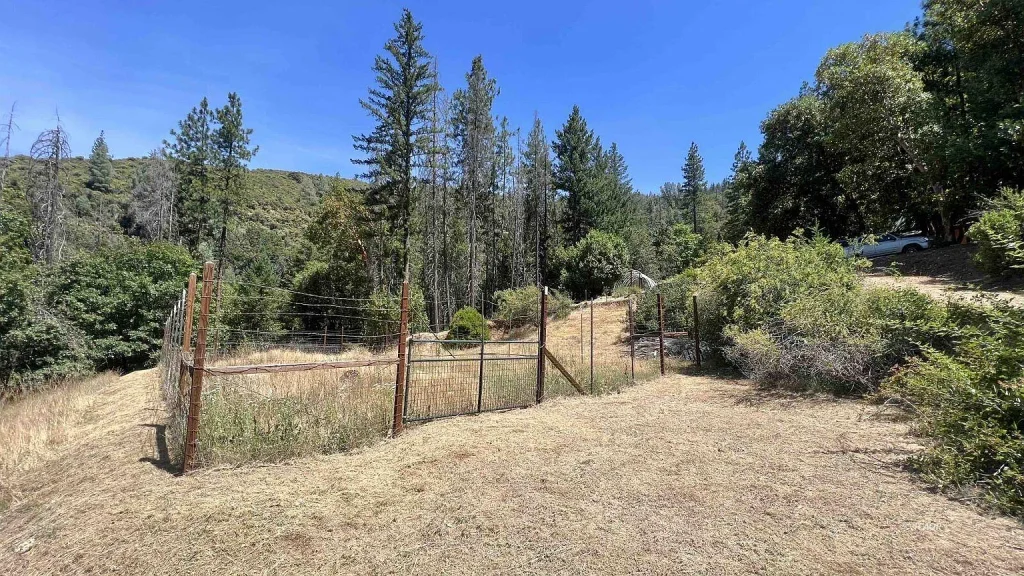
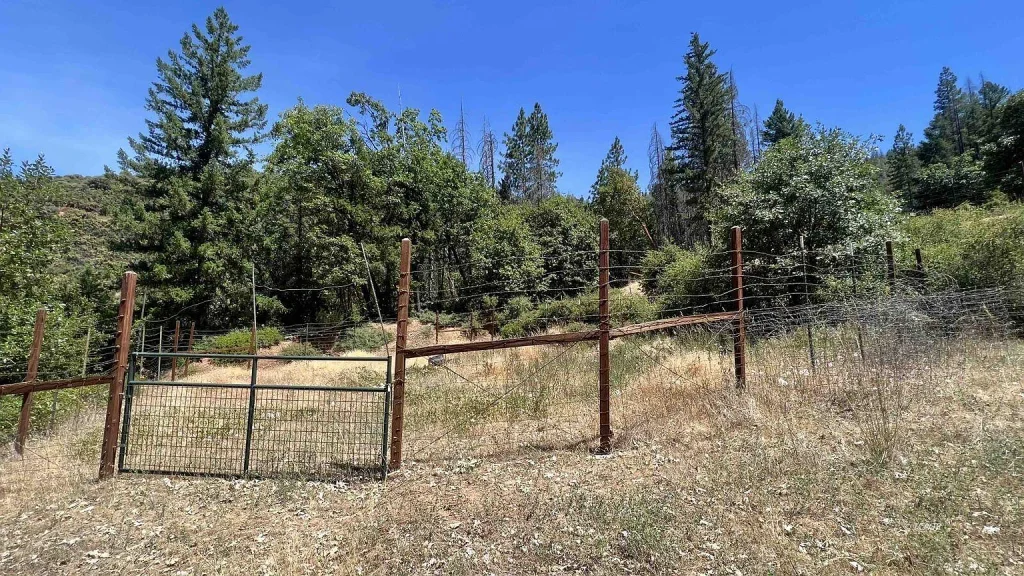
Beyond the cabin, the listing describes an outdoor kitchen supplied with water, a large fire ring, and multiple fenced garden areas.
These improvements may be useful for someone who enjoys outdoor cooking, seasonal gardening, or spending weekends on the property.
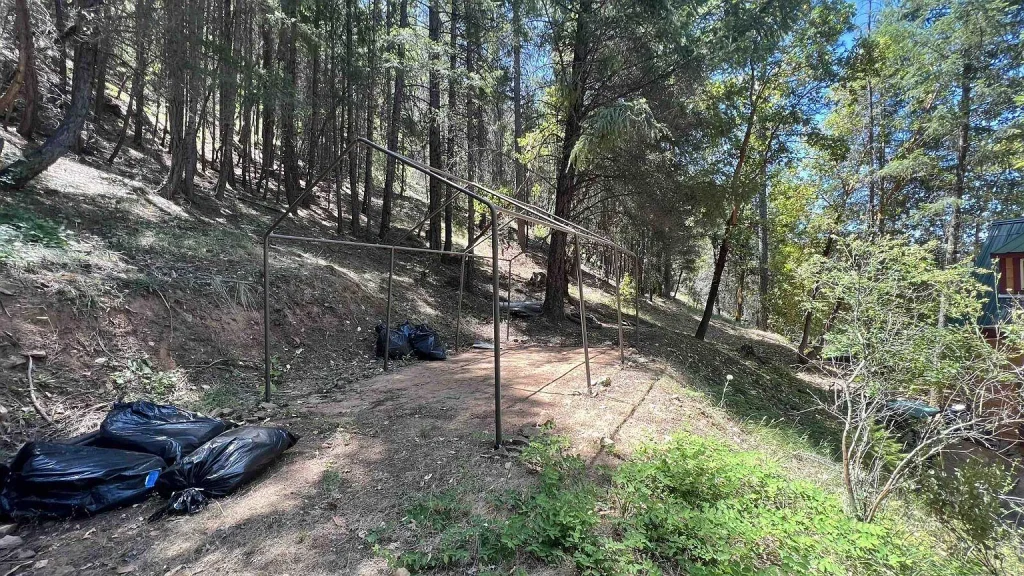
Photographs also show cleared areas, fencing, and additional simple outdoor structures.
However, the buyer should confirm which improvements are permanent, which are included in the sale, and whether any require permits.
Gardening success will depend on more than the presence of fencing and water lines. Soil quality, sunlight, slope, drainage, wildlife pressure, and seasonal water availability all matter.
A soil assessment can help determine whether particular areas are suitable for food production. The USDA Web Soil Survey is a useful starting point, although site-specific testing may still be necessary.
Fire restrictions also deserve attention. The presence of a fire ring does not mean open fires are always permitted, particularly during periods of elevated wildfire risk.
Road Access and Terrain: Two Major Due-Diligence Questions
Remote land can look attractive in aerial photographs while presenting practical access challenges.
The listing describes the property as secluded and identifies steep terrain in some areas. The photographs show unpaved routes through wooded surroundings.
Before making an offer, buyers should confirm whether the property has recorded legal access from a public road.
They should also investigate whether any portion of the route crosses neighboring private land, whether recorded easements exist, and who is responsible for road maintenance.
Physical access is equally important.
A road that is passable in dry summer weather may be difficult to use during heavy rain, storms, or periods of erosion. Buyers should assess drainage, road grade, vehicle clearance, and emergency-service accessibility.
For a property intended as a recreational retreat, these questions can determine how often the land can realistically be enjoyed.
Wildfire Exposure and Property Insurance
A wooded California mountain property requires careful wildfire planning.
Trees and natural vegetation contribute to the property’s privacy and scenery, but they can also create fuel near structures and access roads.
Buyers should investigate local wildfire hazard classifications, defensible-space requirements, evacuation routes, and the cost and availability of insurance.
A useful starting point is CAL FIRE’s wildfire preparedness information.
Insurance should be discussed before purchase, not after closing. Coverage for a non-conforming recreational cabin may differ significantly from standard homeowners insurance.
Buyers should also confirm whether the property can be insured for their intended use and whether any vegetation management or structural improvements will be required.
Understanding the $139,000 Asking Price
At the advertised price of $139,000, the simple calculation works out to approximately:
$1,738 per acre.
However, that figure includes the existing cabin and other improvements. It should not be treated as a direct comparison with undeveloped acreage.
The listing history also provides useful context.
| Date | Reported Listing Price |
|---|---|
| June 27, 2025 | $199,000 |
| August 27, 2025 | $175,000 |
| November 11, 2025 | $149,000 |
| December 25, 2025 | Listing removed |
| October 13, 2026 | $139,000 |
The current asking price is $60,000 lower than the June 2025 initial asking price, a reduction of approximately 30.2%.
That does not necessarily mean the property is undervalued or that the seller will accept a lower offer. Listing prices are not the same as completed sale prices.
The more useful question is how the property’s asking price compares with recent closed sales of similar remote acreage in Trinity County, after accounting for access, usable terrain, water, permits, and improvements.
Buyers should also budget for inspections, title review, potential surveys, equipment repairs, vegetation management, road maintenance, insurance, and any future construction.
Owner Financing May Be Possible
The listing includes “Owner May Carry” among its financing terms.
This suggests that the seller may consider some form of seller financing, but it does not establish the down payment, interest rate, repayment period, or other conditions.
Anyone considering this option should request written terms and have the proposed agreement reviewed by a qualified real estate attorney or other appropriate professional.
Seller financing does not eliminate the need for a title search, property inspections, legal-access verification, or a clear understanding of permitted uses.
Conventional lenders may also treat this property differently from a standard residential home because it is classified as unimproved land and includes a non-conforming cabin.
Who Might Find This Property Interesting?
This property could be worth investigating for several types of buyers.
Recreational land buyers may appreciate the wooded acreage, mountain setting, and existing sleeping shelter.
Off-grid enthusiasts may be interested in the water-storage infrastructure and solar-powered wells, provided the systems are independently verified.
Gardeners or homestead planners may see potential in the fenced growing areas, but they should confirm permitted uses, suitable soils, and year-round water availability.
Buyers seeking a future building site should first determine whether residential construction is allowed and whether a suitable, legally accessible building area exists.
It is less suitable for someone expecting a conventional, move-in-ready home with verified residential permits and standard utility services.
Buyer Checklist: What to Verify Before Making an Offer
For this particular property, the most important due-diligence questions are:
- Legal access: Is there recorded, insurable access to the parcel?
- Cabin status: What does “non-conforming” mean under the applicable county rules?
- Permits: Are the cabin and other improvements legally permitted?
- Water: Do the wells produce the claimed flow rates, and is the water suitable for the intended use?
- Spring rights: What documentation supports use of the developed spring?
- Electricity: What solar equipment is included, and what does it actually power?
- Wastewater: Is there a permitted septic system or another legally approved sanitation arrangement?
- Terrain: How much of the 80 acres is practically accessible and usable?
- Wildfire: What are the applicable hazard classifications, defensible-space requirements, and insurance options?
- Title and boundaries: Are there easements, liens, encroachments, or restrictions affecting the parcel?
- Costs: What repairs and ongoing maintenance will be needed before the property can serve its intended purpose?
A qualified local real estate professional, title company, surveyor, and relevant inspectors can help answer these questions.
Final Thoughts: Is This 80-Acre California Retreat Worth Exploring?
The appeal of 5300 Cabin Gulch Road is understandable.
For an asking price of $139,000, the listing combines 80 acres of secluded mountain land with an existing small cabin, solar-powered water equipment, storage tanks, and outdoor improvements.
Those features make it more interesting than a completely undeveloped parcel.
But the property’s unimproved-land classification, non-conforming cabin, varied terrain, and unverified infrastructure are significant considerations.
For the right buyer, it may offer an opportunity to create a private recreational base or pursue a carefully planned rural project. For someone expecting a fully permitted, ready-to-occupy home, it could involve more expense and uncertainty than the asking price initially suggests.
The strongest buying decision will come from verifying the legal and physical realities of the property—not simply the acreage or the photographs.







View the Original Property Listing
For current availability, additional photographs, seller disclosures, and contact information, visit:
5300 Cabin Gulch Rd, Douglas City, CA — Zillow Property Listing
Disclaimer: This article is for informational and educational purposes only. It is based on publicly presented listing details supplied for review and is not an independent inspection, appraisal, legal opinion, or investment recommendation. Property information, price, availability, permits, and financing terms may change. Buyers should independently verify all material facts before purchasing.