For buyers searching for privacy, acreage and a home far removed from a typical suburban neighborhood, this West Virginia property offers an unusual combination.
Located near Macfarlan, West Virginia, the property is currently listed for $179,900 and includes approximately 62.25 acres, a two-bedroom cabin-style home, a pond, several outbuildings and extensive wooded surroundings.
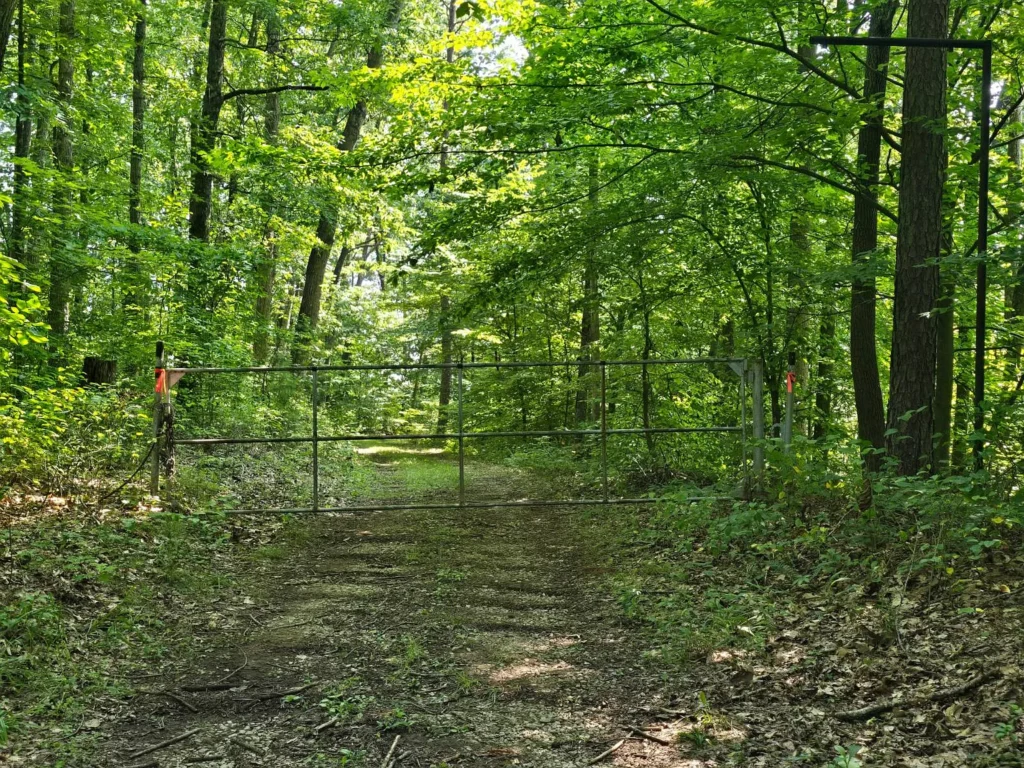
Perhaps the most unusual feature is its location. According to the listing information, the property sits approximately three miles down an unserviced road from Munday Road before reaching the gated property.
That degree of isolation will certainly not appeal to every homebuyer. But for someone specifically searching for a private West Virginia homestead, hunting property, recreational acreage or rural retreat, it could be exactly what makes the property interesting.
Property Overview
| Property Detail | Information |
|---|---|
| Asking Price | $179,900 |
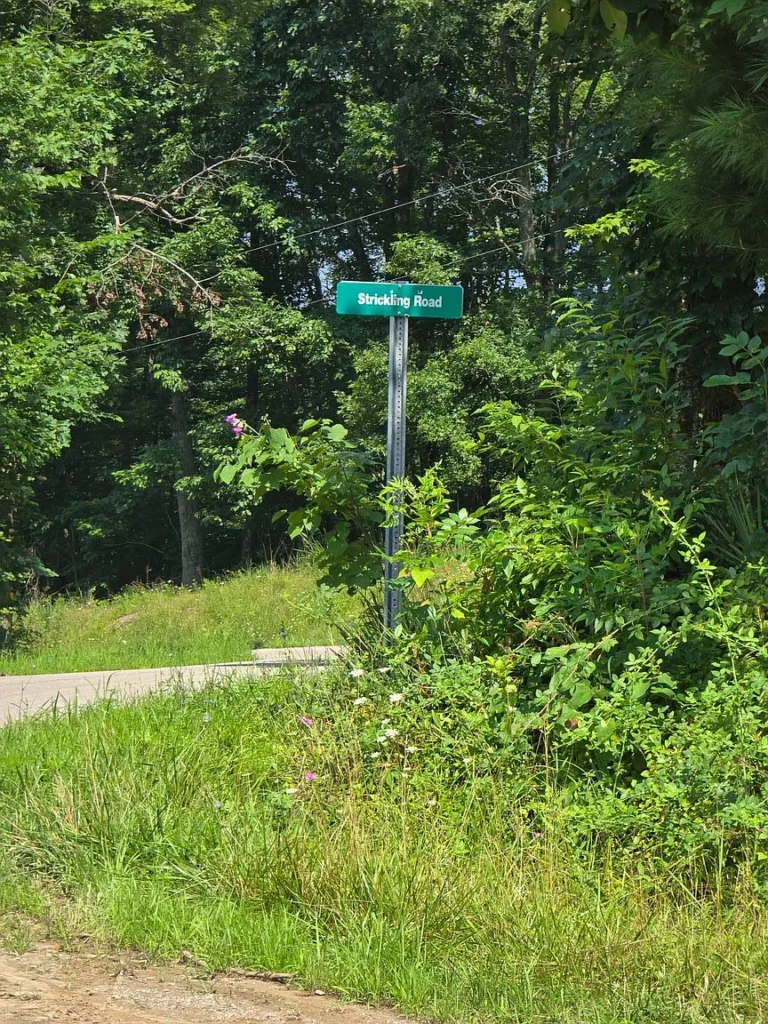
| Location | 0 Strickling Rd, Macfarlan, WV 26148 |
| Property Type | Single-Family Residence |
| Land | 62.25 acres |
| Bedrooms | 2 |
| Bathrooms | 1 |
| Year Built | 2005 |
| Approx. Price Per Acre* | $2,890 |
| Architecture | Ranch |
| Stories | 1 |
| Annual Property Tax | $405 |
| HOA | None listed |
| Heating | Propane + wood-burning stove |
| Cooling | Wall/window units |
| Septic | Private septic |
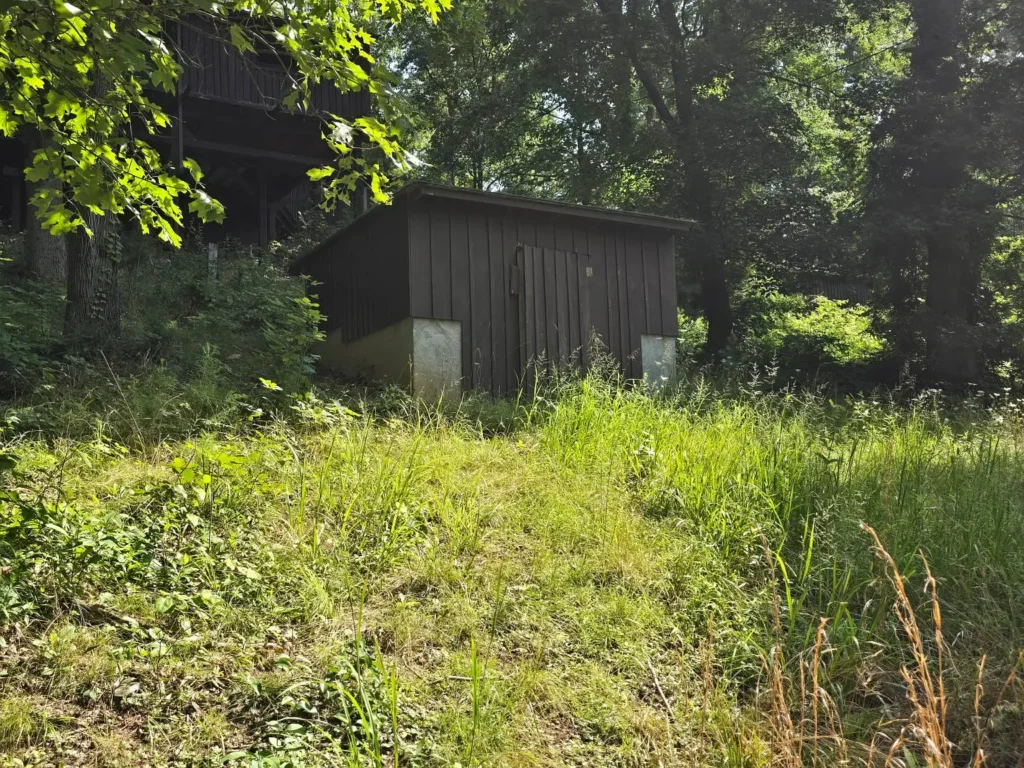
| Water | Rainwater cistern system reported |
| Additional Structures | Sheds/outbuildings + cistern house |
| Views | Woods, pond, mountain/scenic |
| Mineral Rights | Reported to convey with property |
*The price-per-acre calculation divides the entire $179,900 asking price by 62.25 acres. Because the sale also includes a residence and other improvements, this should not be interpreted as the market value of the raw land.
Why This West Virginia Property Stands Out
At first glance, the acreage is probably the number that stands out most.
Dividing the asking price by the total land area gives:
$179,900 ÷ 62.25 acres ≈ $2,890 per acre.
But this property should not be compared directly with vacant land priced at roughly $2,890 per acre.
The $179,900 asking price includes more than acreage. There is an existing residence, electrical service, septic system, water collection system, pond and additional structures.
Therefore, the simple price-per-acre calculation is useful for understanding scale, but not for determining whether the property is undervalued.
A proper valuation would require comparable sales involving similarly remote West Virginia properties with substantial acreage and residential improvements.
A Different Kind of West Virginia Home
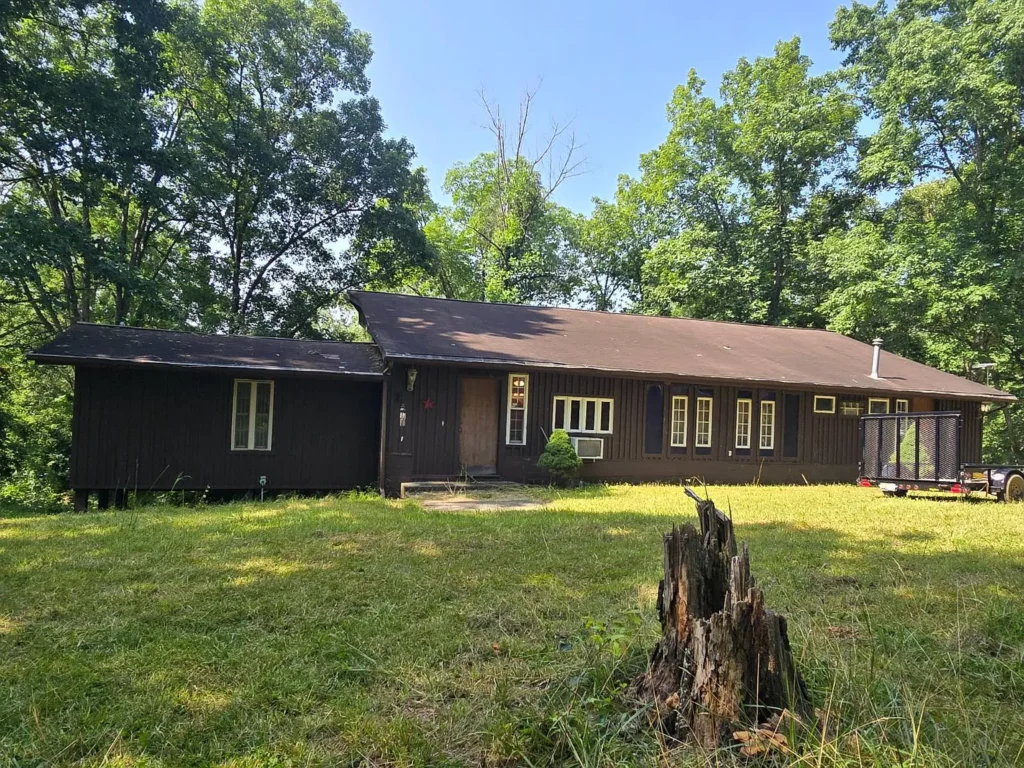
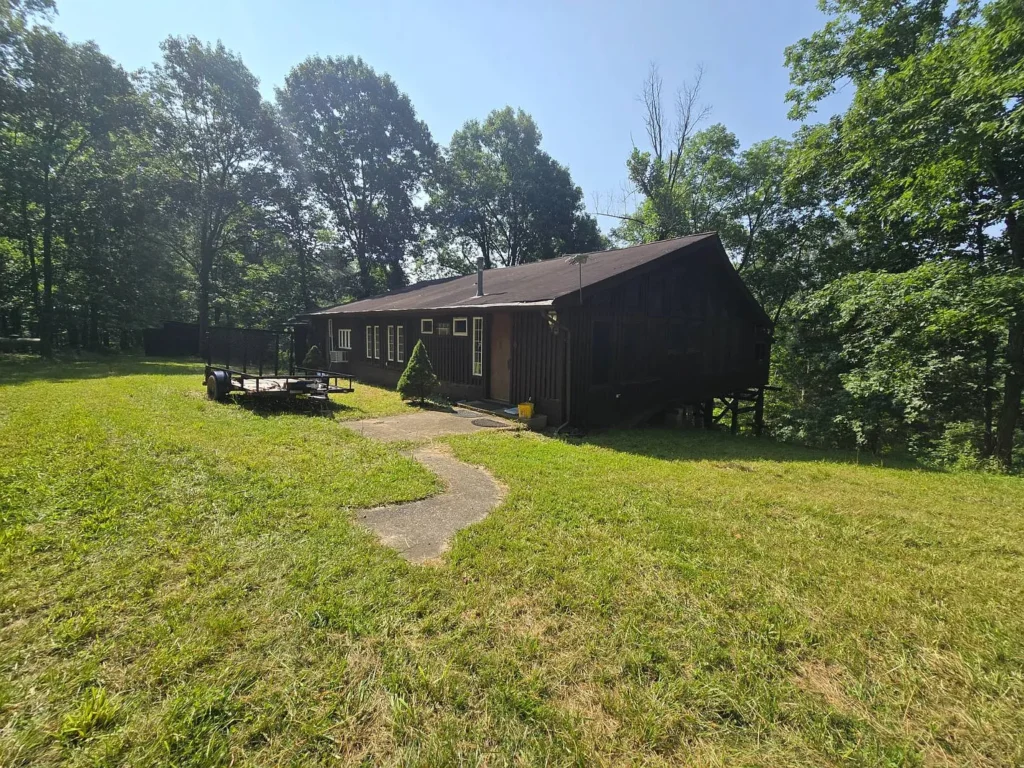
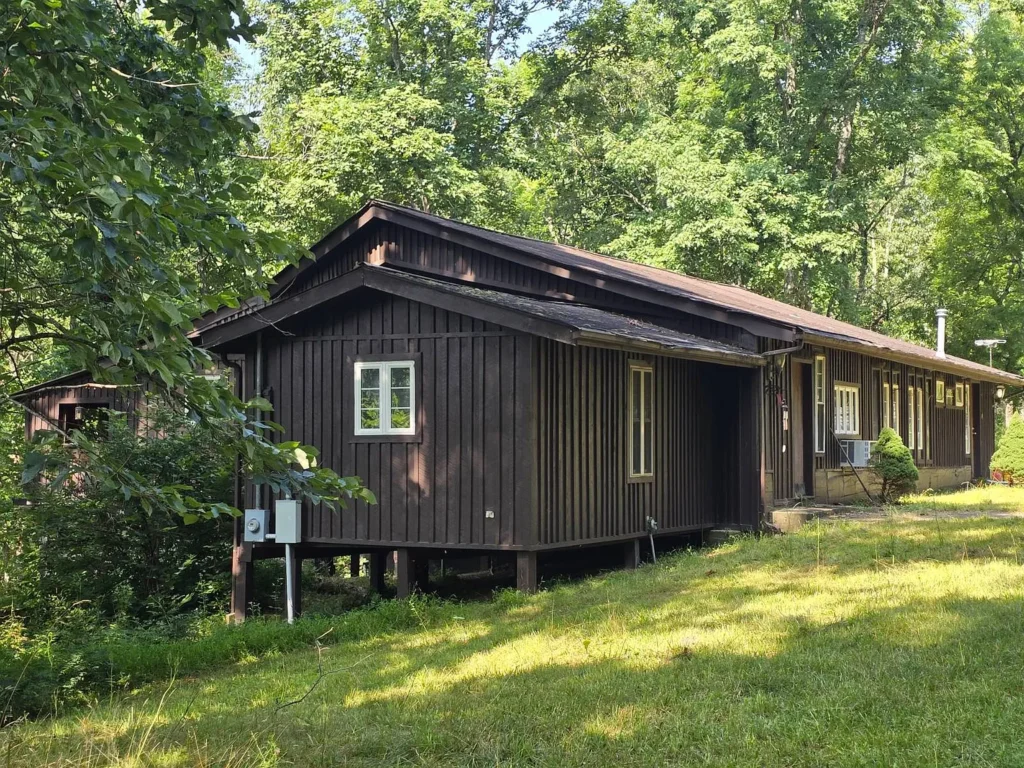
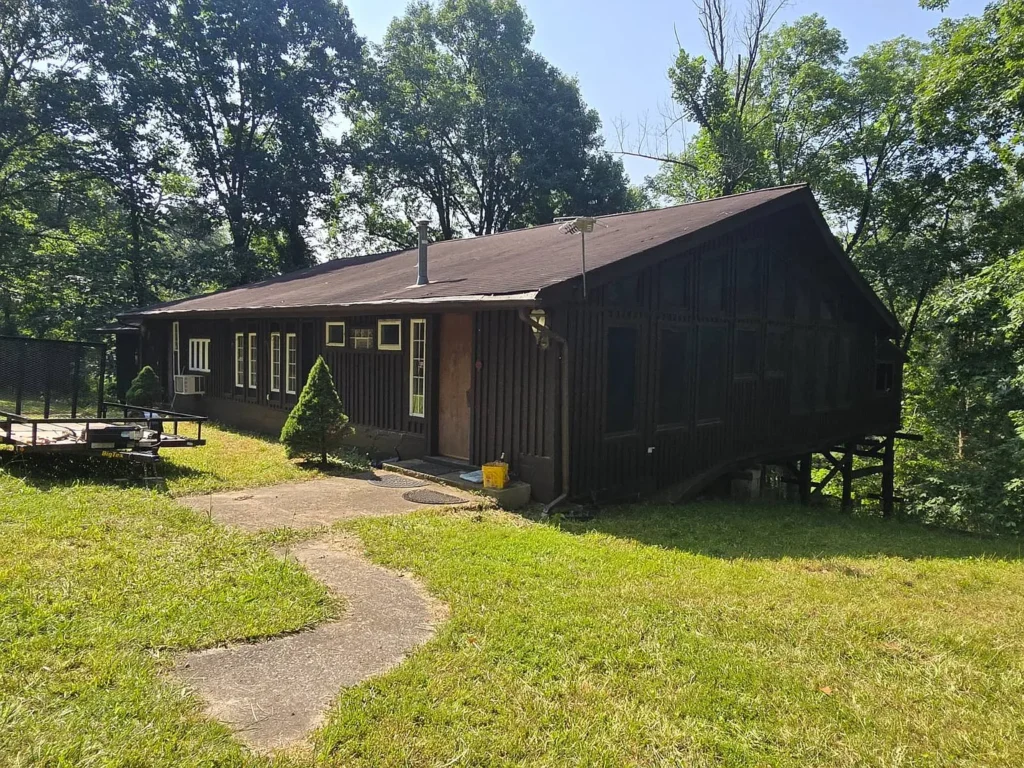
This isn’t a conventional house on a small lot.
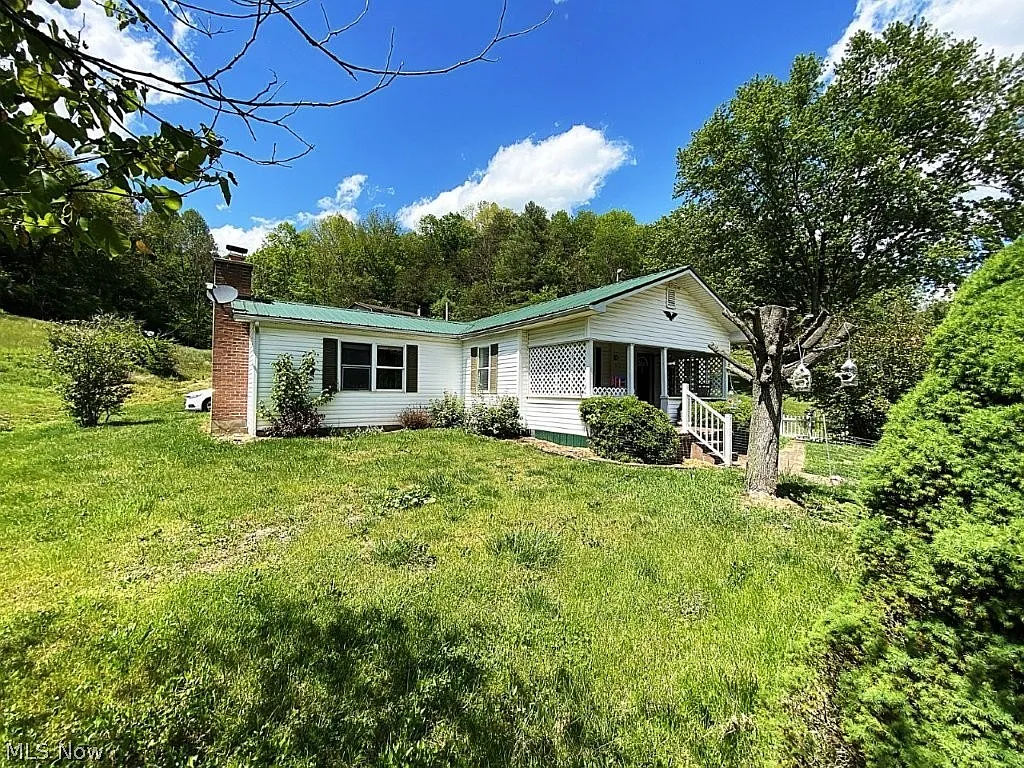
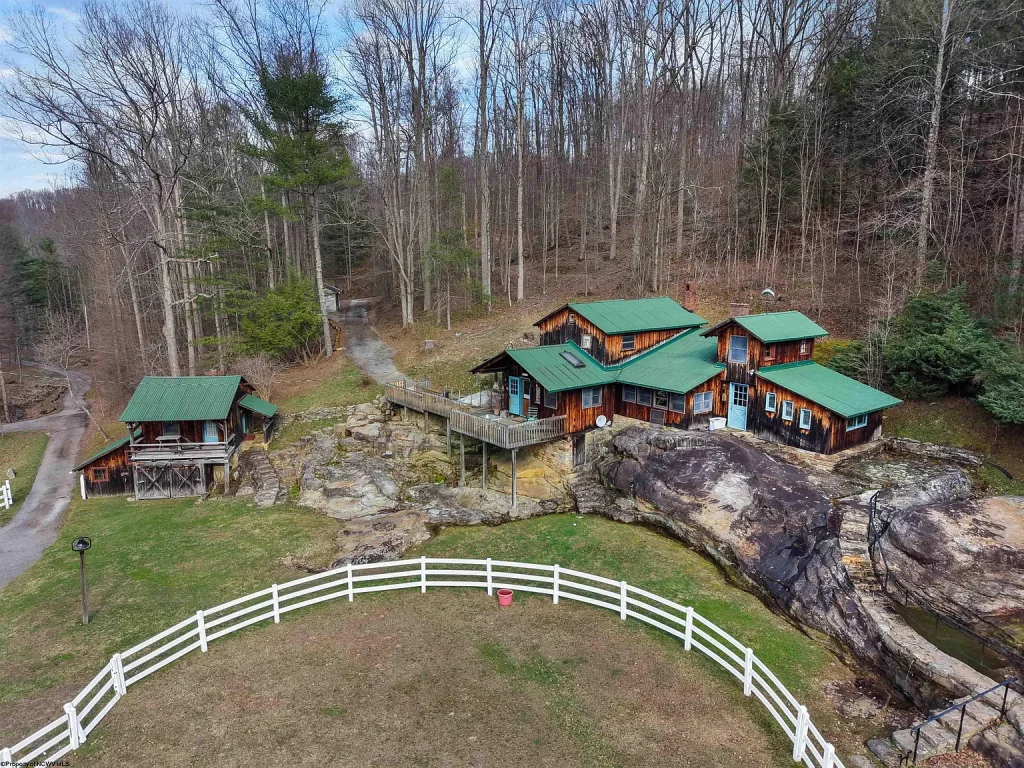
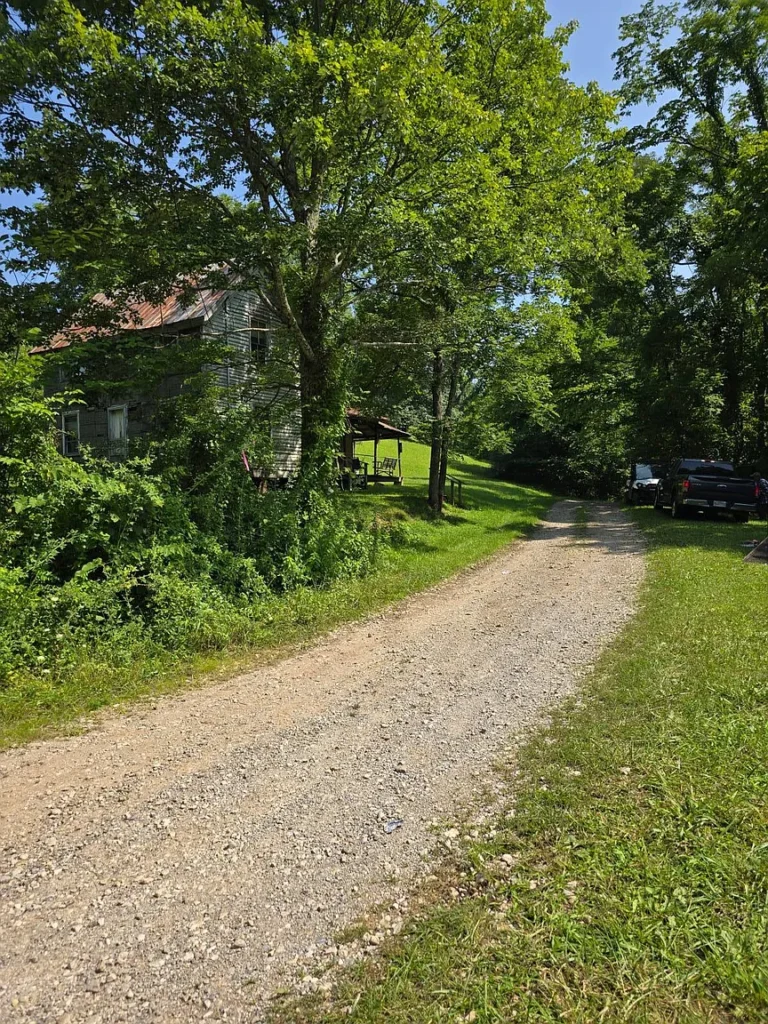
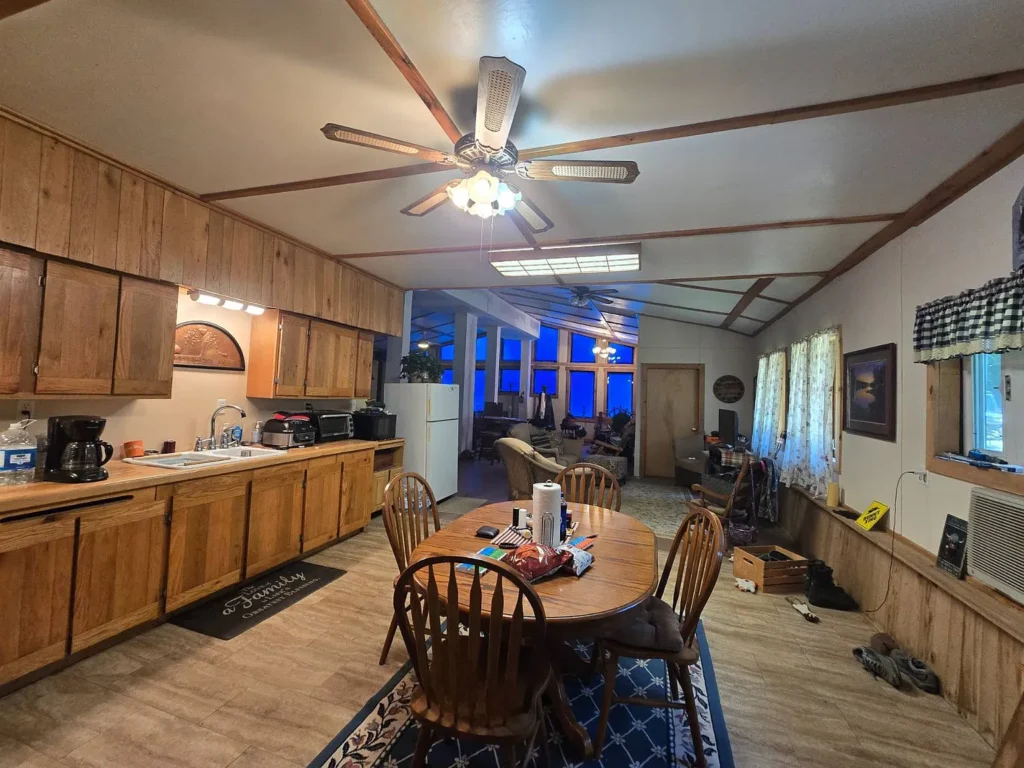
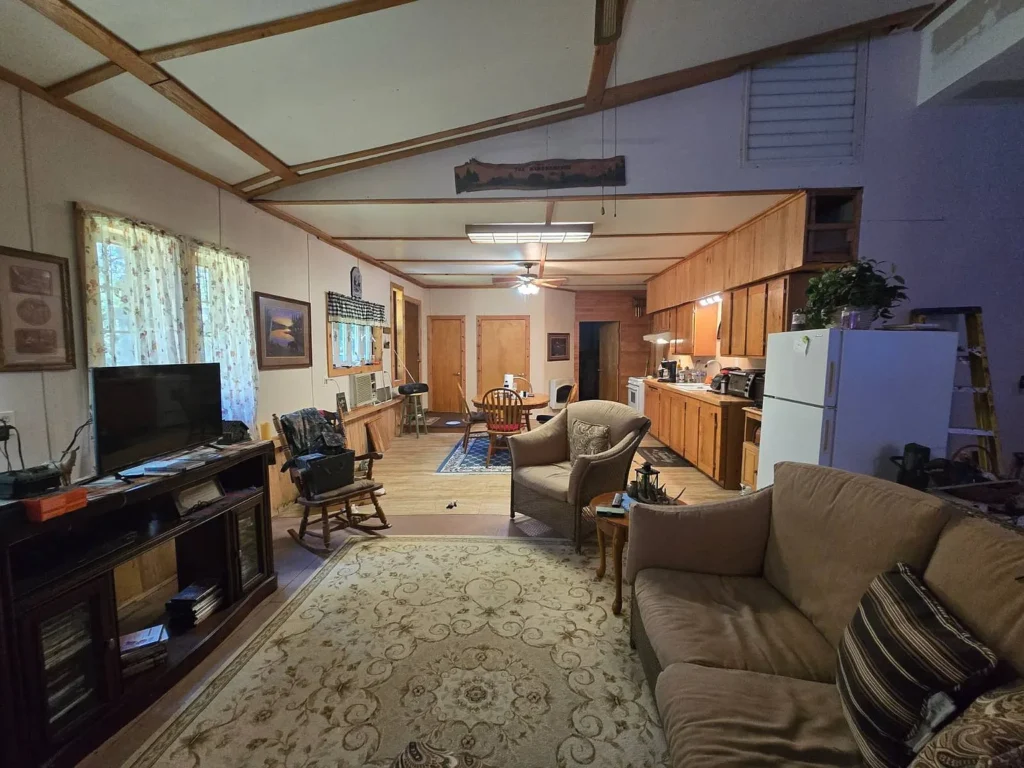
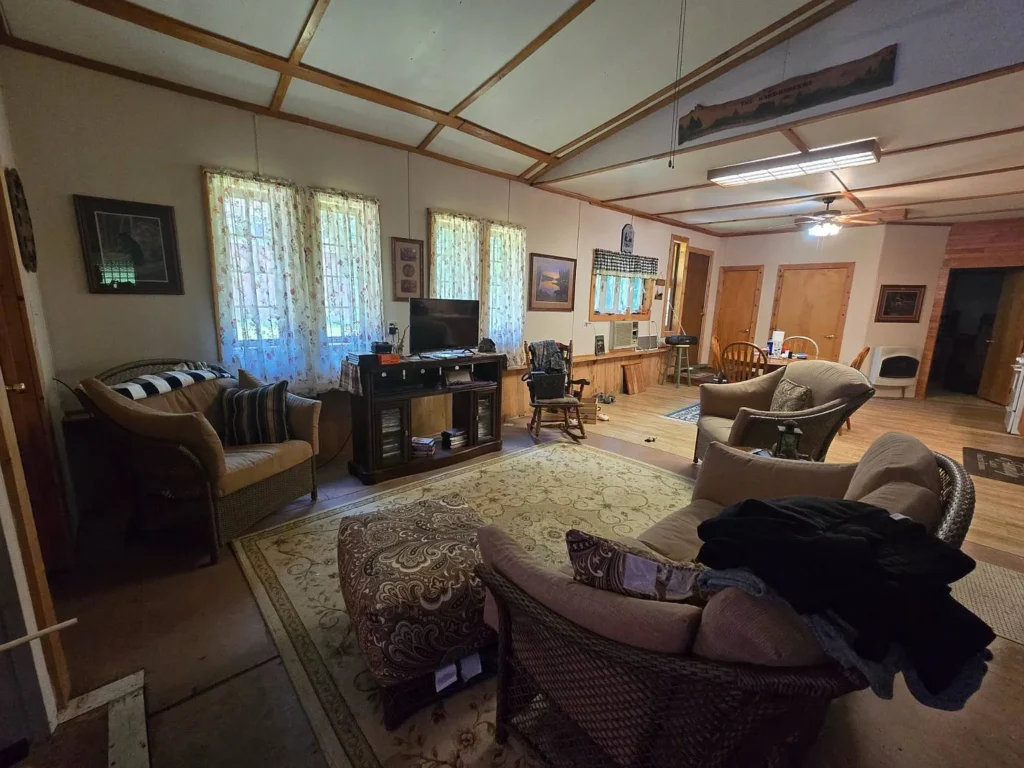
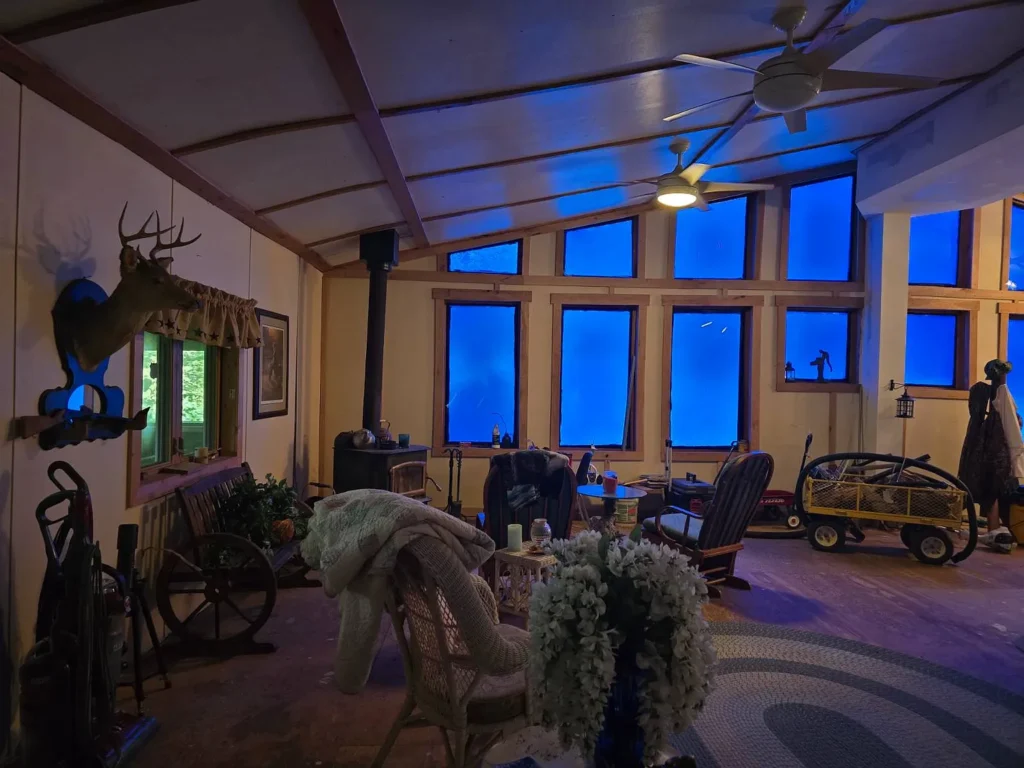
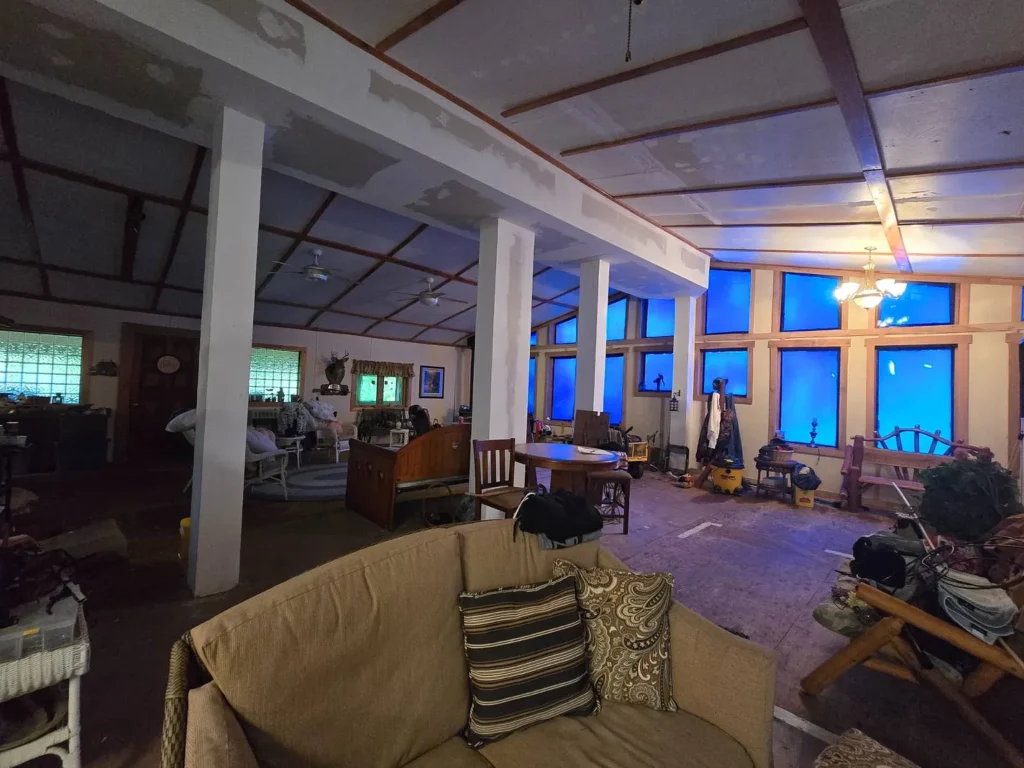
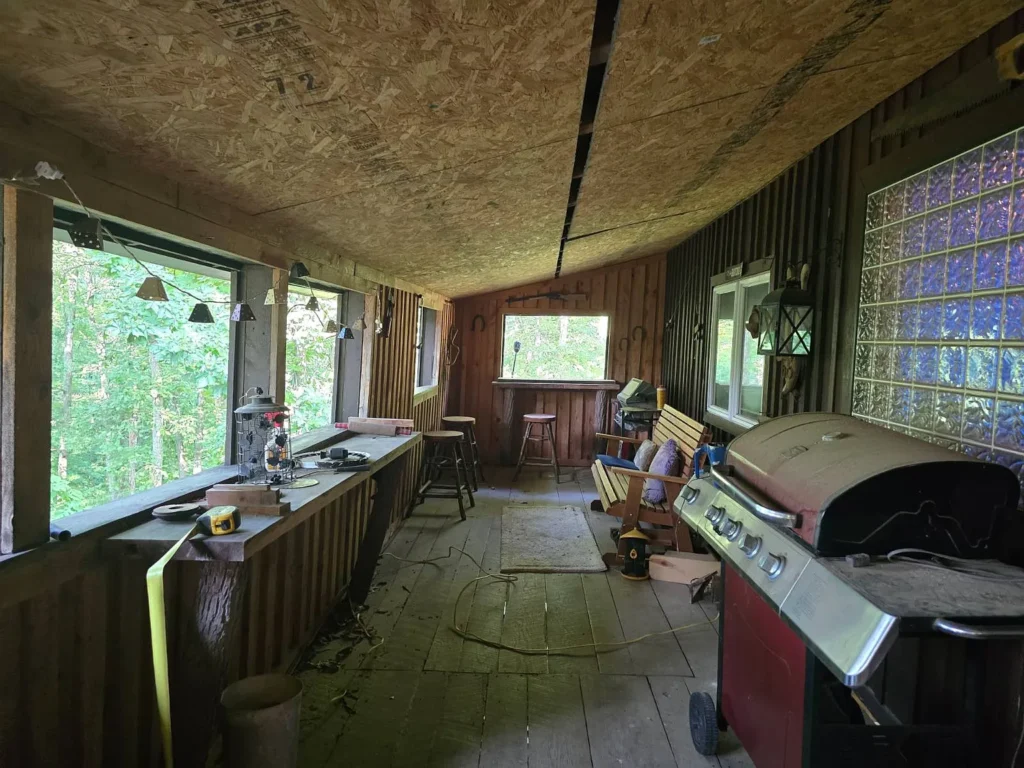
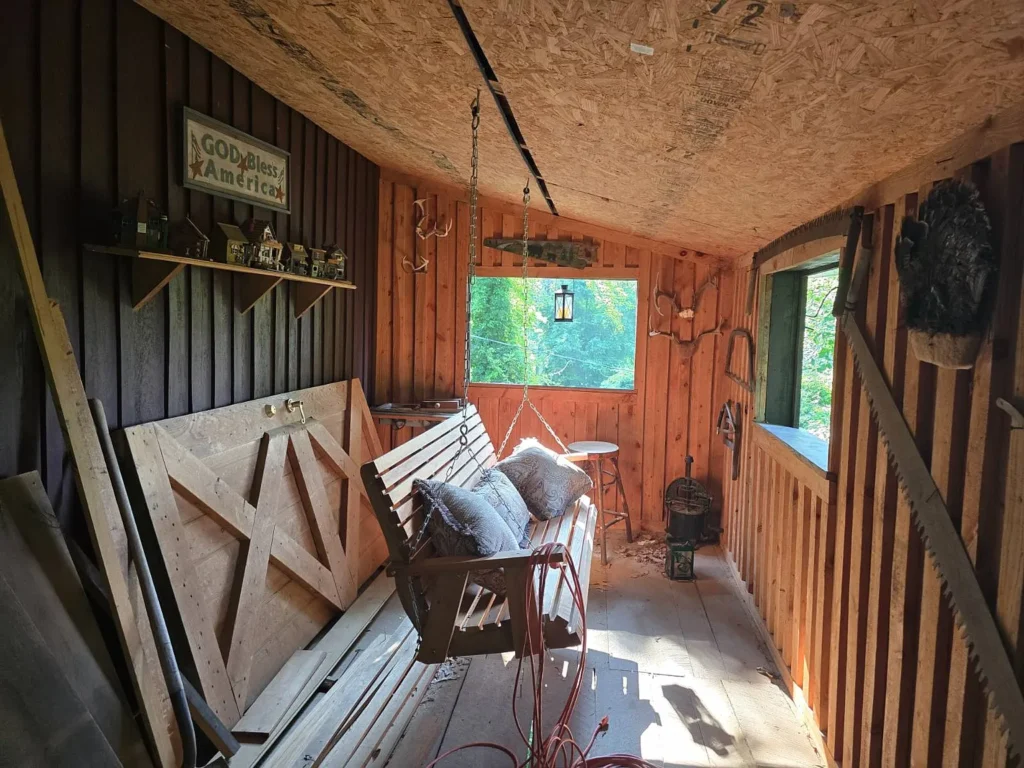
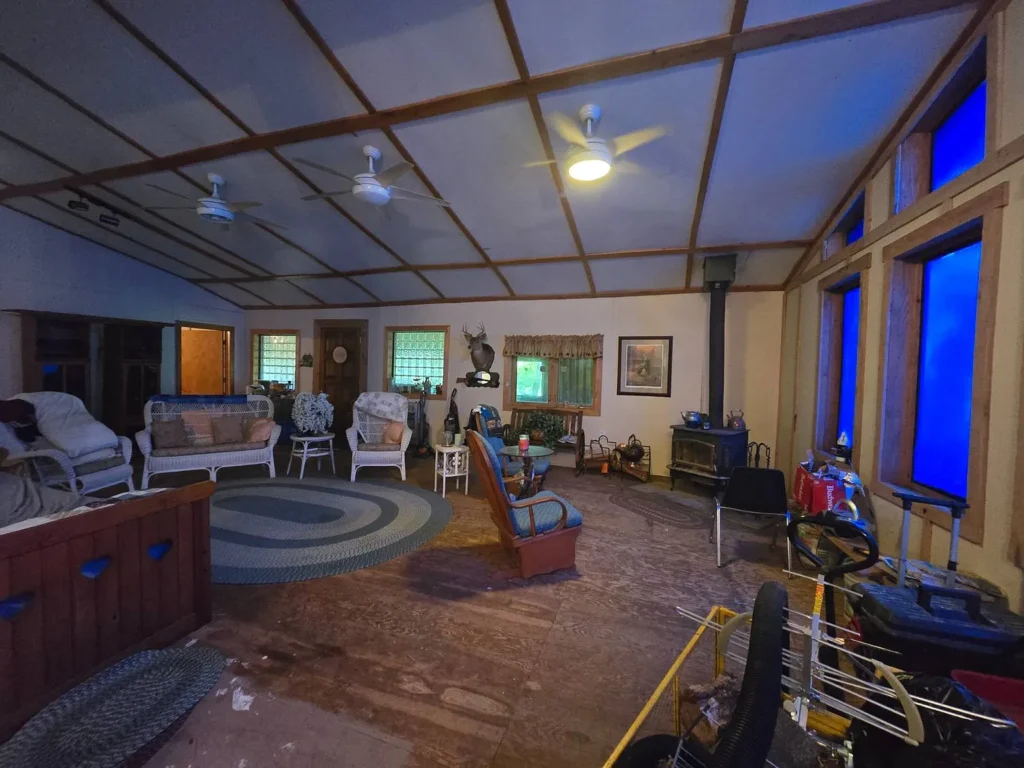
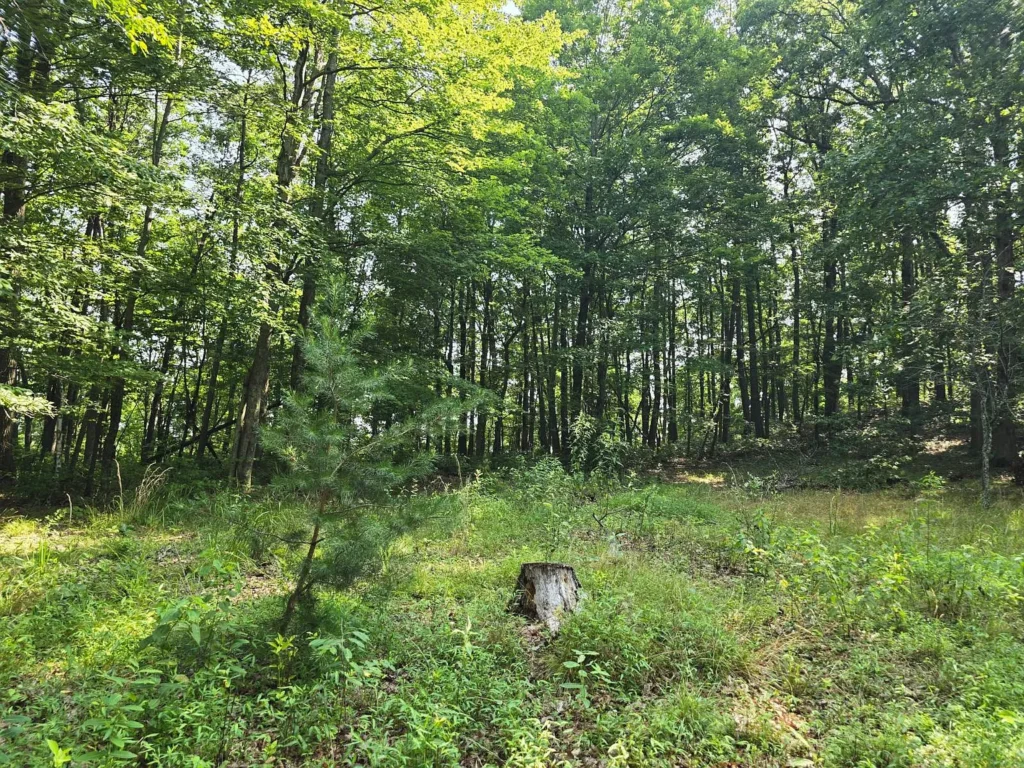
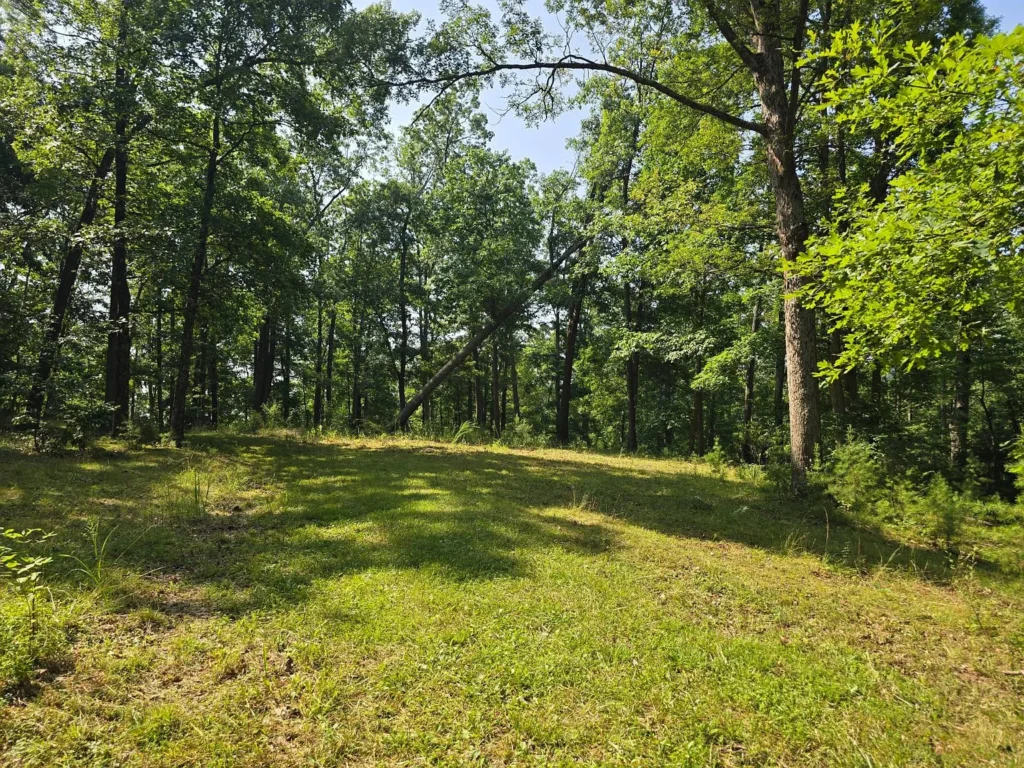
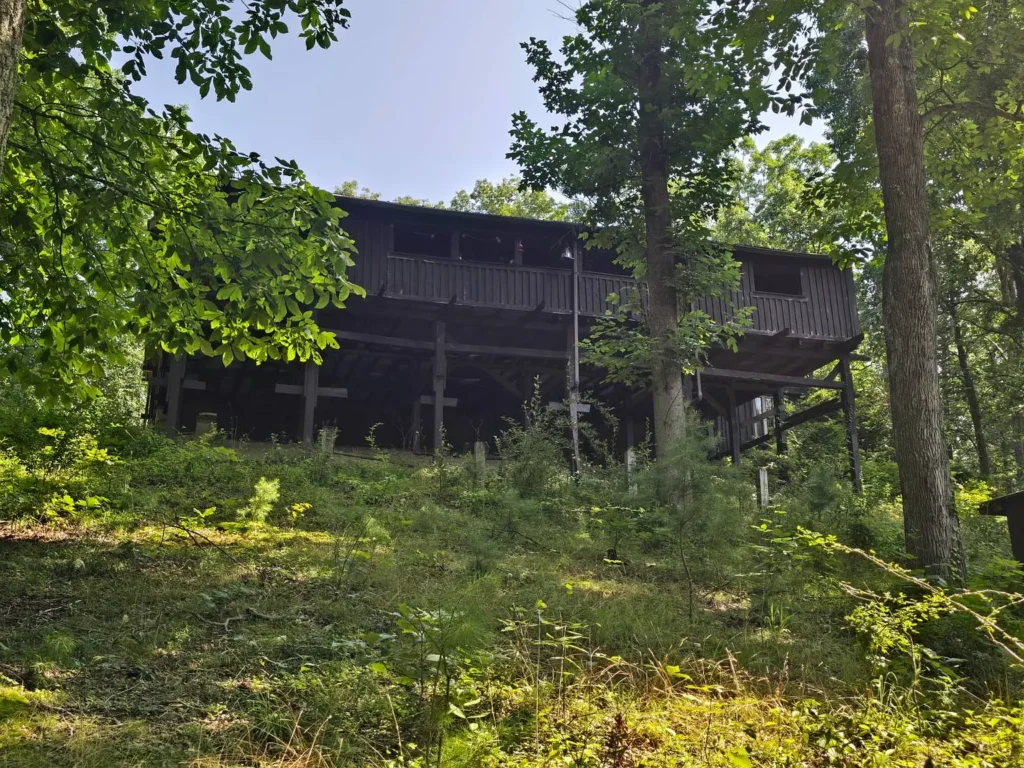
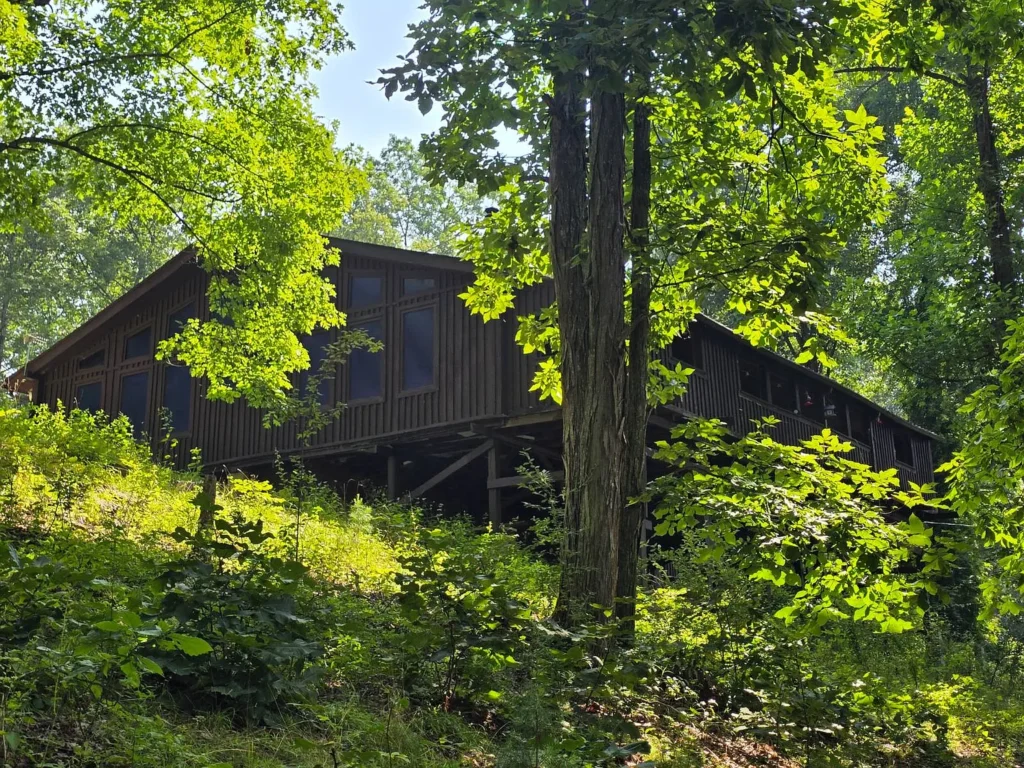
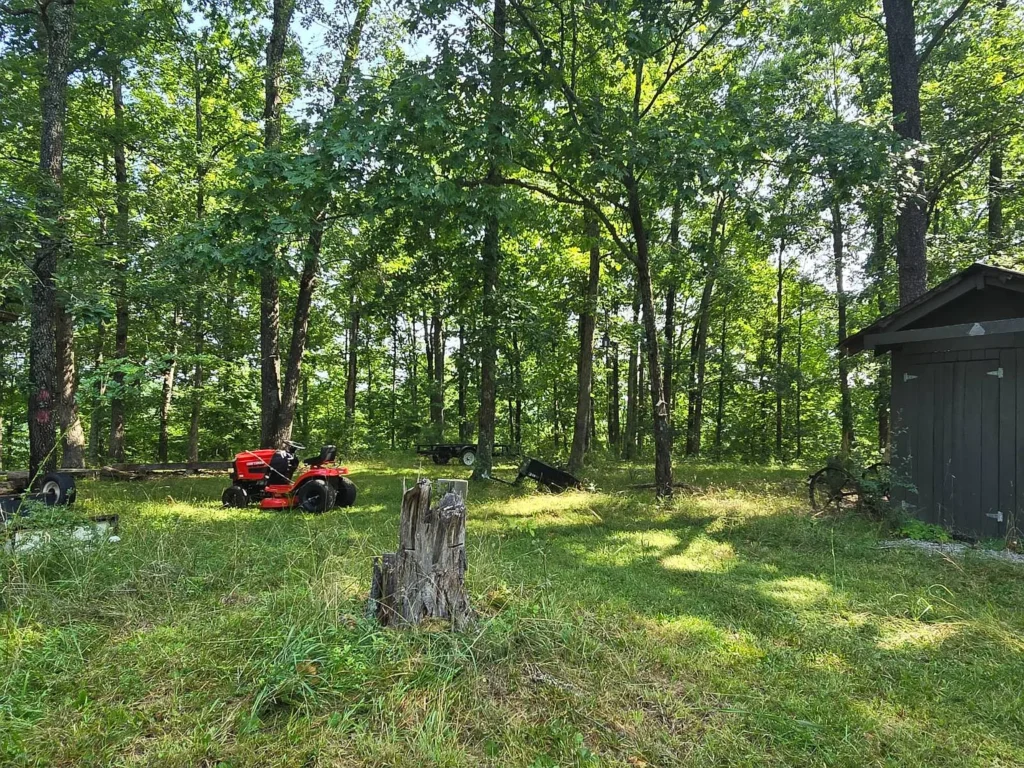
Based on the supplied photographs, the home sits within a heavily wooded environment with substantial separation from surrounding development. The exterior has a rustic cabin appearance, while the interior appears designed around a large, open living space.
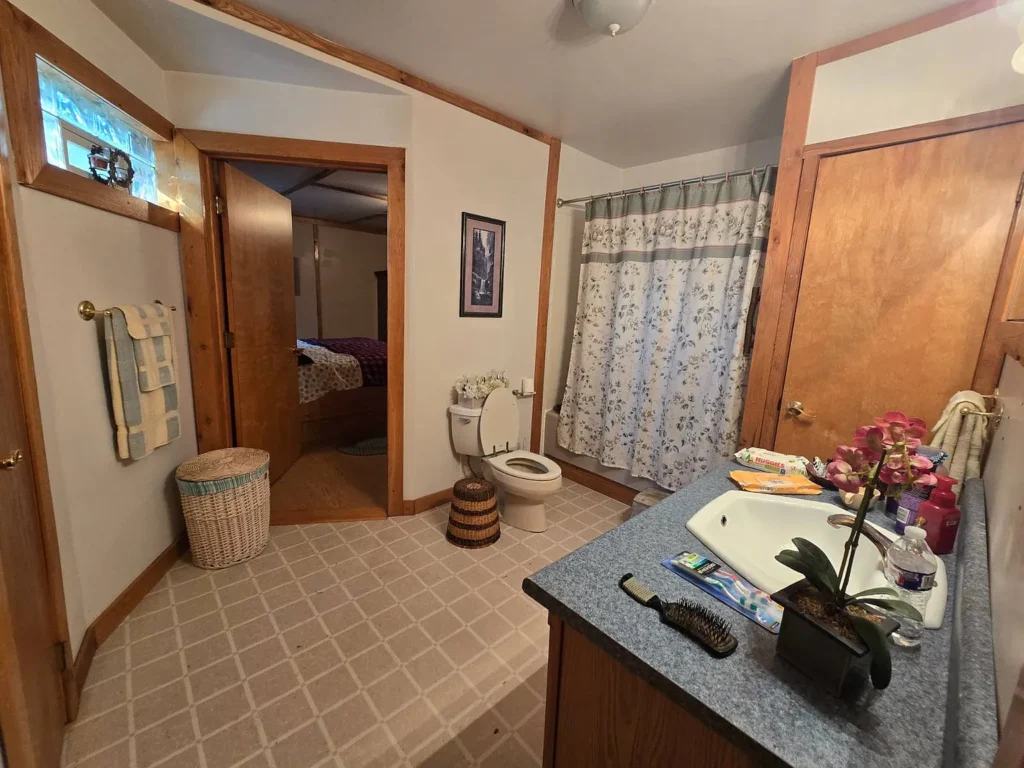
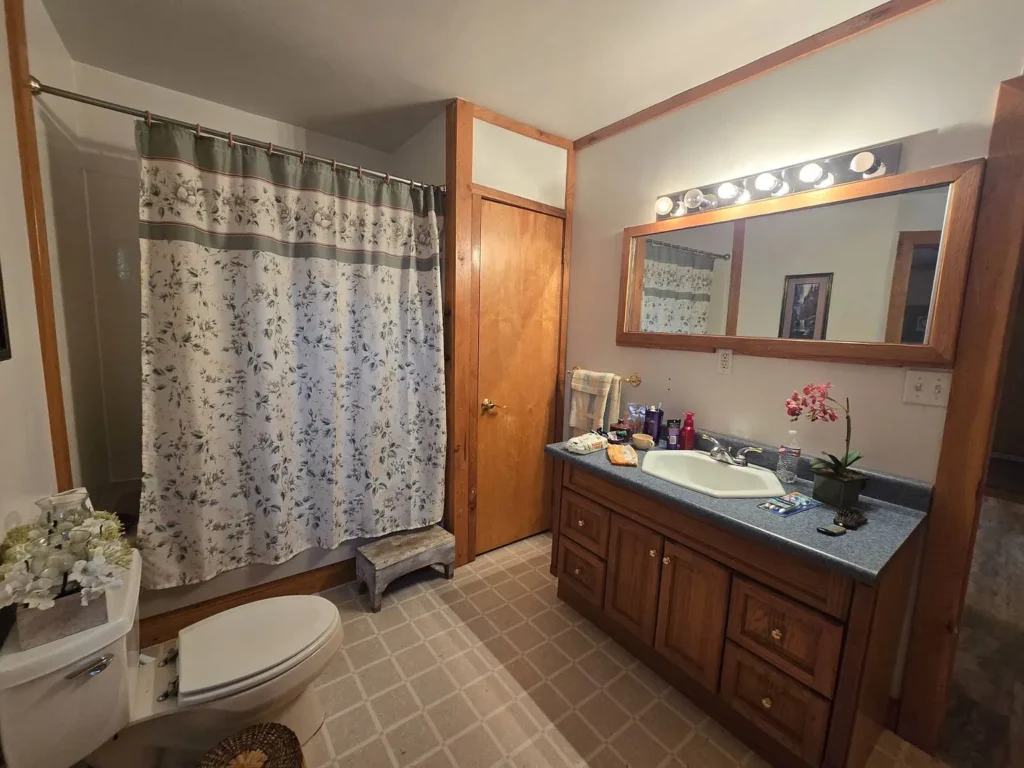
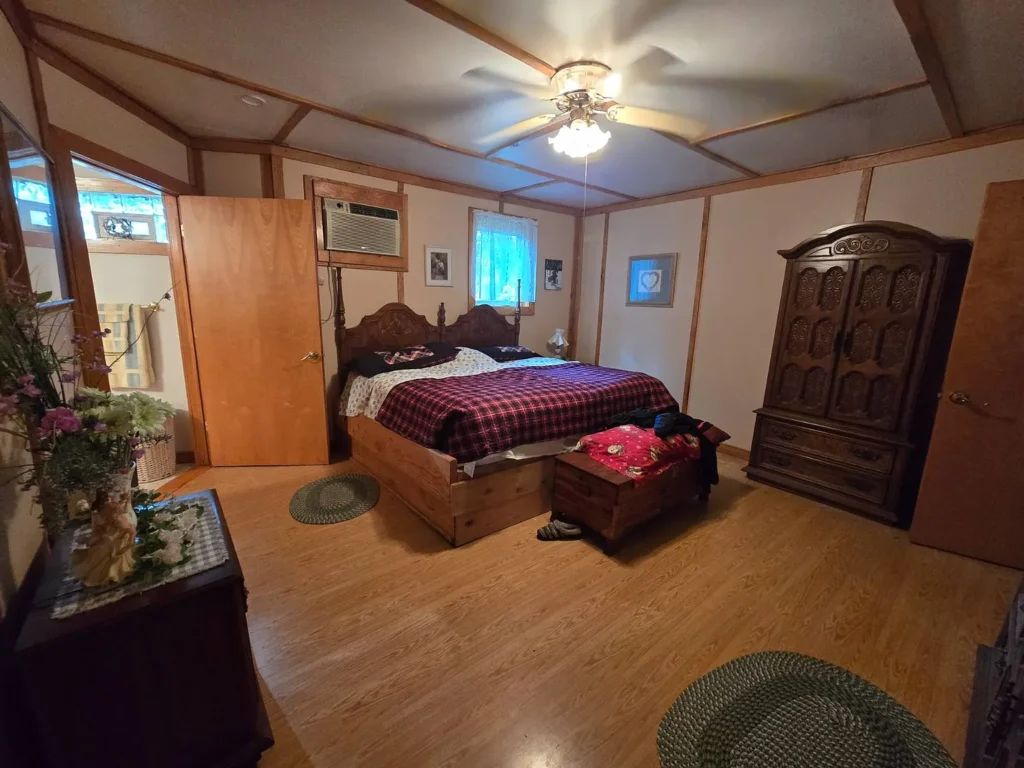
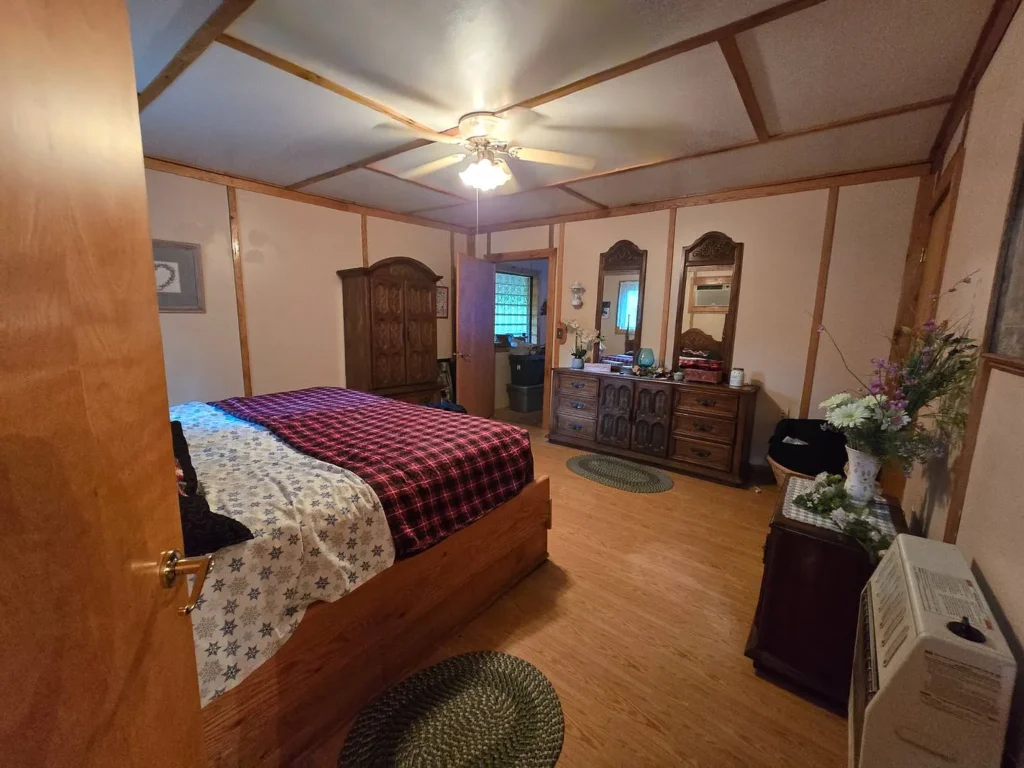
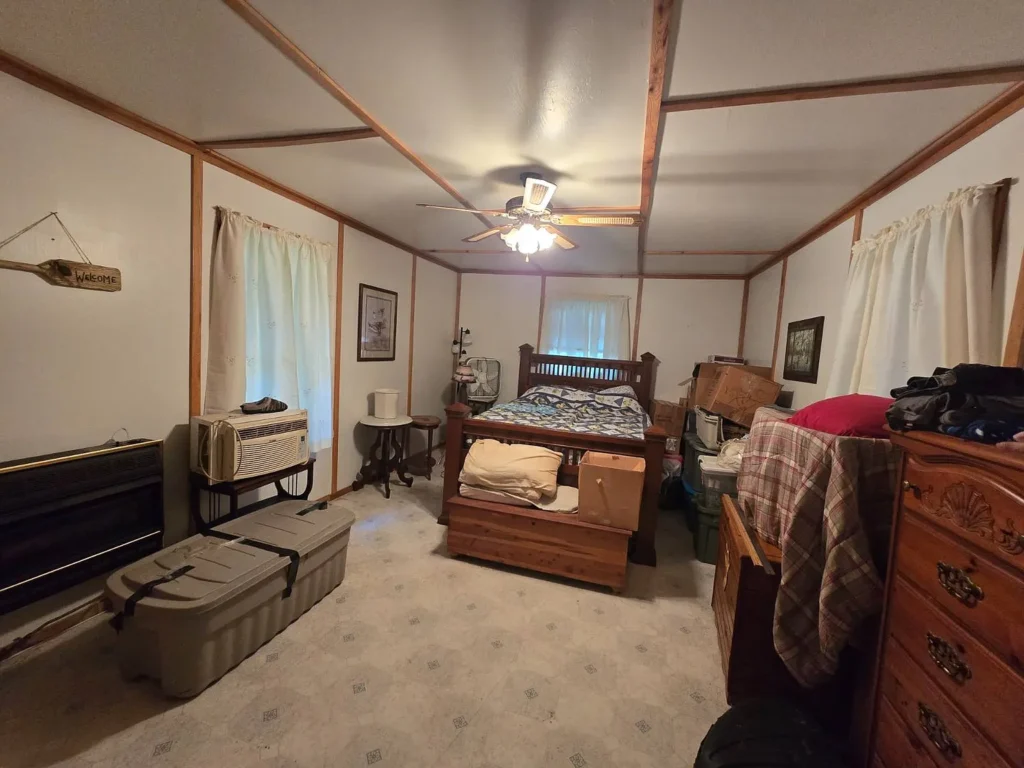
The listing identifies the home as having two bedrooms and one full bathroom.
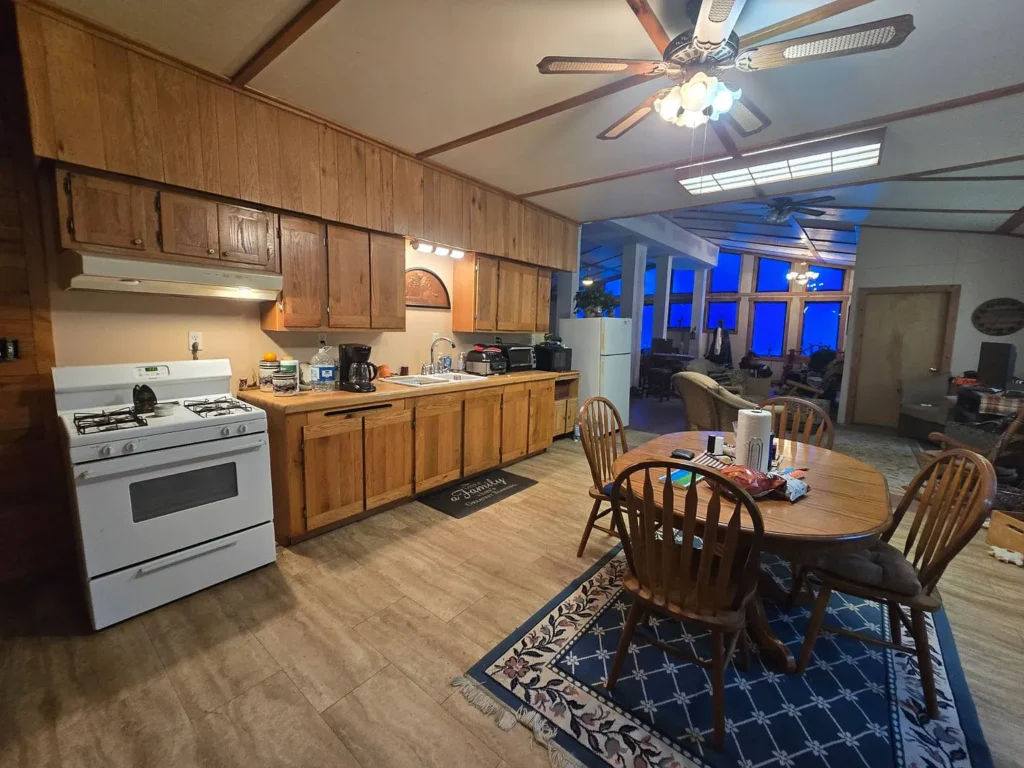
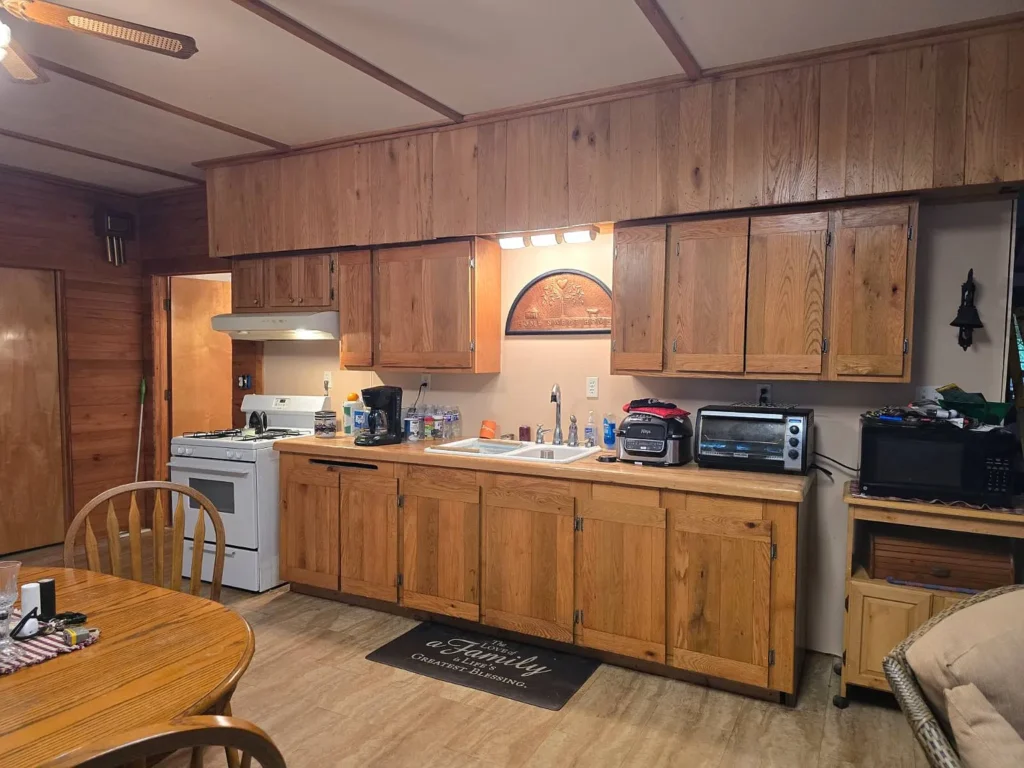
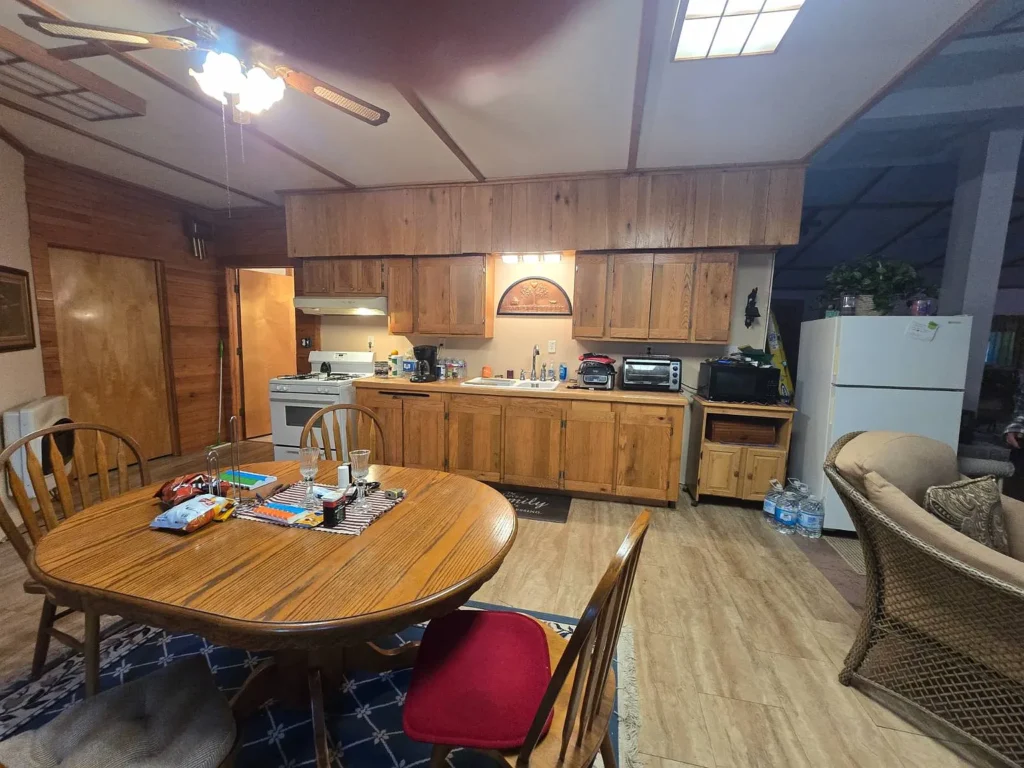
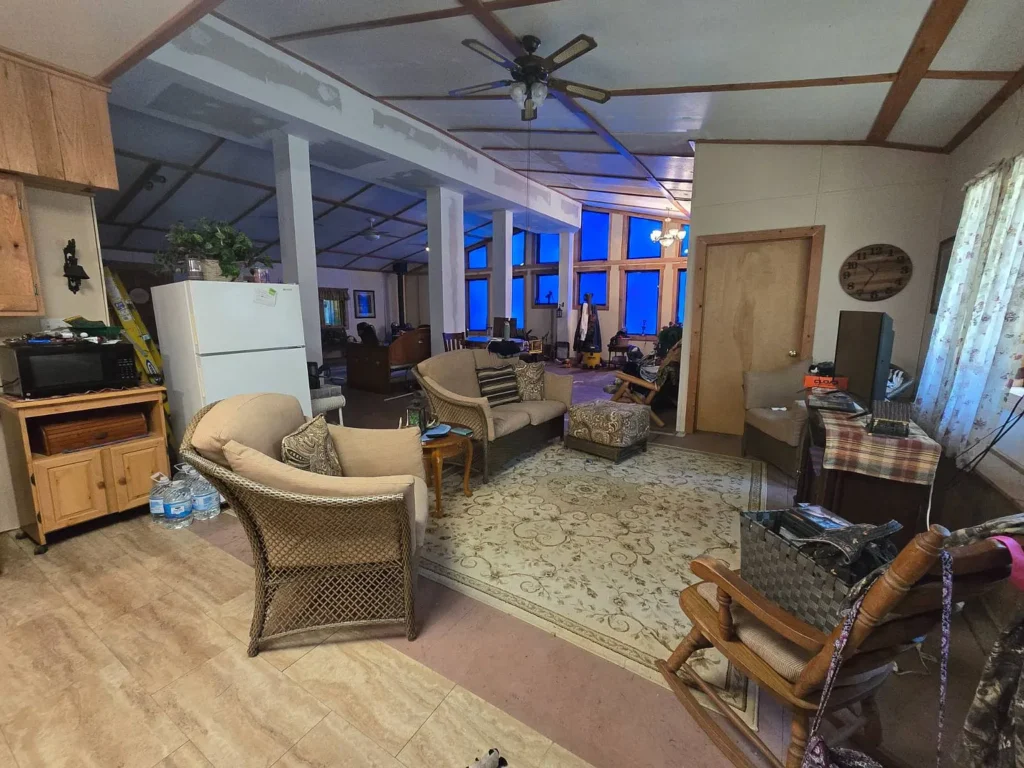
Inside, the main living area combines multiple functions rather than separating everything into small rooms. The photographs show a kitchen, dining area and several seating areas flowing into the larger living space.
Cathedral-style ceilings and a substantial wall of windows add another dimension to the interior.
For a rural property, that could be especially appealing because the house seems designed to keep the surrounding woodland visually connected to the living area.
A Cabin Built Around the Landscape
One of the more interesting details is the use of wood reportedly sourced from the property itself.
According to the seller’s listing information, some of the home’s oak cabinetry and interior trim were made from timber milled from the land.
That doesn’t necessarily increase the property’s financial value, but it gives the house a connection to its surroundings that would be difficult to reproduce in a conventional development.
The home also includes a wood-burning stove, which fits naturally with the rural setting.
Propane is also listed as a heating source, while cooling is provided by wall/window units.
For someone considering year-round living, however, heating and cooling costs should be investigated carefully because West Virginia experiences meaningful seasonal temperature changes.
The Three-Mile Access Road Is Both an Advantage and a Risk
Privacy may be this property’s greatest attraction—and one of its biggest practical considerations.
The listing states that the property is approximately three miles down an unserviced road before reaching the gate.
For buyers who want to escape traffic, close neighbors and everyday noise, this could be highly attractive.
But remote access should be investigated carefully before purchasing.
A prospective buyer should determine who owns the road, what legal access rights come with the property, who is responsible for maintenance, whether there are recorded easements, and how reliably the road can be used throughout the year.
Rain, snow, fallen trees and erosion can affect remote roads very differently from publicly maintained residential streets.
Emergency response times, delivery access and insurance requirements could also differ from a typical home.
This is a perfect example of a property feature that can simultaneously be a major advantage for one buyer and a serious disadvantage for another.
Could This Be a Homestead Property?
Potentially, and this is one of the property’s most interesting possibilities.
With 62.25 acres, substantial woodland, a pond, private septic and a water collection system, the property already has several characteristics that buyers searching for a rural homestead may value.
The large acreage could potentially provide space for gardens, trails, additional outdoor uses or other permitted activities.
However, “homestead potential” should not be confused with guaranteed permission to carry out any particular activity.
Before buying, prospective owners should investigate county land-use requirements, building restrictions, septic rules and any permits required for future improvements.
The property’s remoteness also means buyers should consider practical issues such as internet connectivity, road maintenance, emergency access, fuel storage, waste disposal and year-round water reliability.
The Rainwater Cistern Deserves Special Attention
Instead of a conventional municipal water connection, the listing describes a roof-collected rainwater cistern.
That is an important detail.
For some buyers interested in self-sufficient or remote living, a rainwater collection system may be appealing. For others, dependence on stored rainwater may be a major concern.
A buyer should understand the system’s storage capacity, filtration and treatment setup, condition, maintenance requirements and historical reliability.
Water quality testing would also be a sensible part of due diligence.
A prospective owner should not assume that the existing system will automatically meet every household need throughout the year.
Private Septic System
The property reportedly has a private septic system.
That’s another meaningful advantage compared with completely undeveloped rural land, but the existence of a septic system doesn’t eliminate the need for inspection.
Before closing, a buyer should consider having qualified professionals determine the system’s age, condition, capacity and maintenance history.
Replacing a failed septic system can become a significant ownership expense.
For buyers comparing rural real estate financing or calculating the true cost of buying a remote home, infrastructure condition can be just as important as the purchase price.
A Property Designed With Hunters in Mind
The listing clearly positions hunting as one of the property’s major attractions.
The long rear porch is described as having openings and features designed to function somewhat like a comfortable hunting blind overlooking the wooded property.
The seller also reports seeing deer, bear and turkey around the acreage and pond.
With more than 60 acres of private land, the property may appeal strongly to buyers searching for a West Virginia hunting property for sale.
However, wildlife sightings are never guaranteed, and anyone intending to hunt should independently review property boundaries, firearm safety considerations and current West Virginia hunting regulations.
The West Virginia Division of Natural Resources publishes current hunting regulations and licensing information.
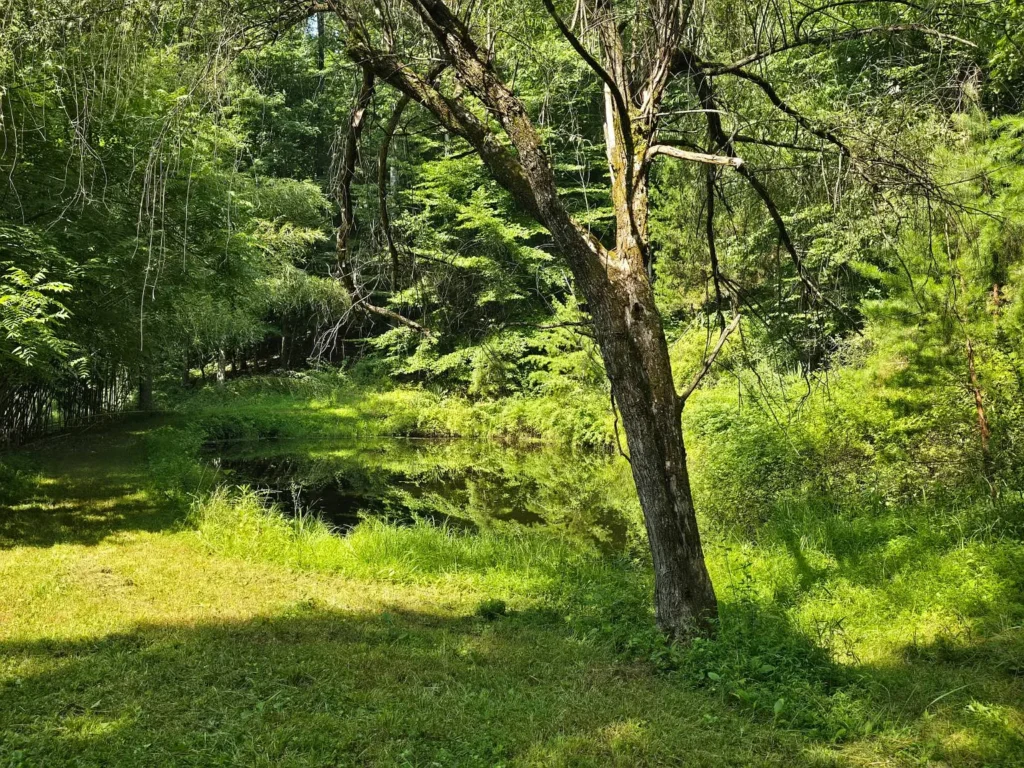
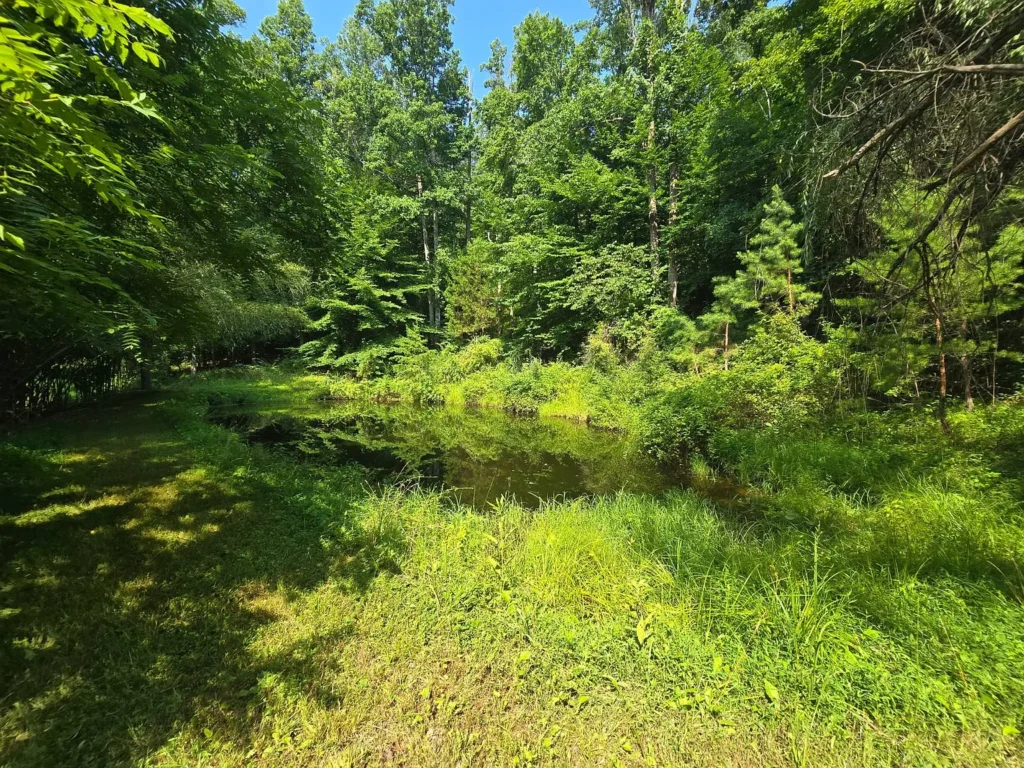
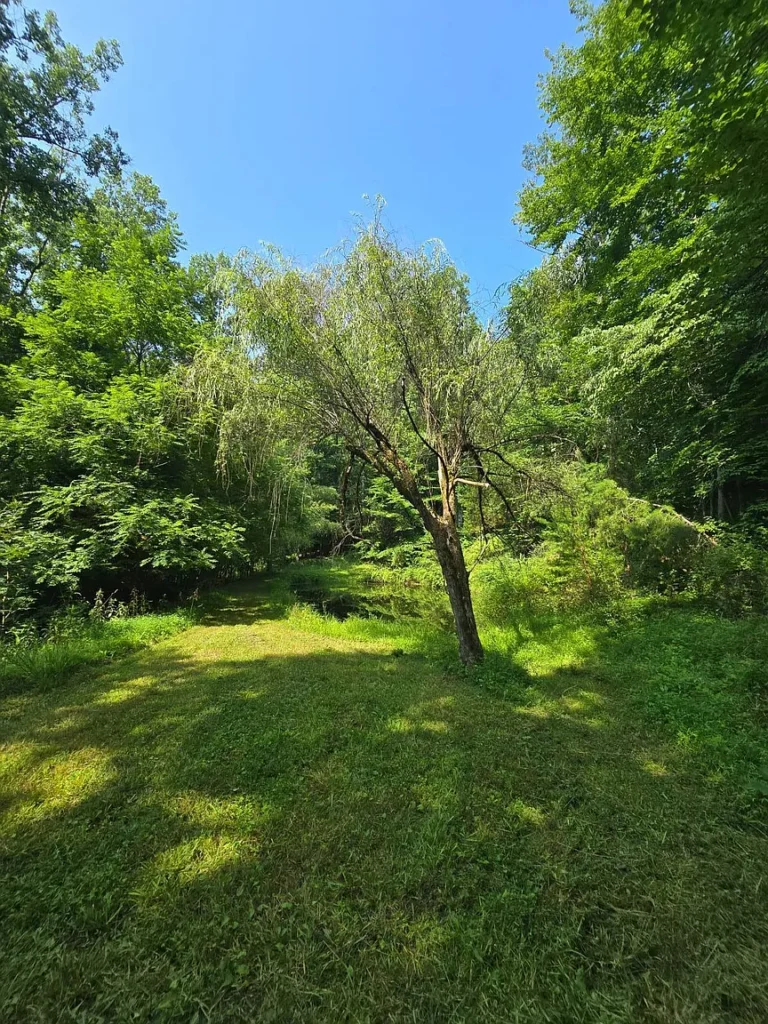
The Pond Adds Another Dimension
The pond is more than just a visual feature.
For a property marketed around recreation, wildlife and privacy, a pond can contribute to the overall experience of the land.
The listing describes views of both the pond and wooded surroundings, and the seller reports wildlife visiting the area.
Buyers should still investigate the pond’s boundaries, condition, drainage and maintenance requirements rather than assuming that all potential uses are permitted.
Oil, Gas and Mineral Rights Could Be Important
One detail deserves particular attention: according to the listing, oil, gas and mineral rights convey with the property.
In a state such as West Virginia, mineral ownership can be an important part of rural real estate due diligence.
Surface ownership and mineral ownership can sometimes involve separate interests. Buyers should therefore have the deed, title work and any existing leases or agreements reviewed by an appropriate real-estate attorney or title professional.
The West Virginia Office of Oil and Gas provides public information related to oil and gas activity in the state.
The fact that mineral rights are reported to convey should be independently confirmed during the title process rather than valued solely from the listing statement.
$405 in Reported Annual Property Taxes
Another striking figure is the reported $405 annual property tax.
Relative to the $179,900 asking price, that’s approximately:
$405 ÷ $179,900 × 100 ≈ 0.23%
But that calculation is not the property’s official property-tax rate. It simply compares the reported annual tax bill with today’s asking price.
Tax assessments and sale prices are different things, and ownership changes or improvements may affect future taxes.
Anyone considering the property should verify the current assessment, tax status and potential future liability with the appropriate county authority before purchasing.
What About Financing a Property Like This?
This is where the property becomes more complicated than a conventional suburban house.
The listing displays an estimated monthly payment, but prospective buyers shouldn’t assume that their actual mortgage payment would match that figure.
Actual monthly housing costs depend on the purchase price, down payment, mortgage interest rate, loan term, property taxes, homeowners insurance and other lender requirements.
More importantly, remote or unconventional properties can sometimes be treated differently by lenders.
Factors such as access, water source, appraisal comparables and property condition could potentially influence financing eligibility.
A buyer interested in a home loan, rural property financing or mortgage pre-approval should speak directly with lenders familiar with rural West Virginia properties before assuming conventional financing will be available.
Could It Qualify for a USDA Rural Home Loan?
Buyers searching for rural homes often investigate USDA financing because eligible borrowers and properties may qualify for favorable terms.
However, eligibility depends on several requirements involving the applicant, property and location.
The USDA provides an official eligibility tool where buyers can investigate property and income eligibility.
This article is not claiming that this particular property qualifies. The unusual access and water system, among other factors, make lender verification especially important.
Understanding the $1,257 Monthly Estimate
The listing displays an estimated payment of approximately $1,257 per month.
That should not be treated as a guaranteed mortgage quote.
Mortgage payments change significantly based on down payment and interest rate. Homeowners insurance on a remote property may also differ from insurance for a conventional house.
Potential buyers should obtain personalized loan estimates from lenders and insurance quotes before using any online monthly-payment estimate for budgeting.
This is especially important for an acreage property where the land, structures, access and alternative water system may all influence underwriting.
Potential Advantages and Drawbacks
The strongest arguments in favor of this property are easy to see: 62.25 acres, extreme privacy, an existing two-bedroom residence, pond, private septic, electricity, multiple outbuildings, no listed HOA, low reported annual property tax and mineral rights reportedly included.
The price also works out to approximately $2,890 per acre when the house and improvements are included in the calculation.
But those advantages come with meaningful trade-offs. The approximately three-mile unserviced access road could create maintenance and year-round accessibility concerns. The rainwater cistern deserves careful inspection. Financing and insurance could be more complicated than for a conventional home, and remote living means buyers must be comfortable managing infrastructure themselves.
For the right person, those characteristics create freedom and privacy.
For the wrong person, they create inconvenience.
Is $179,900 a Good Investment?
There isn’t enough information to responsibly answer that question with a simple yes or no.
A real estate investor would need to examine comparable sales, access rights, title history, mineral ownership, structure condition, water and septic systems, insurance costs and potential resale demand.
The unusual nature of the property matters too.
A 62-acre secluded cabin may have fewer potential buyers than a conventional residential house. That can be a disadvantage when selling.
On the other hand, unique recreational and hunting properties attract a specific group of buyers who may place considerable value on privacy and acreage.
Therefore, investment potential and liquidity are two different questions.
What Buyers Should Investigate Before Making an Offer
For a property this unusual, due diligence is particularly important. Buyers should independently verify property boundaries and survey records; deeded/legal access; responsibility for the three-mile road; title and liens; oil, gas and mineral ownership; existing leases or rights affecting the minerals; septic condition; cistern capacity and water quality; electrical service; roof and structural condition; heating systems; pond condition; homeowners insurance availability; internet/cellular connectivity; emergency access; annual property taxes; zoning and permitted uses; and financing eligibility.
A home inspection alone may not answer every question. Depending on the buyer’s intended use, a surveyor, title professional, attorney, septic professional, lender and insurance provider may all have relevant roles.
Who Is This Property Really For?
This isn’t likely to be the ideal property for someone whose priorities are quick access to stores, paved neighborhood streets and minimal property maintenance.
Its strengths are almost the opposite.
It appears better suited to someone who actively wants privacy, acreage and separation from neighboring properties.
Potential buyers might include people searching for a hunting retreat, recreational property, private cabin, rural homestead or secluded year-round residence.
For those buyers, the three-mile journey into the property may not be a drawback at all—it may be part of the appeal.
Final Thoughts
At $179,900, this Macfarlan-area property offers something increasingly difficult to find in ordinary residential real estate: a home surrounded by more than 62 acres of private land.
The existing two-bedroom residence means a buyer isn’t simply purchasing raw acreage. The property also reportedly includes electricity, private septic, a rainwater cistern, propane heat, a wood-burning stove, pond, outbuildings and mineral rights.
At the same time, the property should not be judged solely by its acreage or relatively low reported tax bill.
Its remote access, alternative water system and specialized rural characteristics make professional due diligence particularly important.
For a buyer who wants a conventional house, there may be easier choices.
For someone specifically searching for a secluded West Virginia property with acreage, a hunting retreat or a private homestead, this is a far more unusual opportunity worth investigating.
Frequently Asked Questions
How much land comes with the property?
The listing reports approximately 62.25 acres.
How much is the property per acre?
Dividing the $179,900 asking price by 62.25 acres gives approximately $2,890 per acre. This is only a mathematical comparison because the purchase also includes the house and other improvements.
How many bedrooms and bathrooms does the cabin have?
The property is listed with two bedrooms and one full bathroom.
Does the property have a well?
The listing instead describes a roof-collected rainwater cistern system. Buyers should independently inspect the system and investigate water quality and reliability.
Does it have septic?
Yes, a private septic system is reported. Its condition should be professionally verified.
Are mineral rights included?
The listing states that oil, gas and mineral rights convey with the property. Buyers should confirm this through title/deed research before closing.
How much are the property taxes?
The listing reports approximately $405 annually, but buyers should verify current taxes and future obligations directly.
Is the property suitable for hunting?
Its acreage and wooded environment may make it attractive for hunting, and the seller reports wildlife including deer, bear and turkey. Buyers should follow applicable hunting laws and independently evaluate the land.
Disclaimer
This article is provided for informational and educational purposes only. It is not real estate, financial, mortgage, legal, tax or investment advice. Listing details, price, availability, property taxes, acreage, mineral rights, financing eligibility and other information can change or may contain errors. Prospective buyers should independently verify all information and consult appropriate licensed professionals before purchasing real estate.
Original listing: View the property on Zillow