What can $100,000 buy in rural Virginia?
In Buchanan County, a property on Hobbs Branch Road near Grundy offers approximately 40 acres, an old farmhouse, a traditional barn, and additional agricultural buildings.
The advertised price may catch the attention of buyers searching for affordable Virginia homes with acreage. But this is not a conventional move-in-ready property.
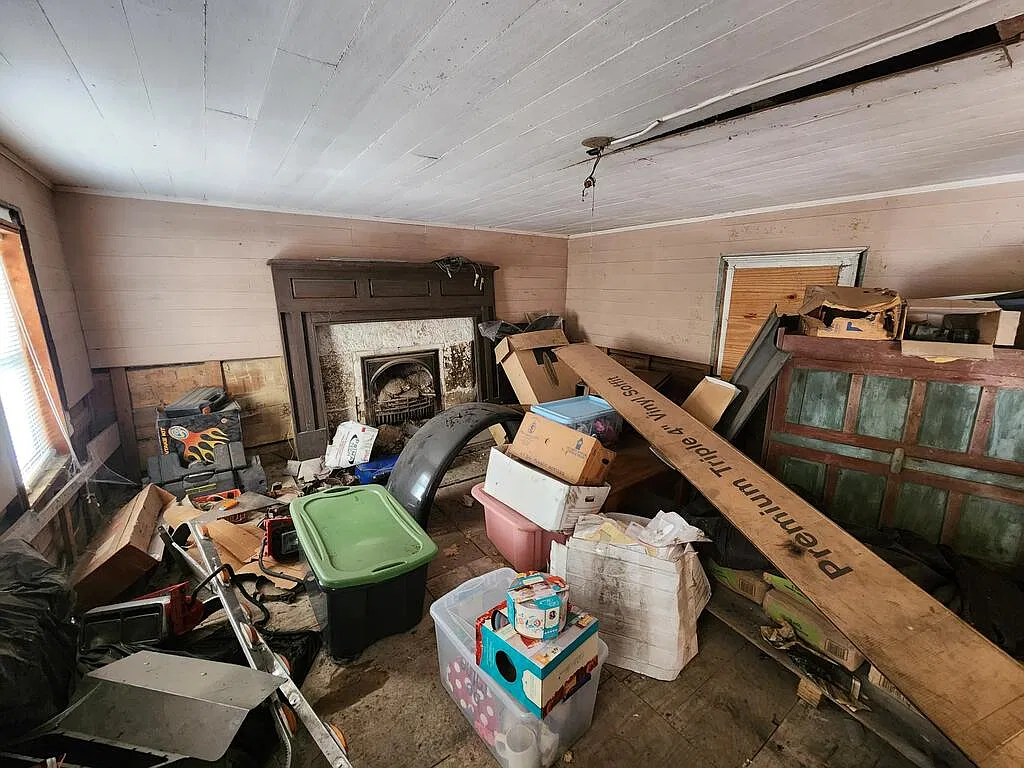
The farmhouse reportedly dates to 1890 and has been unoccupied for many years. Listing photographs reveal substantial deterioration, including damaged interior finishes, boarded windows, and aging outbuildings.
That makes this property an interesting case study in rural real estate: how much value lies in the land, and how much could it cost to restore or replace the existing structures?
For buyers interested in historic farmhouses, rural homesteads, or land investment opportunities, understanding that distinction is essential.
Property Overview
| Property Feature | Reported Information |
|---|---|
| Asking Price | $100,000 |
| Location | Hobbs Branch Rd, Grundy, VA 24614 |
| County | Buchanan County, Virginia |
| Acreage | 40.09 acres |
| Property Type | Single-family residence |
| Bedrooms | 3 |
| Bathrooms | 1 |
| Reported Living Area | 2,000 square feet |
| Estimated Year Built | 1890 |
| Stories | 2 |
| Foundation | Stone |
| Roof | Metal |
| Heating | None reported |
| Cooling | None reported |
| Water | Other; system not specified |
| Sewer | Other; system not specified |
| Additional Structures | Barn, former dairy building, and outbuilding |
| HOA | None reported |
| Annual Property Tax | Approximately $200 |
| Listing Date | October 11, 2026 |
The listing specifically states that the farmhouse’s age and square footage are estimates. Buyers should verify both rather than treating them as confirmed measurements.
What Makes This 40-Acre Virginia Property Interesting?
The most appealing feature is the combination of acreage and existing farm infrastructure.
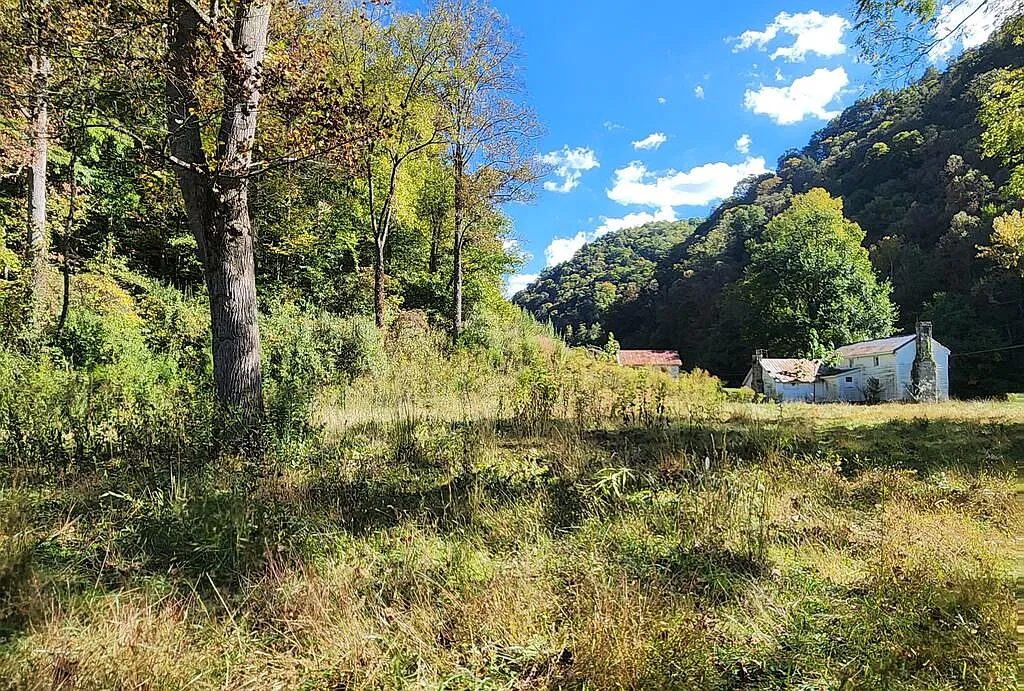
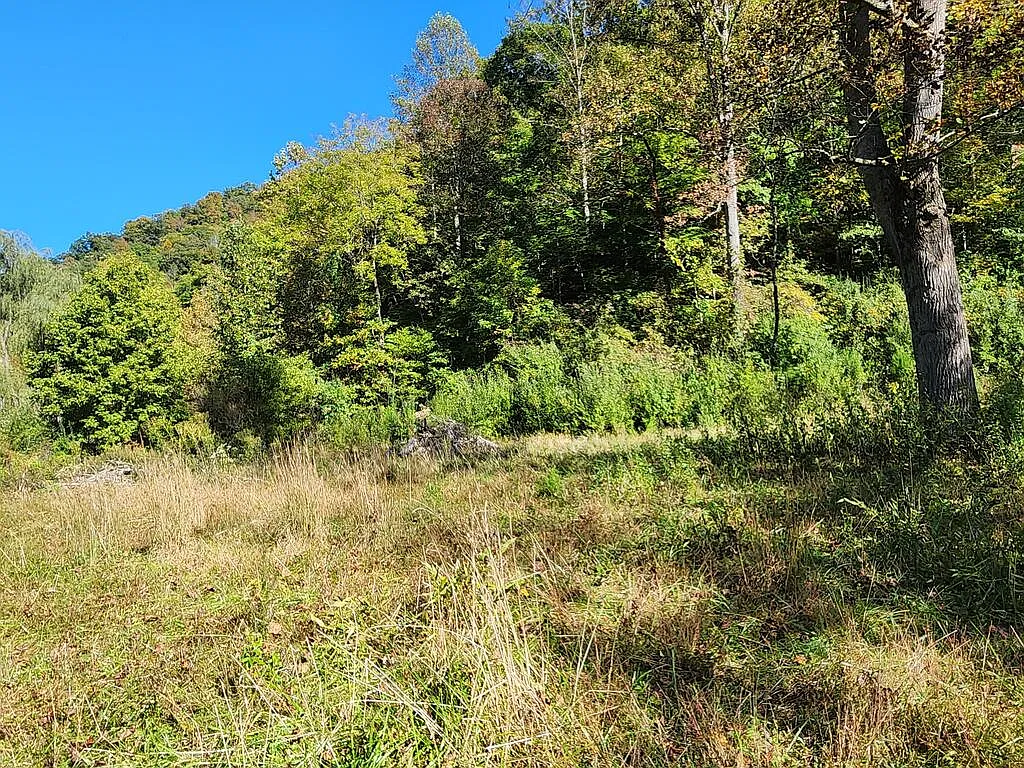
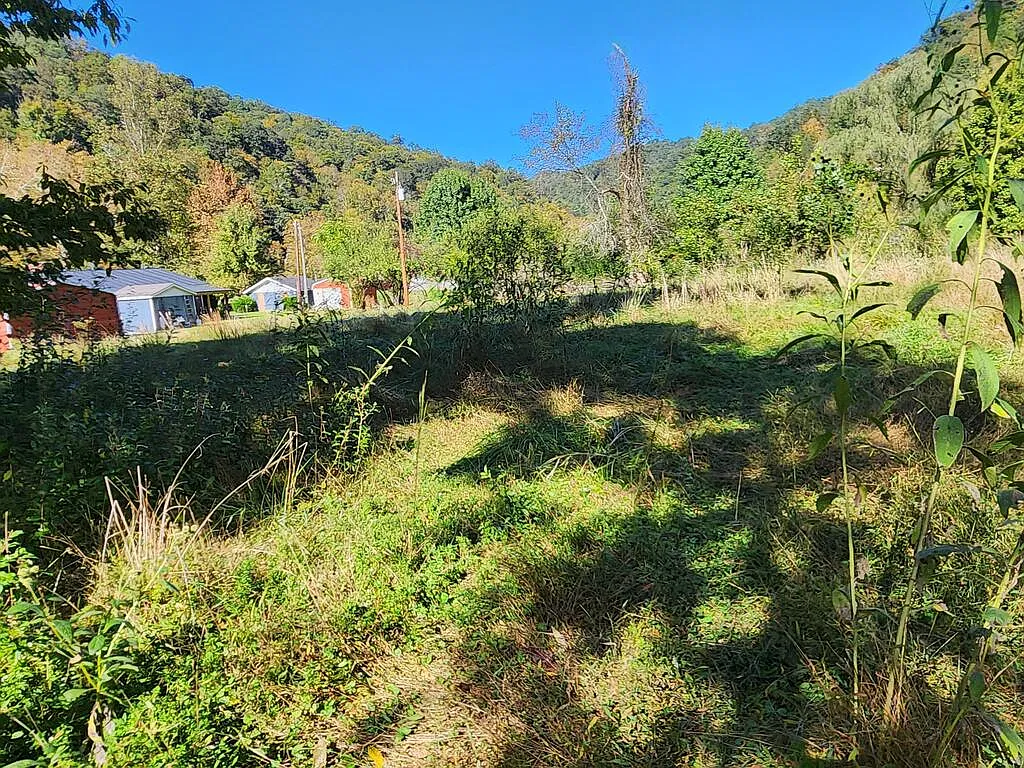
According to the listing, the land includes a considerable amount of relatively level bottomland, which may be useful for gardening, keeping animals, or establishing other agricultural activities.
The remainder includes rolling and wooded terrain.
The listing also identifies an original farmhouse, a barn, a dairy building, and another outbuilding.
For buyers who appreciate older rural properties, these structures contribute to the property’s historic character.
However, historic character does not automatically translate into financial value.
A deteriorated building may require expensive repairs or demolition, while a structurally sound agricultural building could potentially provide useful storage or workspace.
The condition of each structure needs to be evaluated separately.
The 1890 Farmhouse: Restoration or Replacement?
The two-story farmhouse is reported to contain approximately 2,000 square feet, with three bedrooms and one bathroom.
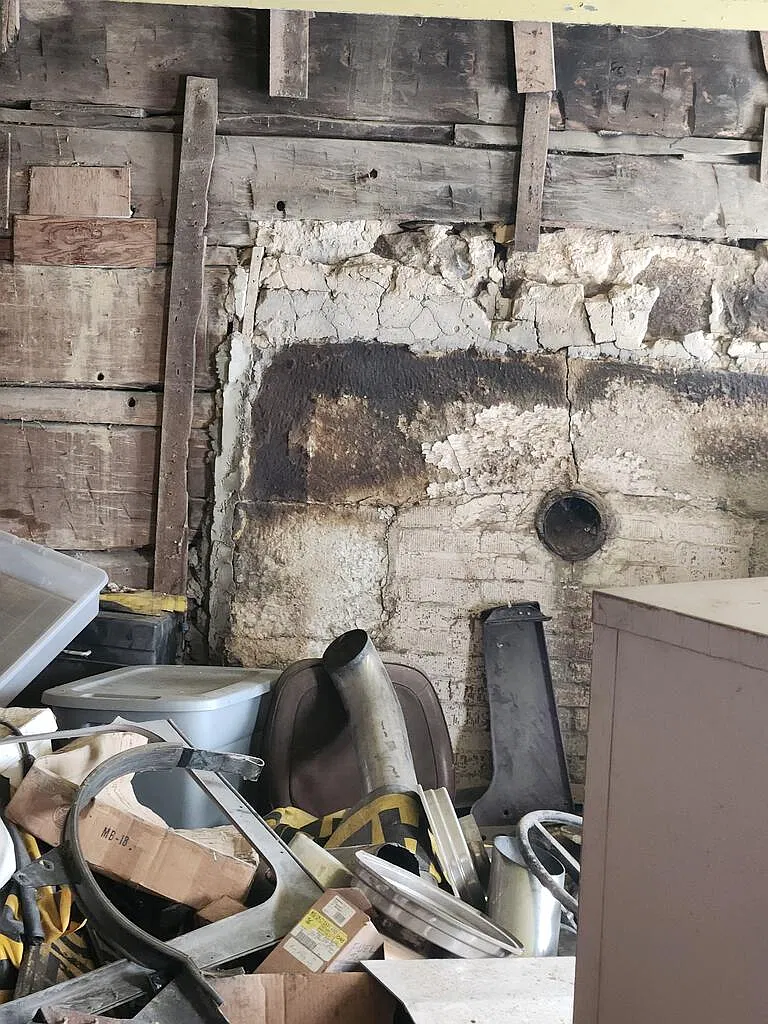
It has a stone foundation, wood-framed windows, a metal roof, and a stone fireplace.
The property description makes clear that the house has not been occupied for many years.
The listing also rates both its interior and exterior condition as poor.
Photographs reinforce that assessment.
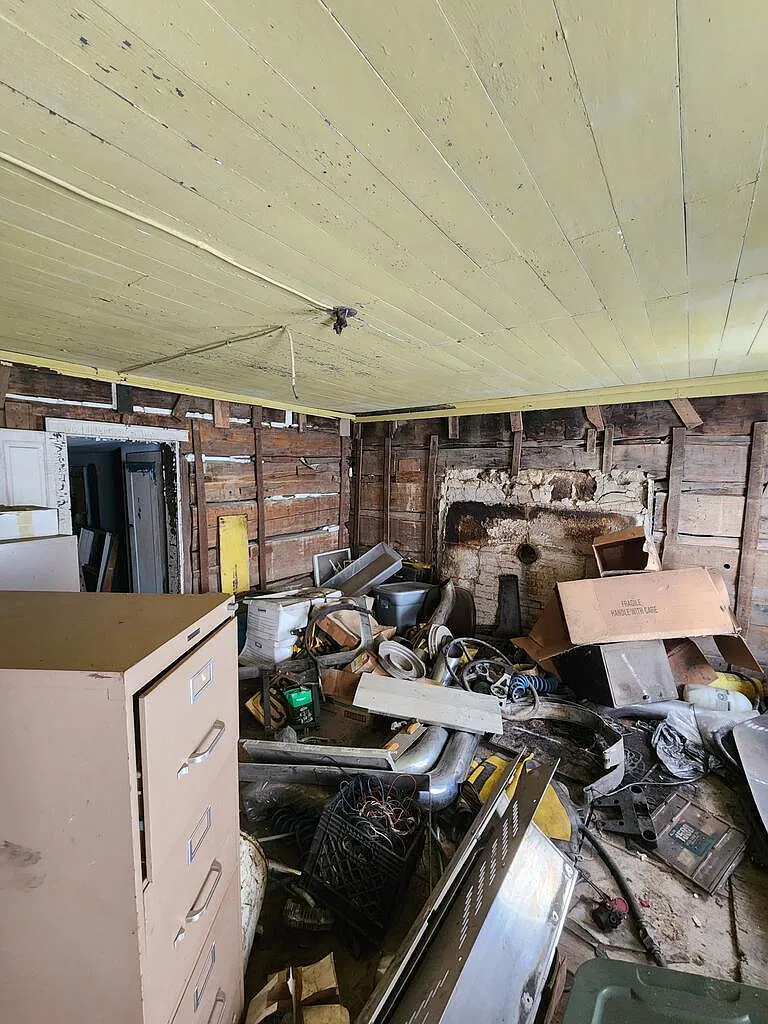
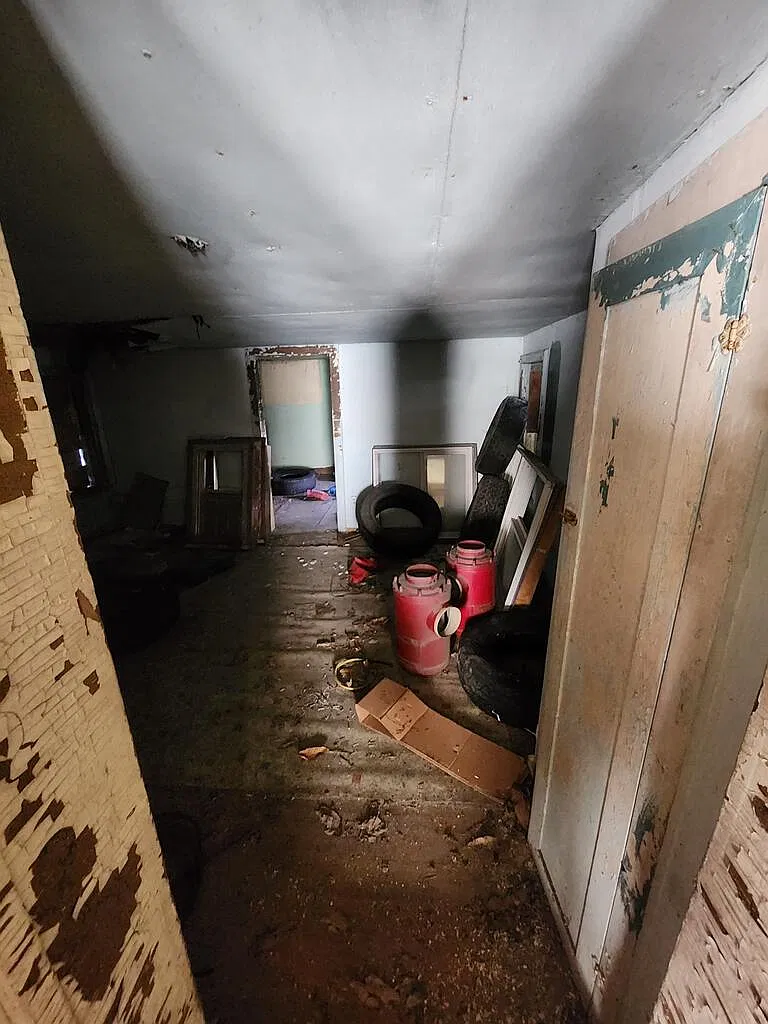
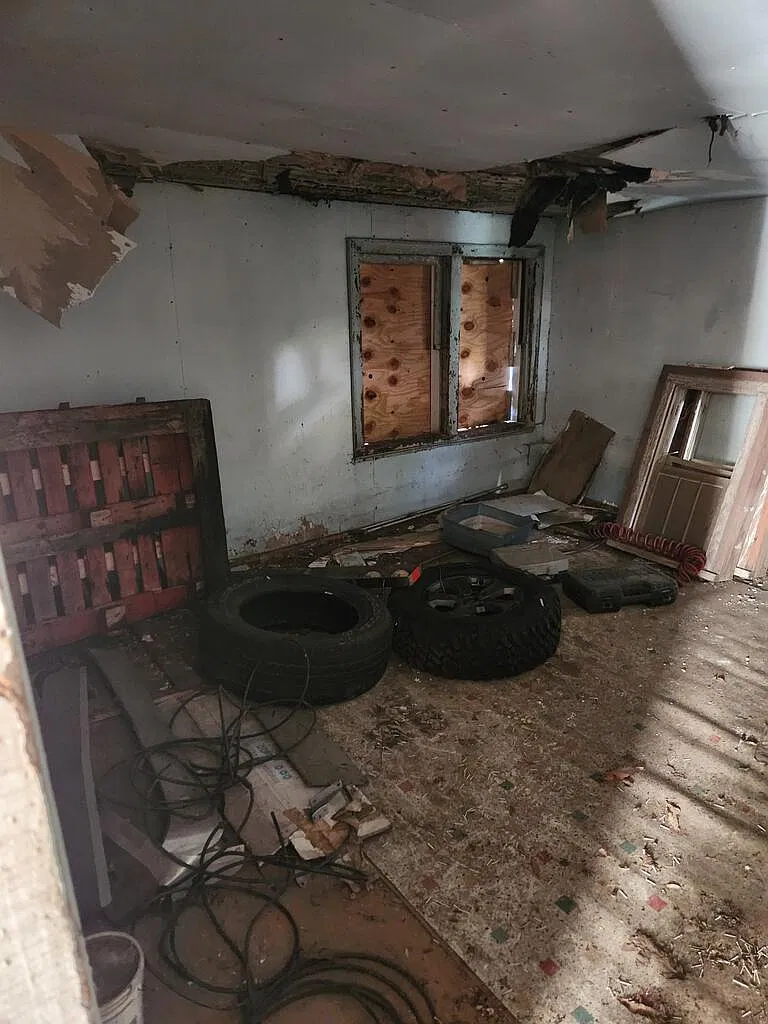
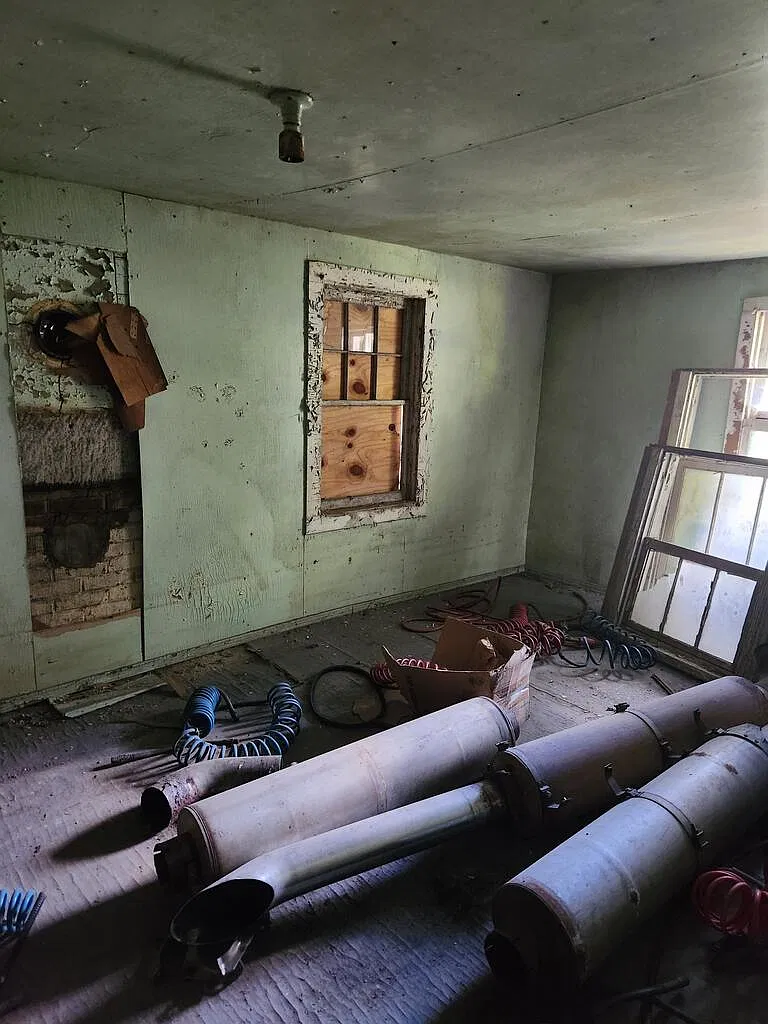
Several rooms appear to contain stored materials and debris. Some windows are boarded, while sections of the ceilings and wall finishes show visible deterioration.
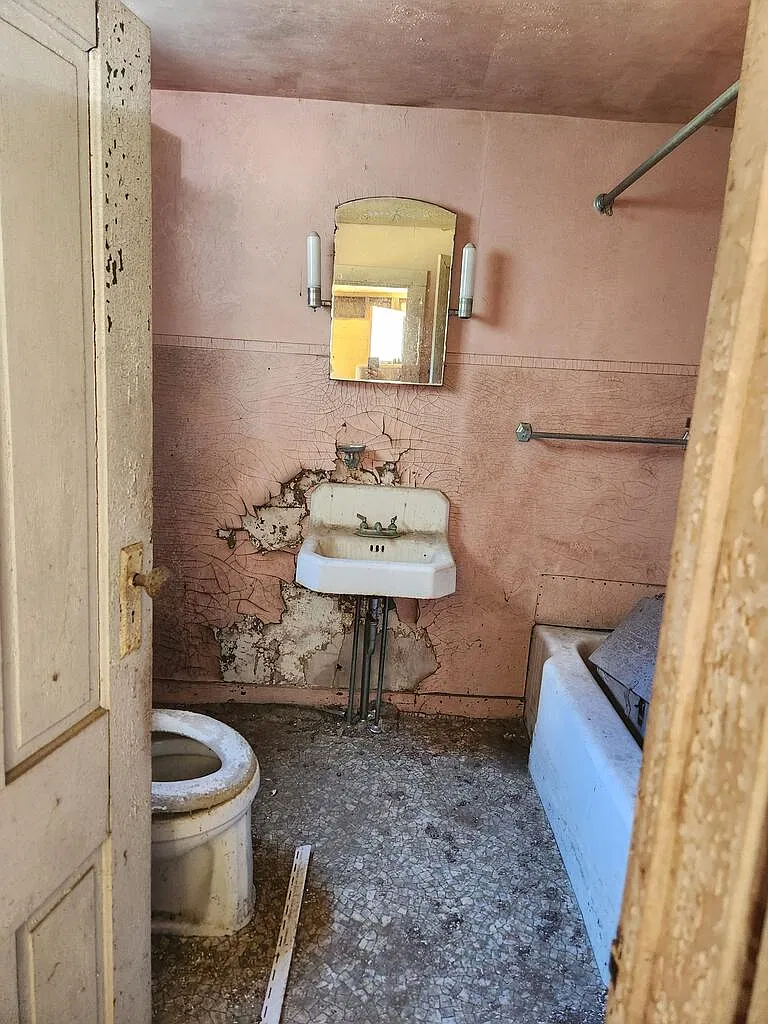
The bathroom photograph shows extensive damage around the sink and wall surfaces.
These observations raise concerns about moisture intrusion, structural integrity, and the condition of hidden building systems.
However, photographs alone cannot establish the full extent or cause of the damage.
A professional structural inspection would be essential before deciding whether restoration is practical.
What the Listing Photos Reveal
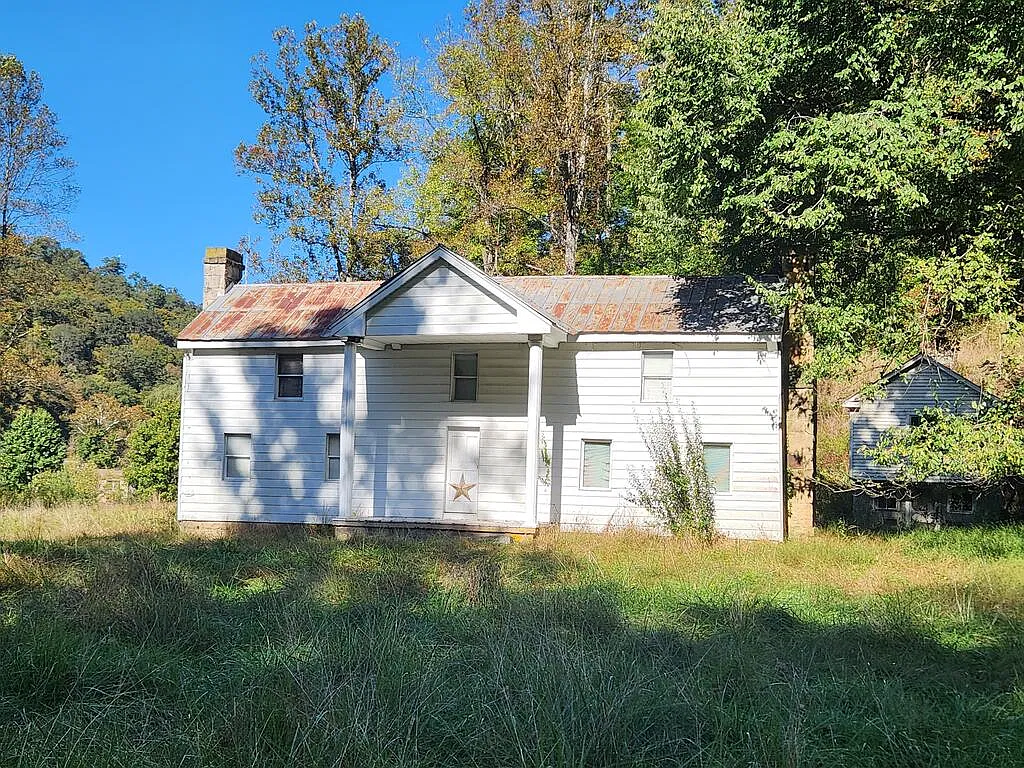
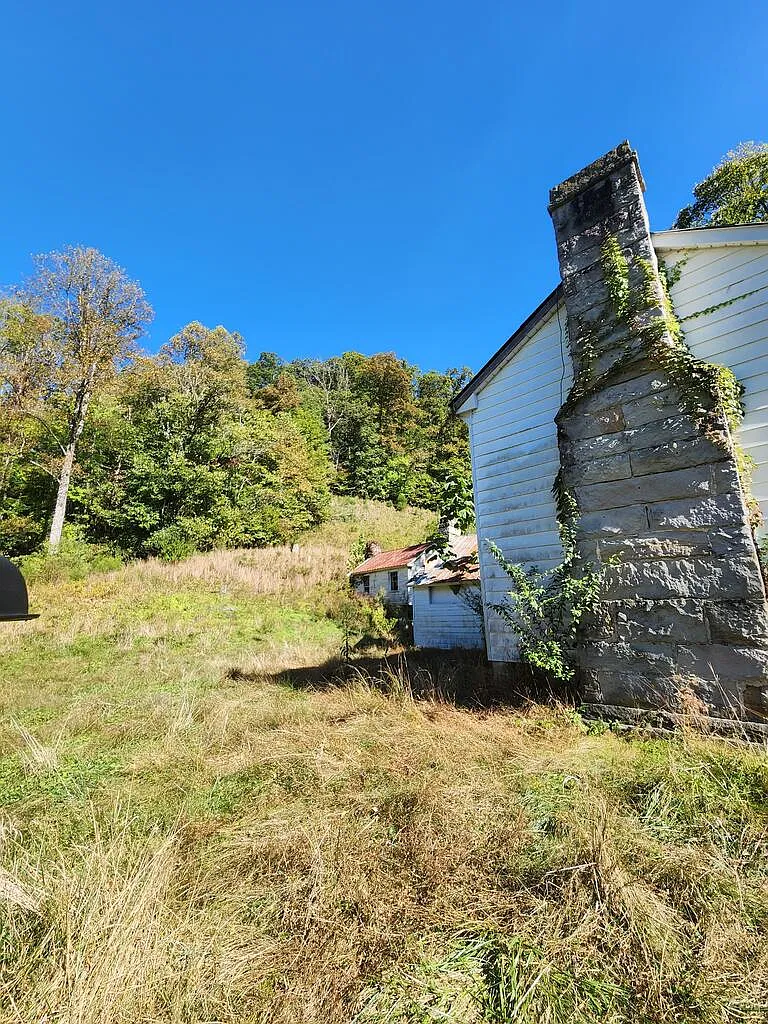
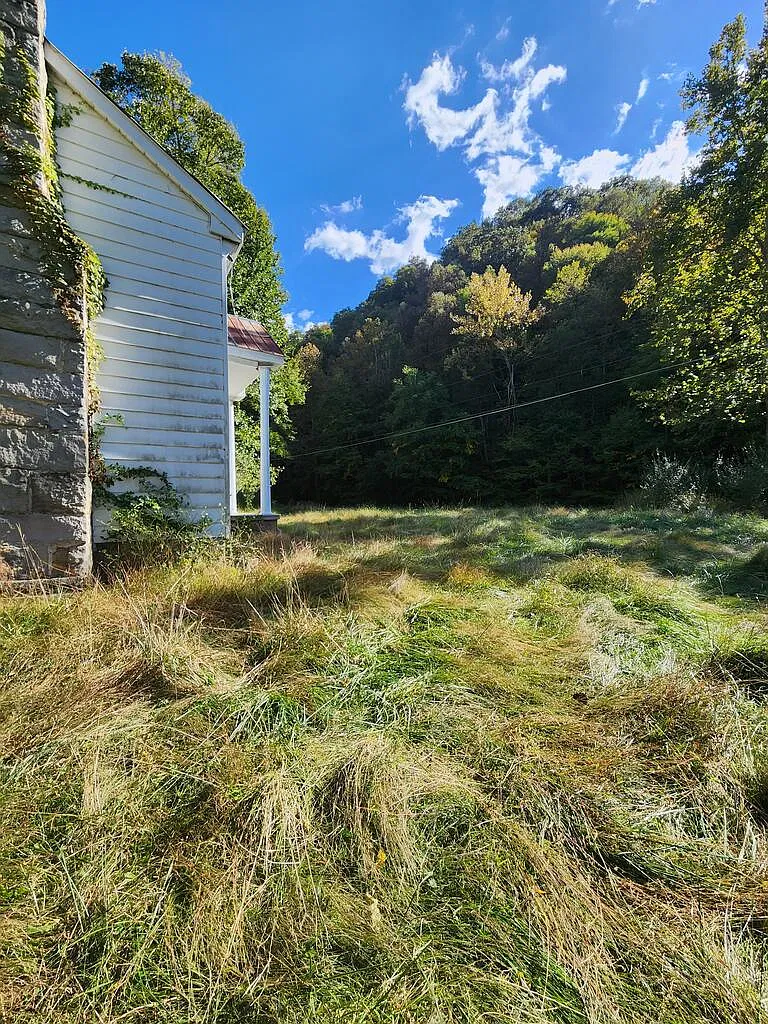
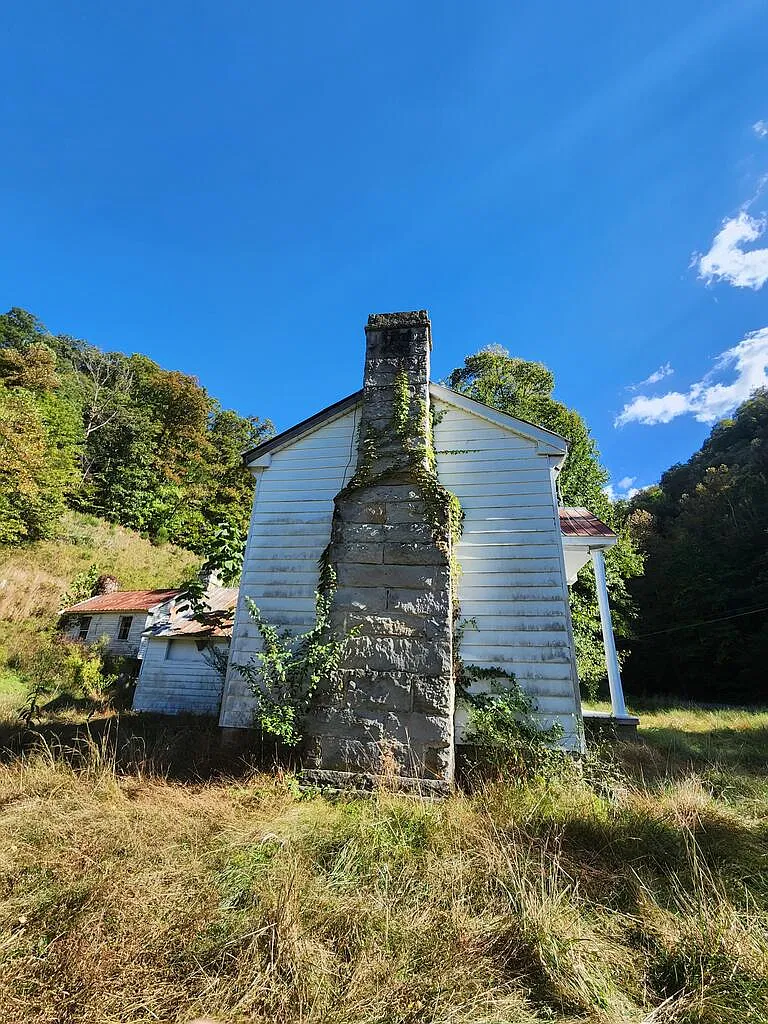
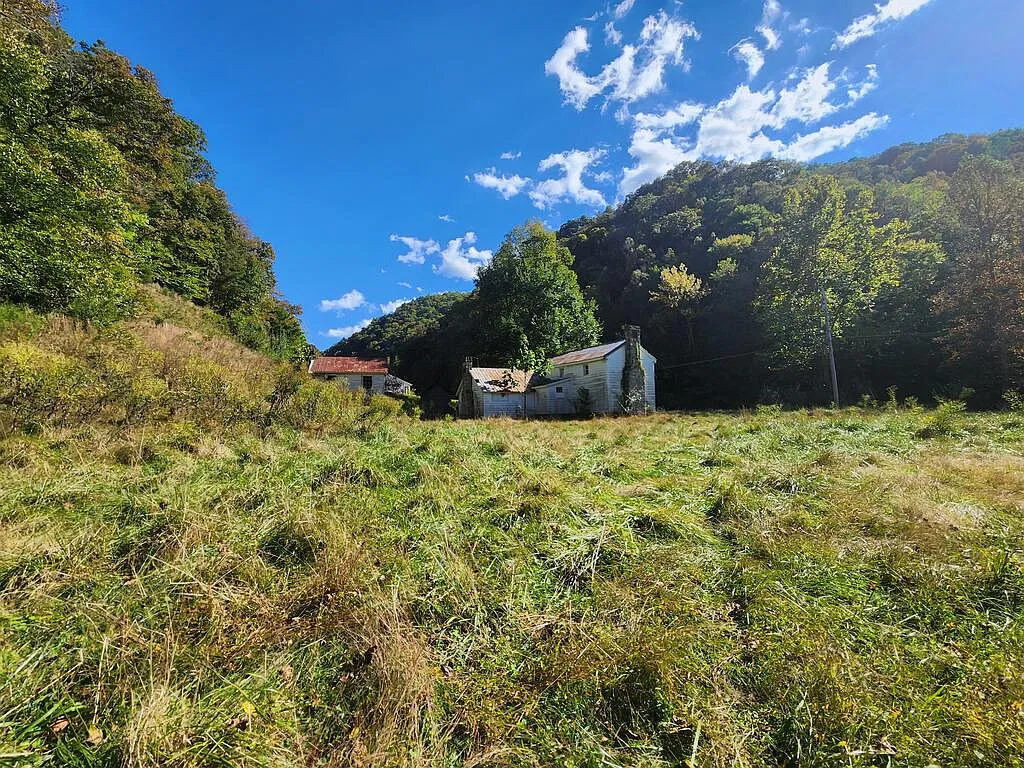
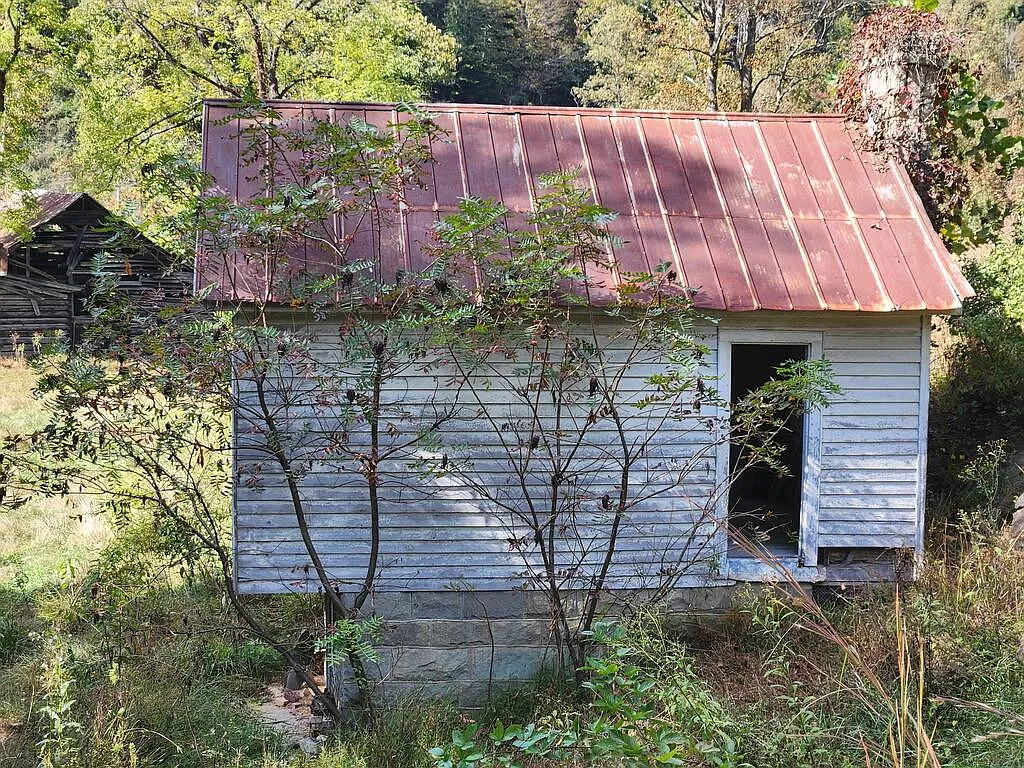
The property’s exterior photographs show a traditional white farmhouse set within a grassy valley surrounded by wooded hillsides.
The building features a metal roof, covered porch, and prominent stone chimney.
Although the exterior retains elements of its original rural appearance, the visible weathering suggests that extensive maintenance may be needed.
Interior photographs reveal several issues worth investigating.
Bathroom deterioration: The sink area has damaged wall finishes, and the room appears to need major rehabilitation.
Boarded windows: Several windows have been covered with plywood, raising questions about weather protection, security, and the condition of the original frames.
Ceiling damage: Some rooms show missing or deteriorated ceiling materials.
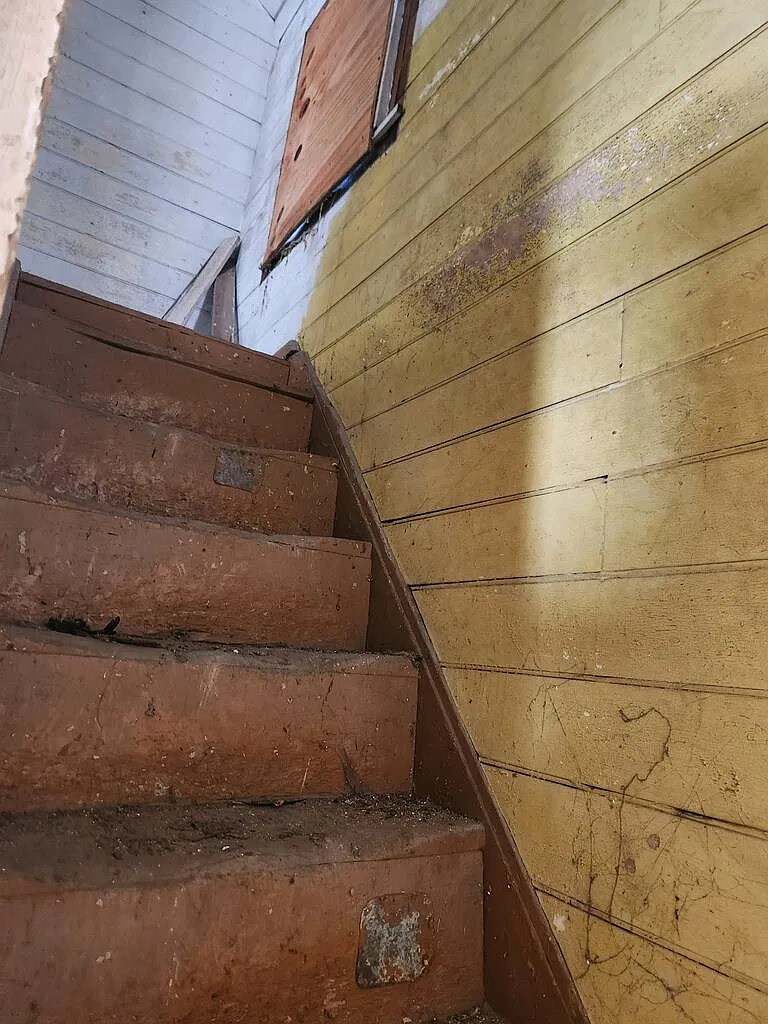
Aging staircase: The wooden stairs and surrounding surfaces appear worn and should be checked for structural safety.
Stored materials and debris: Several rooms contain substantial amounts of equipment, furniture, and miscellaneous items that would need to be removed before a full inspection or renovation.
These conditions suggest that cosmetic improvements alone may not be sufficient.
A realistic restoration plan should begin with structural safety, weatherproofing, electrical systems, plumbing, and sanitation.
A Historic Barn and Former Dairy Building
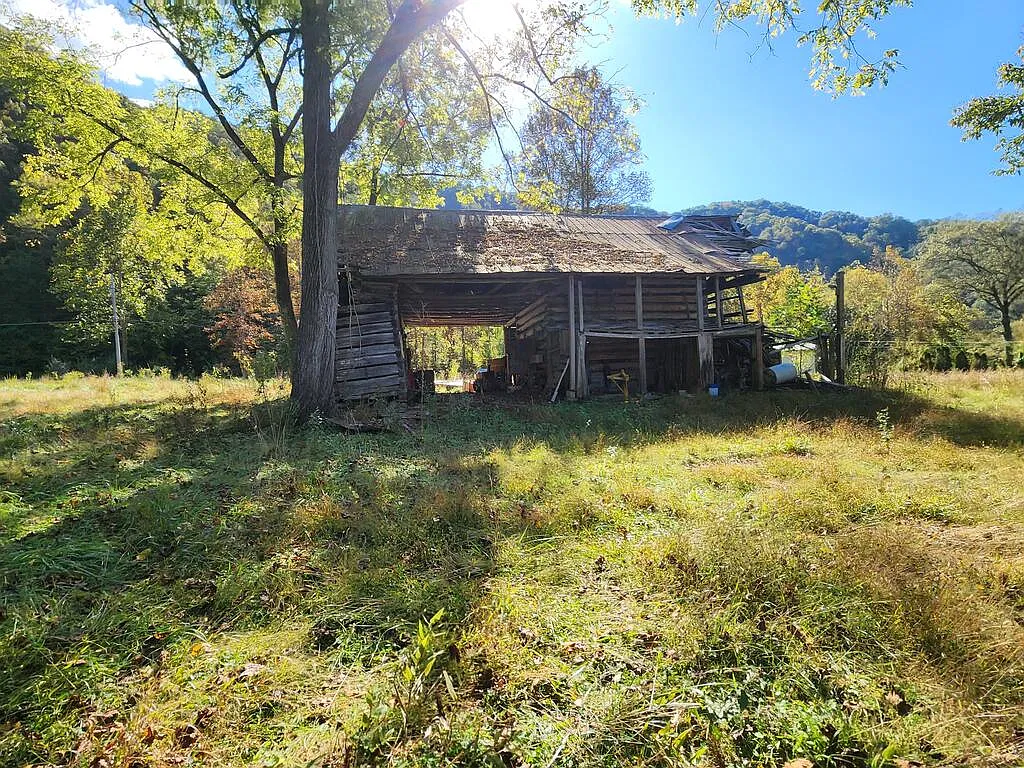
One of the property’s more distinctive features is its collection of agricultural structures.
The listing identifies a barn, a dairy building, and another outbuilding.
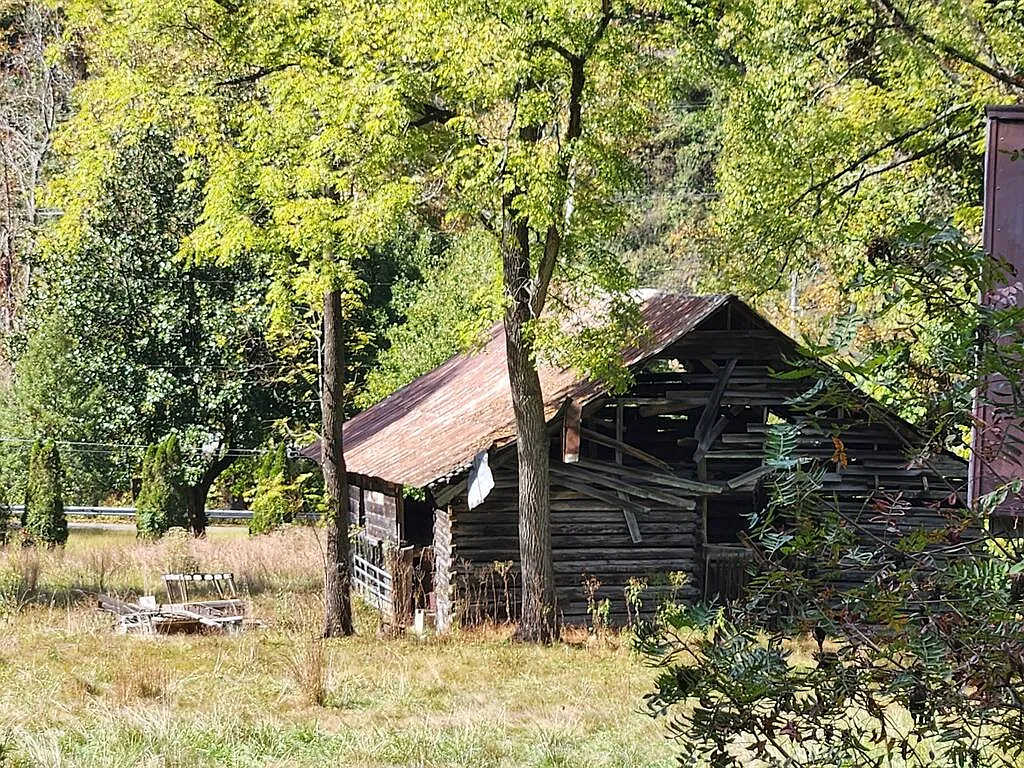
Exterior photographs show a weathered wooden barn with sections of the roof and siding that appear deteriorated.
These buildings could potentially appeal to buyers interested in preserving a historic farm setting.
However, their current structural condition is unknown.
Before using any of these buildings for livestock, equipment storage, or workshops, buyers should have them inspected.
Repairs to old barns can be costly, particularly when roof framing, foundations, or structural supports have deteriorated.
If restoration is not economical, demolition and debris removal may become part of the overall project budget.
How Much of the 40 Acres Is Usable?
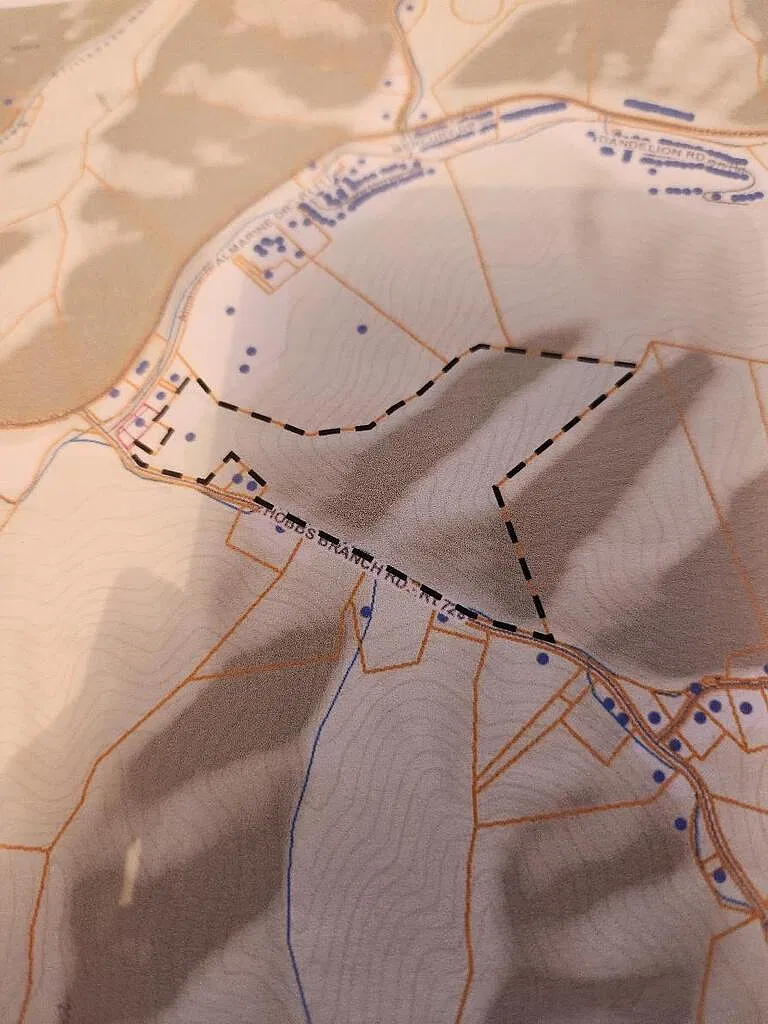
The property includes approximately 40.09 acres, but not all acreage necessarily offers the same practical value.
The listing highlights level bottomland suitable for potential gardens or farm animals, along with rolling and wooded areas.
This mix of terrain could appeal to buyers who want a combination of open space and natural surroundings.
However, buyers should investigate the exact location and amount of usable land.
Bottomland can be attractive for agriculture, but it may also be susceptible to flooding or drainage problems.
The listing mentions creek or stream views, although it does not establish legally defined waterfront frontage.
A buyer should review flood maps, topographic information, soil conditions, and property boundaries before planning any major improvements.
The $100,000 Asking Price: What Is the Cost Per Acre?
At an asking price of $100,000 for 40.09 acres, the approximate price is:
$2,494 per acre.
The listing also calculates approximately $50 per square foot using the reported 2,000-square-foot house.
However, that price-per-square-foot figure can be misleading.
Because the farmhouse requires significant attention, its reported floor area does not necessarily represent usable or habitable living space.
Similarly, the price per acre includes the existing structures.
The most useful valuation approach would involve comparing recent sales of similar rural parcels in Buchanan County, especially properties with older or uninhabitable houses.
Buyers should consider the land’s independent value as well as the potential cost of rehabilitating or removing existing buildings.
Could This Become a Working Homestead?
The listing suggests that the more level portions of the property may accommodate gardens or farm animals.
It also reports that horses are permitted.
For someone interested in a rural homestead, the acreage and existing agricultural structures could offer possibilities.
However, the land’s actual suitability for livestock depends on fencing, pasture quality, access to water, shelter, and local requirements.
The property currently has no fencing reported.
The listing identifies its zoning as “None,” but that does not mean every proposed use is automatically permitted.
Buyers should confirm applicable building codes, environmental rules, subdivision requirements, and deed restrictions with local authorities.
A soil evaluation may also be useful before planning substantial agricultural activity.
Water, Septic, and Utility Questions
The listing provides limited information about utilities.
Water and sewer are both identified as “Other,” without a clear description of an active well, public water connection, or approved septic system.
Heating and cooling are listed as absent.
Natural gas is also reported as unavailable.
These details are important because restoring an old house without functional utilities can be substantially more expensive than renovating a house with established systems.
Buyers should investigate whether electricity is connected, whether a safe water supply exists, and whether an approved wastewater system can be used or installed.
If a new well, septic system, or electrical service is required, those costs should be estimated before purchasing.
A property may appear affordable at the asking price but become considerably more expensive once infrastructure improvements are included.
Renovation Costs: Why the Purchase Price Is Only the Beginning
The biggest financial uncertainty is the condition of the farmhouse and outbuildings.
A restoration project of this scale may require work involving:
- Foundation and structural repairs.
- Roof and moisture protection.
- Replacement windows and exterior siding.
- Electrical rewiring.
- Plumbing and bathroom reconstruction.
- Heating and cooling installation.
- Kitchen rehabilitation.
- Interior walls, ceilings, and flooring.
- Water and wastewater infrastructure.
- Cleanup and debris removal.
Because the farmhouse dates to approximately 1890, renovation planning should also account for potential lead-based paint and asbestos-containing materials.
Those hazards cannot be confirmed from the photographs, but professional evaluation may be necessary before disturbing older building materials.
The total renovation budget could vary dramatically depending on the structural condition and the standard of restoration.
Buyers should obtain multiple contractor estimates and include a contingency for unexpected repairs.
Financing a Property in Poor Condition
Traditional mortgage financing may be challenging for a property with extensive damage and no confirmed functioning heating, water, or sanitation systems.
Many residential loan programs have minimum property-condition requirements.
Depending on the buyer’s financial situation and the property’s eligibility, potential alternatives might include cash purchasing, specialized renovation financing, or certain land-oriented loans.
However, no financing option should be assumed available without lender approval.
A buyer considering this property should consult a lender experienced with distressed rural homes before making an offer.
Insurance availability may also be limited or more expensive for an unoccupied house requiring major rehabilitation.
Flood Risk and Rural Access
The property includes low-lying land and reportedly has creek or stream views.
These characteristics make flood-risk research important.
Buyers should check official FEMA flood maps and consult local authorities regarding drainage and any applicable floodplain restrictions.
The listing also identifies the road surface as unimproved.
That raises practical questions about year-round access, maintenance responsibilities, and the ability of construction vehicles to reach the property.
Before purchasing, buyers should inspect the access route in person and verify any recorded easements or road agreements.
Access can have a major influence on construction costs, insurance, and resale potential.
Property Taxes and Long-Term Ownership Costs
The listing reports annual property taxes of approximately $200.
While that figure may seem relatively low, buyers should verify the current tax bill with the county.
Future assessments may change following a sale or improvements.
Other ownership costs could include property insurance, vegetation management, building stabilization, utility installation, equipment rental, and ongoing maintenance.
If the farmhouse is not immediately usable, buyers may also need to budget for temporary accommodation while work is completed.
A detailed financial plan should account for the entire project rather than just the purchase price.
Pros and Cons of This Virginia Farmhouse Property
Potential Advantages
- Approximately 40.09 acres for an advertised $100,000.
- Historic farmhouse with distinctive architectural character.
- Traditional barn and former dairy building.
- Some relatively level land reported.
- Potential for gardening and agricultural use.
- Combination of open and wooded terrain.
- No homeowners association reported.
- Rural setting near Grundy, Virginia.
Important Drawbacks
- The farmhouse has been vacant for many years.
- Both interior and exterior conditions are rated poor.
- Visible damage suggests potentially extensive renovation.
- Water and sewer arrangements are unclear.
- No heating or cooling systems are reported.
- Agricultural outbuildings may require major repairs.
- Unimproved road access needs verification.
- Low-lying land may require flood-risk investigation.
- Traditional mortgage financing may be difficult.
- The actual age and square footage are estimates.
Questions Buyers Should Ask Before Making an Offer
A serious buyer should investigate the following issues:
- Is the farmhouse structurally sound enough to restore?
- Has the foundation been evaluated by a qualified professional?
- Are electricity, water, and wastewater services currently functional?
- What is the condition of the metal roof and stone chimney?
- Are the barn and other outbuildings safe to enter or use?
- How much of the 40.09 acres is suitable for farming or construction?
- Are any portions of the property within a floodplain?
- Is the access road legally established and maintained?
- Are there any liens, easements, or deed restrictions?
- Would demolition and new construction be more economical than restoration?
These questions can help determine whether the property is a feasible renovation project or primarily a land purchase with deteriorated improvements.
Final Thoughts: Is This $100,000 Virginia Property Worth Considering?
The property on Hobbs Branch Road near Grundy offers an unusual combination of acreage, historic buildings, and rural character.
At $100,000, the advertised package includes approximately 40 acres, a farmhouse dating to around 1890, and several traditional agricultural structures.
For buyers seeking a restoration challenge or a substantial rural parcel, the listing may be worth investigating.
However, the photographs and property description indicate that the buildings require serious attention.
The absence of clearly documented utilities, the home’s poor condition, and the potential cost of structural repairs could significantly increase the overall investment.
Rather than viewing this as a cheap move-in-ready farmhouse, buyers should approach it as a major renovation or land redevelopment opportunity.
The best decision will depend on a professional inspection, verified land-use information, realistic construction estimates, and a clear understanding of the property’s total cost.
Original Property Listing
Hobbs Branch Rd, Grundy, VA 24614
View the original Zillow listing
Disclaimer: This article is an independent educational analysis based on supplied real estate listing information and photographs. It is not a property advertisement, appraisal, legal advice, or investment recommendation. The author is not affiliated with the seller or listing brokerage. Property prices, availability, conditions, and regulations may change. Buyers should verify all information with the listing agent, county authorities, and qualified professionals before making a purchase decision.