For buyers searching for affordable land for sale in West Virginia, a conventional house is not always the goal. Some buyers are looking for privacy, wooded acreage, hunting access and a simple cabin where they can disconnect from everyday life.
A property currently listed for $125,000 at 0 Petroleum Rd, Walker, West Virginia 26180 offers exactly that kind of opportunity.
The listing includes approximately 37.63 acres of mostly wooded land and a small furnished off-grid cabin reached by a private four-wheel-drive road. The property also includes established trails, mature timber, hunting infrastructure and a private septic system. Current listing records identify it as vacant or unimproved land despite the cabin being present.
At roughly $3,322 per acre, this property raises an interesting question: what exactly does $125,000 buy when the package includes both substantial acreage and an existing off-grid retreat?
Property Overview
| Property Detail | Information |
|---|---|
| Location | 0 Petroleum Rd, Walker/Petroleum, WV 26180 |
| Asking Price | $125,000 |
| Property Type | Vacant / Unimproved Land |
| Acreage | 37.63 acres |
| Approx. Price Per Acre | $3,322 |
| Cabin | Approx. 20 × 24 ft. |
| Approx. Cabin Footprint | 480 sq. ft. |
| Bedrooms | 0 officially listed |
| Bathrooms | 0 officially listed |
| Sewer | Private septic |
| Water | Rainwater collection system described by listing |
| Heating | Wood stove |
| Electricity | Off-grid battery lights; wired for generator/power pack |
| HOA | None reported |
| Annual Property Tax | $563 reported |
| Access | Private four-wheel-drive road |
| Land | Mostly wooded, some mature timber |
| MLS | My State MLS #11970202 |
The current My State MLS record identifies the property as active at $125,000 and reports 37.63 acres in Ritchie County.
What Does $125,000 Buy Here?
This is not a traditional residential property.
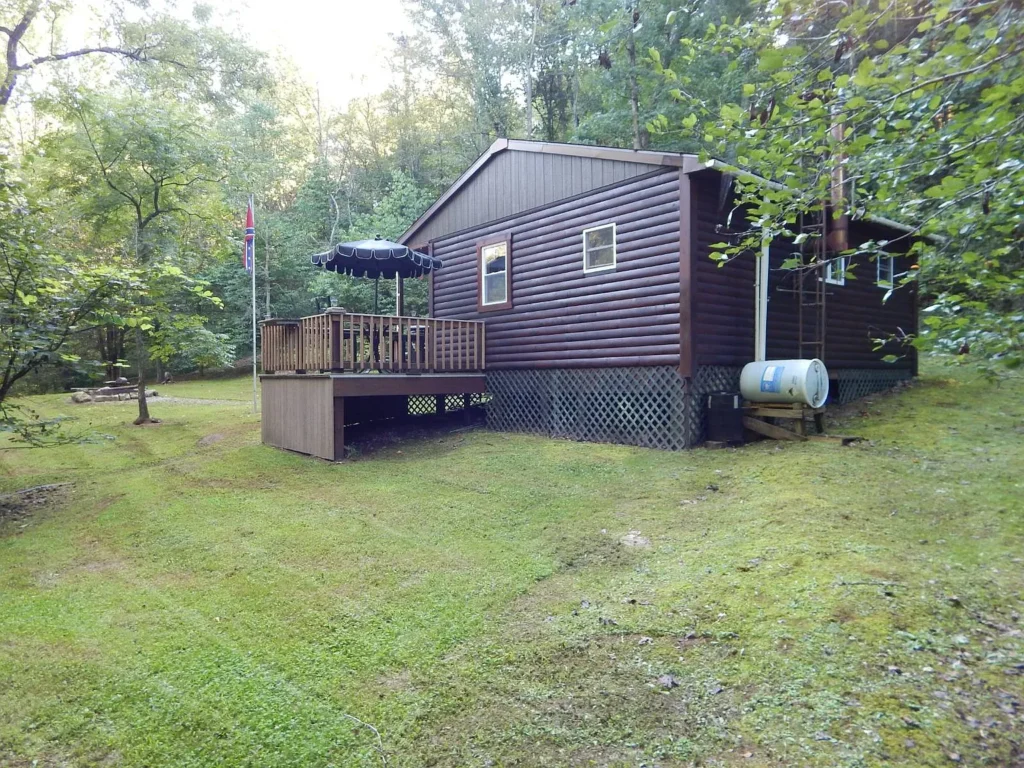
The real estate is officially marketed as vacant land, but an approximately 20-by-24-foot off-grid cabin sits on the property. That works out to an approximate 480-square-foot footprint.
The cabin is described as furnished, and the listing also says a riding mower stays with the property.
That makes the offering different from purchasing 37 acres of completely raw West Virginia land and starting from zero.
For a buyer interested in a recreational retreat, having a cabin, septic system, heating source and basic water setup already in place could potentially eliminate several initial projects.
However, buyers should independently inspect all of these systems and verify the legal/permitting status of the cabin and improvements.
The Price Works Out to About $3,322 Per Acre
A useful way to examine a large land purchase is to calculate the asking price per acre.
$125,000 ÷ 37.63 acres = approximately $3,321.82 per acre.
That does not mean each acre is worth exactly $3,322.
Rural land values can change dramatically based on road access, timber, topography, buildable areas, utilities, water, mineral rights, easements and development restrictions.
The cabin and other improvements are also part of the overall asking price.
For context, other current land listings in the broader region show significant variation. Examples surfaced in current listings include 19.3 acres at $59,000, 100 acres at $159,000 and 153 acres at $244,900. Those properties are not necessarily comparable to this one, so their asking prices should not be treated as evidence of market value.
A professional appraisal and recent closed-sale comparables would provide much stronger evidence for determining whether $125,000 represents fair market value.
How Does the Off-Grid Cabin Work?
One of the property’s most interesting characteristics is its simple utility setup.
Instead of a conventional municipal water connection, the listing describes gutters collecting rainwater into a storage tank. Water then moves by gravity to the cabin’s kitchen sink and bathroom.
For electricity, the cabin reportedly has battery-powered lighting and wiring that can accommodate a generator or portable power station. Heat comes from a wood-burning stove. A private septic system is also reported.
For someone specifically searching for an off-grid cabin in West Virginia, this may be appealing because some of the basic systems already exist.
But buyers should inspect rather than assume.
Rainwater quality and treatment, tank capacity, winter performance, septic condition, electrical wiring and generator compatibility should all be evaluated.
A recreational weekend cabin has very different infrastructure requirements from a full-time residence.
Could Solar Power Be Added?
Potentially, but feasibility would depend on the site.
A buyer considering a more permanent off-grid solar system would need to evaluate tree cover, orientation, available sunlight, electrical demand and battery-storage requirements.
Because the property is heavily wooded, simply buying solar panels does not guarantee sufficient generation.
A properly designed system could involve solar panels, an inverter, battery storage, charge-control equipment and a backup generator.
Anyone planning full-time off-grid living should calculate actual electrical loads before purchasing equipment.
A Property Designed Around Privacy
Privacy is arguably one of the strongest characteristics of this listing.
The cabin sits back in the woods and is reached by a private road described as requiring four-wheel-drive access.
That isolation may be exactly what a hunting or recreational buyer wants.
It can also introduce practical considerations.
Buyers should investigate who legally owns and maintains the access road, whether an easement exists, whether access is year-round, how difficult the road becomes after heavy rain or snow, and whether emergency vehicles can reach the cabin.
The condition of a private road can become a meaningful ownership expense over time.
37.63 Acres for Hunting and Recreation
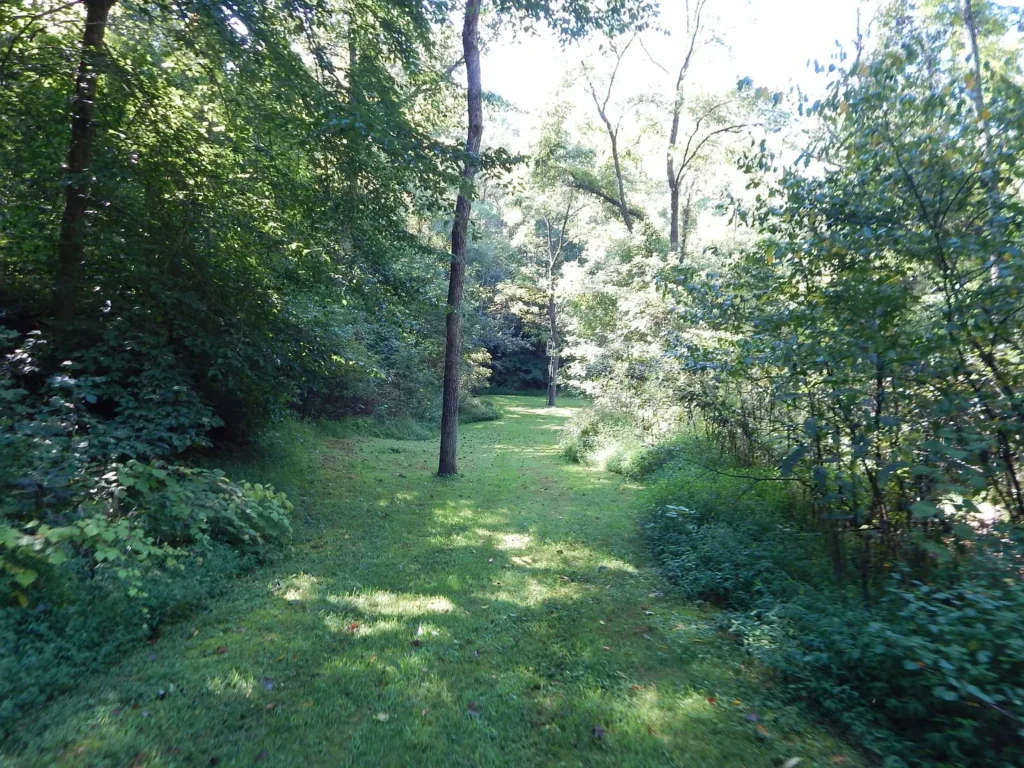
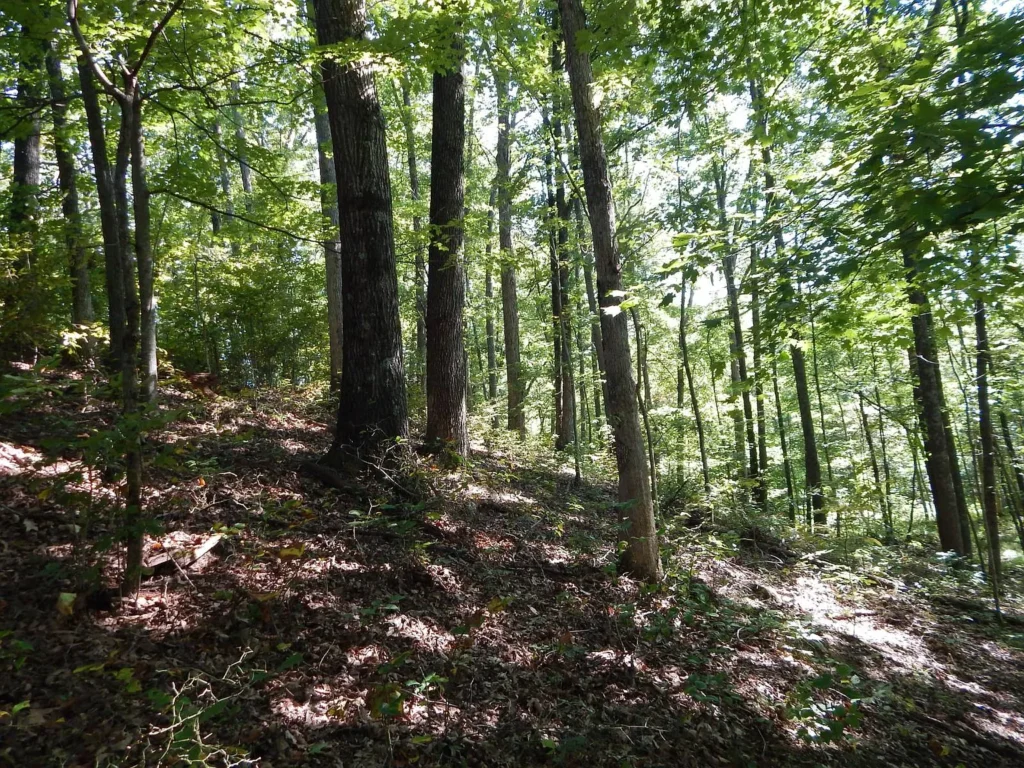
The land is described as mostly wooded, with some mature timber and trails running through the property.
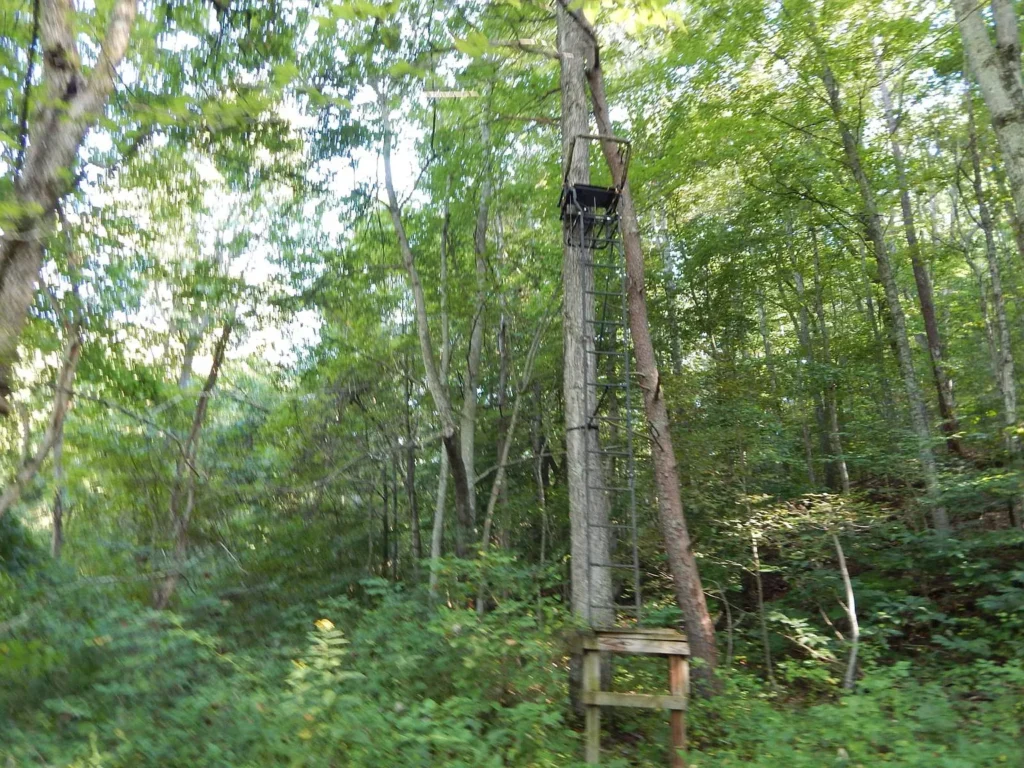
The listing also reports existing tree stands and feeders and mentions deer, turkey and bear.
Those characteristics could make the property attractive to someone searching for hunting land for sale in West Virginia.
Still, wildlife presence can vary. Buyers interested specifically in hunting should investigate habitat, neighboring land uses, property boundaries and applicable hunting regulations rather than relying only on marketing descriptions.
The trail network may also have recreational value for hiking or ATV use, subject to the terrain and the owner’s management of the property.
What About the Mature Timber?
Mature trees can be an important component of rural acreage, but buyers should be careful about assigning a dollar value without professional analysis.
A timber cruise conducted by a qualified forester can help identify species, volume, quality and potential harvest value.
The presence of mature trees does not automatically mean that a large timber harvest is financially or environmentally appropriate.
Road access for logging equipment, terrain, erosion concerns, local regulations and long-term forest-management objectives can all affect the economics.
A buyer considering timber as part of the investment case should obtain independent forestry advice.
Annual Property Taxes
The current listing reports annual property taxes of approximately $563.
That works out to roughly $46.92 per month when divided by 12, although property tax is not necessarily billed monthly.
Importantly, the $563 figure should not be interpreted as a guaranteed future tax bill.
West Virginia property assessments and applicable levy rates determine the actual tax obligation, and a change in ownership or property characteristics can affect future figures.
Prospective buyers should verify the parcel and current assessment with the appropriate county assessor before closing.
No HOA Could Matter to Rural Buyers
The current listing reports no homeowners association.
For someone looking specifically for secluded recreational land, avoiding monthly HOA dues and private HOA rules can be attractive.
However, “no HOA” does not mean “no restrictions.”
Deed restrictions, easements, county requirements, building codes, septic rules and other laws may still affect what can be done with the property.
Those should be checked independently during due diligence.
Financing an Off-Grid Cabin and Vacant Land
Financing could be one of the more complicated parts of buying a property like this.
Because the listing classifies the property as vacant/unimproved land rather than a conventional residence, a buyer should not automatically assume that an ordinary residential mortgage will work.
Depending on the lender and property, financing possibilities might include a land loan, rural property loan, local bank financing or other real estate financing.
Lenders may look at the down payment, appraisal, road access, utilities, cabin status, credit profile and intended use.
Properties with unconventional water and electrical systems can also be treated differently by lenders.
A buyer who needs financing should speak with lenders familiar with rural and recreational properties before making assumptions about loan eligibility.
Could This Be a Short-Term Rental Cabin?
The idea is tempting.
A furnished cabin surrounded by 37 acres of woods could potentially have characteristics that appeal to travelers seeking a secluded outdoor experience.
But investment potential and legal permission are two different things.
Before treating the property as an investment property or vacation rental, a buyer should verify county rules, cabin permitting, access requirements, insurance availability, septic capacity, short-term rental regulations and any applicable lodging or business requirements.
The same applies to adding additional cabins or campsites.
A large amount of acreage alone does not guarantee development rights.
The Cabin Is Small—but That May Be the Point
At roughly 20 by 24 feet, this is not intended to compete with a large suburban house.
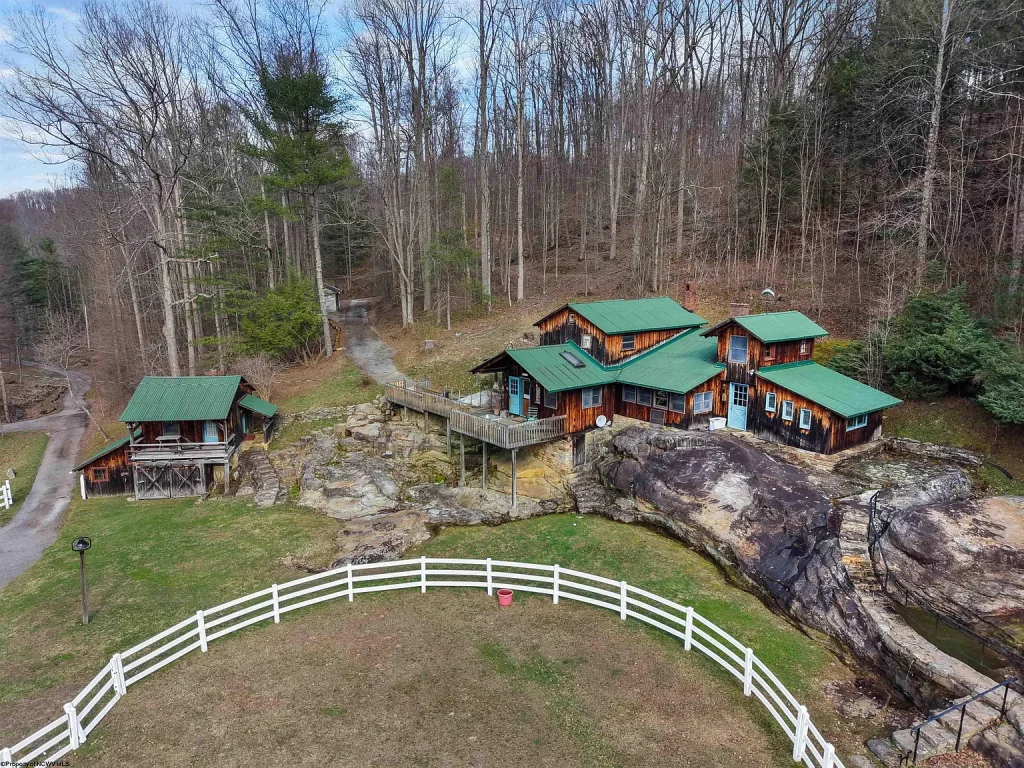
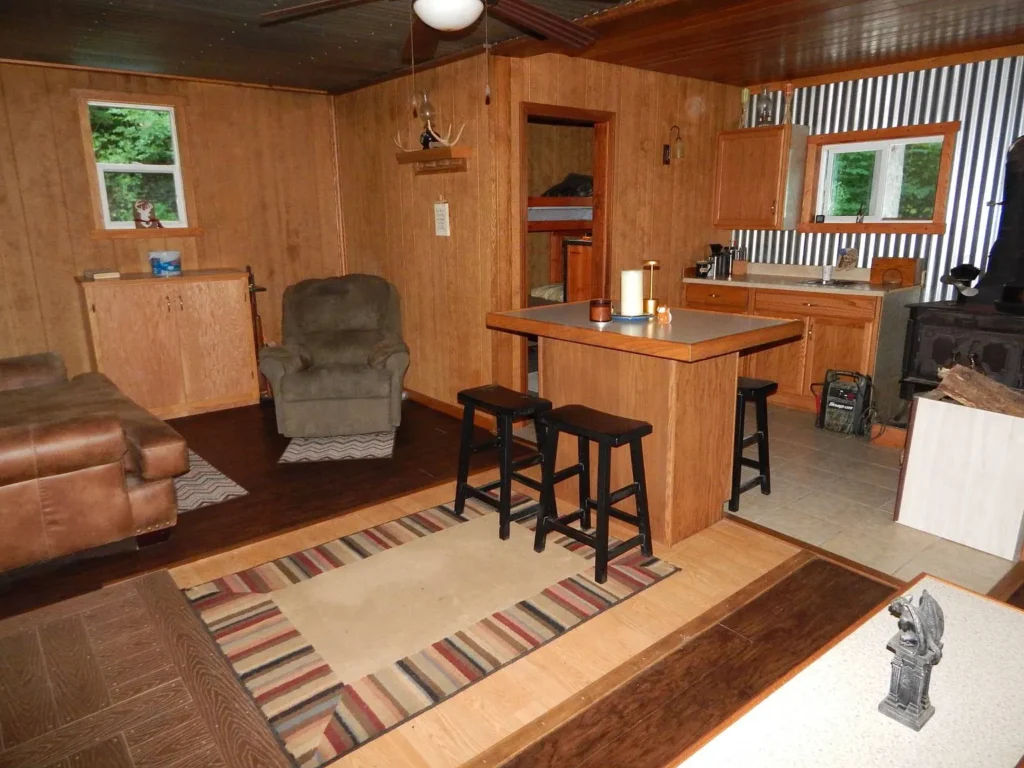
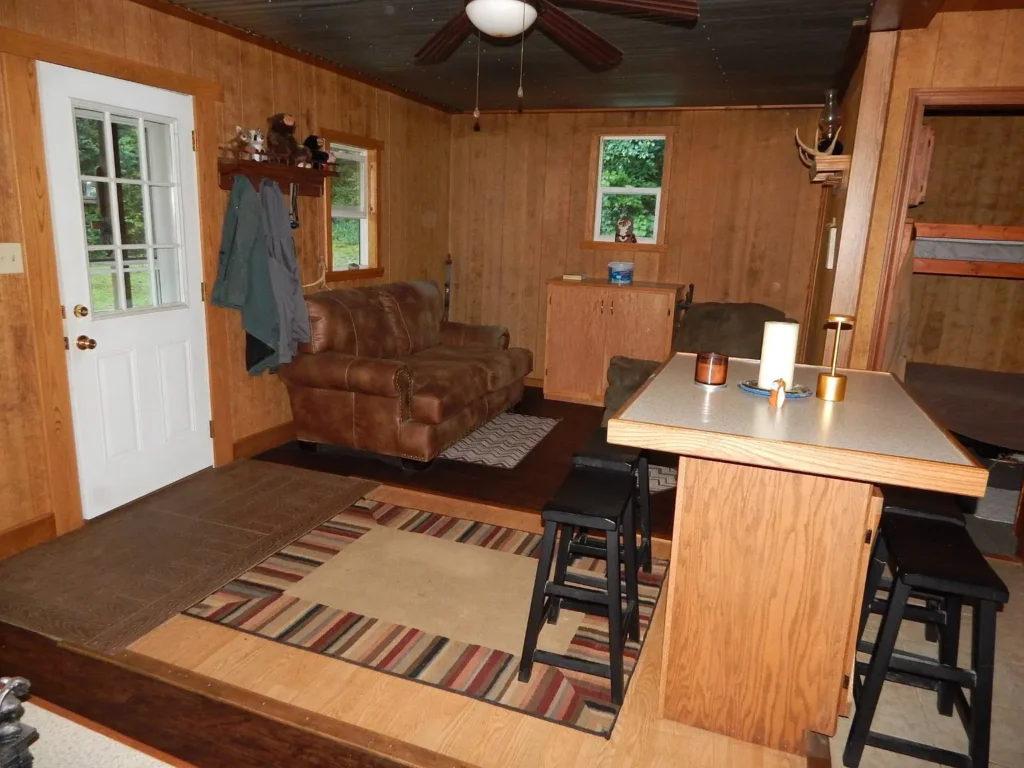
The photos show a relatively simple interior with a kitchen area, wood stove, seating space and rustic finishes.
For a hunting camp or weekend retreat, a smaller building can have advantages.
There is less space to heat, potentially lower maintenance, and less infrastructure demand than a full-size house.
For full-time living, however, buyers would need to decide whether the space, utilities, water system and access meet their needs throughout the year.
Potential Ownership Costs Beyond the $125,000 Price
Purchase price is only the beginning of the financial calculation.
A rural property like this could eventually involve expenses for road maintenance, property insurance, tree or vegetation management, septic maintenance, water-storage equipment, generator fuel and maintenance, battery replacement, cabin repairs, property taxes and possibly improvements to the electrical system.
A buyer wanting to add solar, improve the road or build additional structures could face substantially higher costs.
This is why total cost of ownership is more useful than looking only at the asking price.
Investment Potential vs. Lifestyle Value
Land can create value in several different ways.
Some buyers may primarily view 37.63 acres as a long-term land investment. Others may value it for hunting, recreation, timber or privacy. Another buyer might consider improving the cabin or investigating rental opportunities.
Those are very different investment theses.
For example, a buyer expecting appreciation would need to study historical land sales and future demand. A timber-focused buyer would need a forestry assessment. Someone considering rental income would need a realistic occupancy and operating-cost model.
There is no guarantee that any of those strategies will produce a profit.
In this case, a substantial portion of the property’s appeal may simply be lifestyle value—owning a private wooded retreat that can already be used.
Advantages and Risks to Consider
Several characteristics could attract buyers: 37.63 acres of mostly wooded land, an existing furnished cabin, private septic, an established rainwater system, wood heat, no reported HOA, trails, mature timber, hunting infrastructure and a relatively low reported annual tax bill.
The same property also comes with considerations that a conventional homeowner may never face. Four-wheel-drive access can be inconvenient or expensive to maintain, the water and power systems are unconventional, heavily wooded terrain may limit development locations, financing may be more difficult, and future improvements may require permits or infrastructure upgrades.
Neither side of that equation automatically makes the property a good or bad investment. It depends heavily on the buyer’s intended use.
Buyer Due-Diligence Checklist
Before purchasing, a serious buyer should verify the survey and exact boundaries; deed, title and easements; legal road access and maintenance obligations; cabin permits and status; septic condition; rainwater storage and treatment; property taxes and assessment; timber and mineral rights; flood and drainage conditions; insurance availability; cellular/internet connectivity; hunting and land-use regulations; feasibility of additional construction; and whether all furniture, equipment, tree stands, feeders and the riding mower are actually included in the final purchase agreement.
For a property with unconventional infrastructure, a physical inspection is particularly important.
Is $125,000 a Reasonable Price?
The listing alone cannot answer that.
At approximately $3,322 per acre, the property may initially appear affordable compared with many residential real-estate purchases. But price per acre is only one metric.
The existing cabin, septic system, trails and other improvements may add value. Conversely, difficult access, limited utilities or challenging topography could reduce what some buyers are willing to pay.
The strongest approach would be to compare the property with recently sold, similarly sized recreational and hunting properties in the surrounding West Virginia market—not just other active listings.
A professional appraisal could also help a buyer separate the value of the land from the value of the improvements.
Final Thoughts
The $125,000 property at 0 Petroleum Rd is an unusual combination of West Virginia land, an off-grid cabin and a ready-made recreational retreat.
Current listing records show 37.63 acres, a $125,000 asking price, $563 in reported annual property taxes and an approximately 20-by-24-foot furnished cabin reached through private four-wheel-drive access.
For buyers looking for conventional utilities and easy paved-road access, the property may require more compromise than a typical home.
For someone specifically seeking privacy, hunting acreage, wooded trails and a small off-grid base, those same characteristics may be central to the appeal.
The most useful question is therefore not simply whether 37.63 acres for $125,000 is cheap.
It is whether the land, access, cabin and infrastructure fit the buyer’s intended use—and what it will cost to maintain or improve them over time.
Frequently Asked Questions
How much land comes with the property?
The current listing reports 37.63 acres.
What is the approximate price per acre?
At a $125,000 asking price, it works out to approximately $3,322 per acre.
How large is the cabin?
The listing describes it as approximately 20 feet by 24 feet, which implies a roughly 480-square-foot footprint.
Does the cabin have electricity?
The listing describes battery-powered lighting and says the cabin is wired for a generator or power pack rather than describing conventional grid electricity.
How does the cabin get water?
According to the listing, gutters collect rainwater into a tank that provides gravity-fed water to the kitchen and bathroom. Buyers should independently inspect the system and determine whether treatment is needed for their intended use.
Does the property have septic?
Yes, the listing reports a private septic system.
How much are the property taxes?
The current listing reports total annual taxes of approximately $563.
Is there an HOA?
Zillow currently reports no HOA.
Is the property suitable for hunting?
The listing describes wooded acreage, trails, tree stands and feeders and reports deer, turkey and bear activity. Actual hunting suitability and wildlife presence should be independently evaluated.
Disclaimer: This article is for informational and educational purposes only. It is not real-estate, investment, legal, tax or financial advice. Listing details, pricing, taxes, property condition and availability may change. Buyers should independently verify all information and consult appropriate real-estate, legal, financial and inspection professionals before purchasing.












Original listing: View 0 Petroleum Rd on Zillow