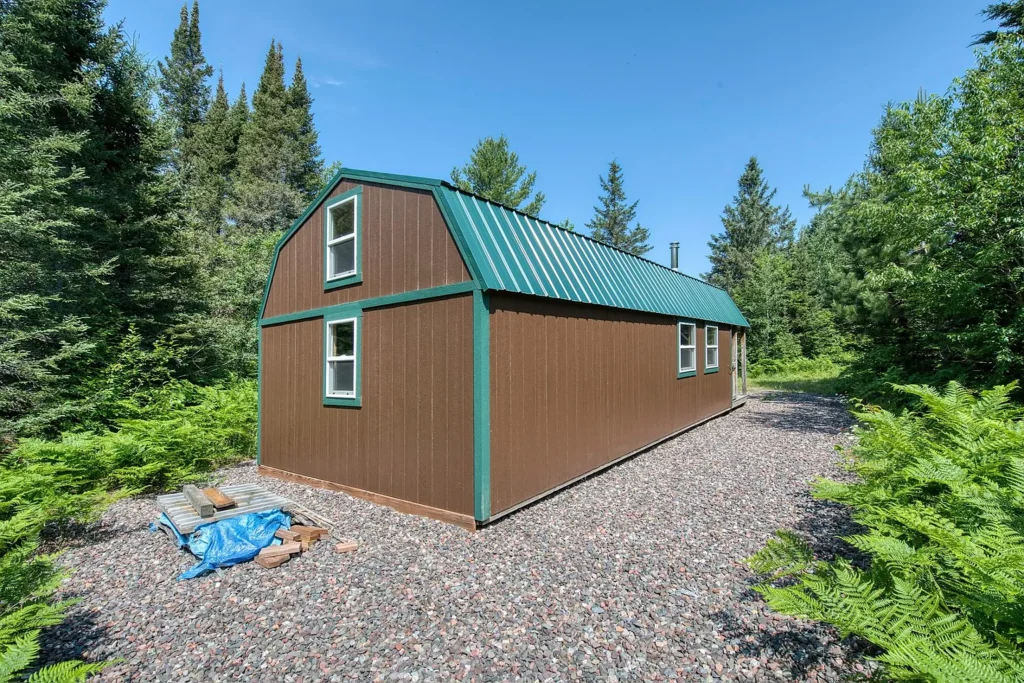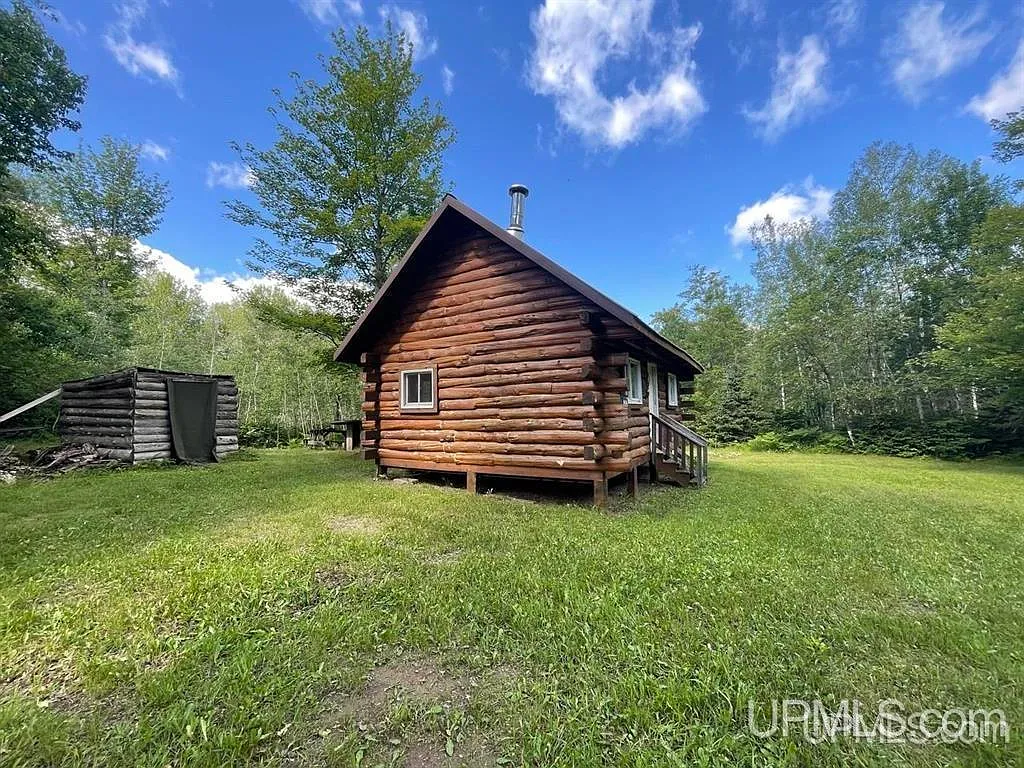
For buyers searching for an affordable cabin with land in Michigan, this small property in the Upper Peninsula offers an interesting combination: a relatively new cabin, 10 wooded acres, and an asking price below $100,000.
Located at 33048 W North Rd, Eckerman, MI 49728, the property is listed for $90,000, following a $10,000 price reduction on October 23, 2026.
The cabin itself is only 384 square feet, but the appeal extends beyond the building. Its wooded setting, loft space, electric service, and access from a reportedly year-round maintained road could make it worth investigating for someone seeking a seasonal getaway or outdoor recreation basecamp.
However, this is not a conventional, fully equipped house. Its water arrangement, wastewater system, limited living space, and potential winter maintenance costs deserve careful attention before a buyer makes an offer.
Property Overview
| Feature | Details |
|---|---|
| Address | 33048 W North Rd, Eckerman, MI 49728 |
| Asking Price | $90,000 |
| Previous Asking Price | $100,000 |
| Price Reduction | $10,000 on October 23, 2026 |
| Land Size | 10 acres |
| Building Size | 384 square feet |
| Bedrooms | 1 |
| Bathrooms | 1 full bathroom |
| Additional Space | Loft |
| Year Built | 2024 |
| Construction | Amish-built cabin, according to listing |
| Roof | Metal |
| Exterior | Hardboard |
| Heating | Electric and propane |
| Electricity | Electric utility reported on property |
| Water | Pump water setup described; no conventional water source specified in structured listing |
| Wastewater | Holding tank listed |
| Road Access | Described as county-maintained and plowed year-round |
| HOA | No HOA amount reported |
Property details are based on the supplied real estate listing information and may change. Buyers should independently verify all important facts.
A Small Cabin Surrounded by 10 Acres of Michigan Woodland
The most compelling feature of this listing may be the land rather than the cabin’s interior square footage.
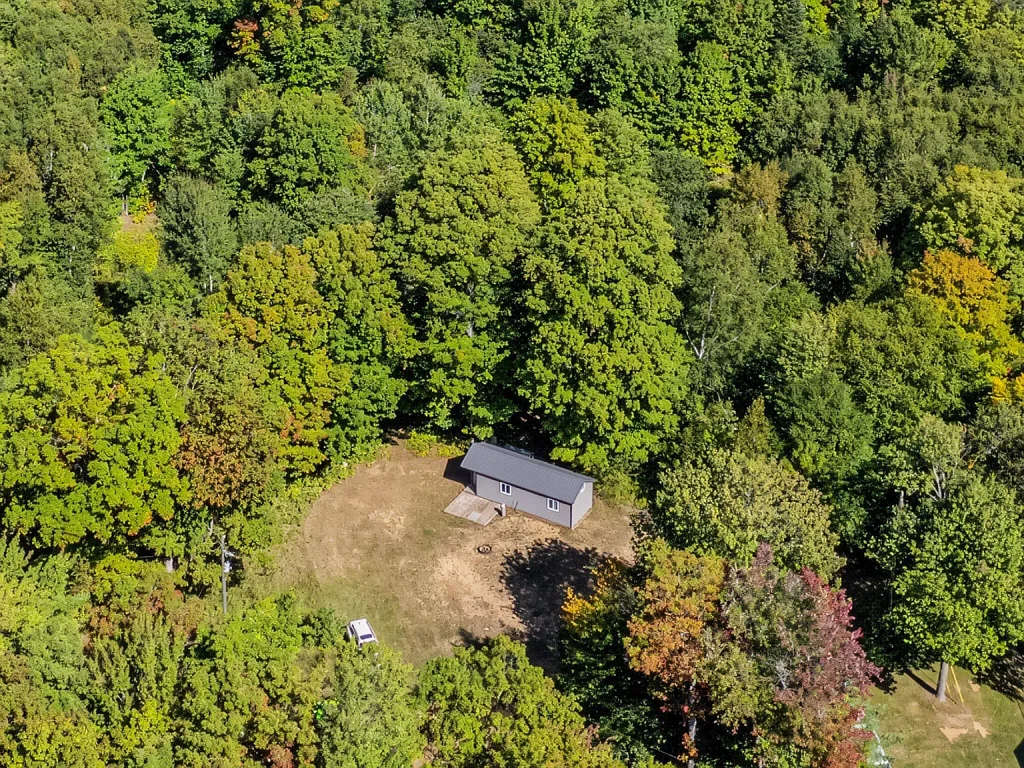
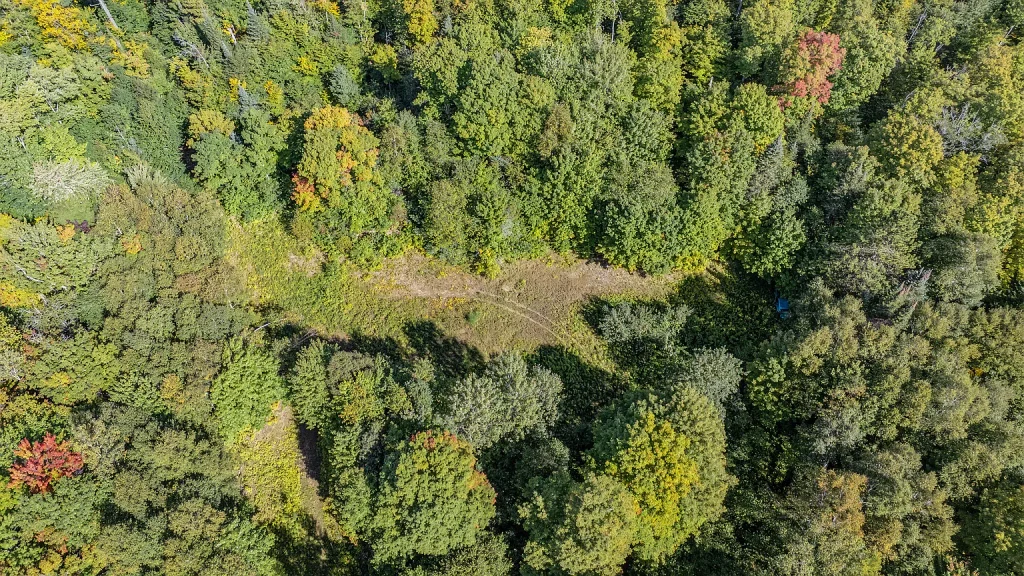
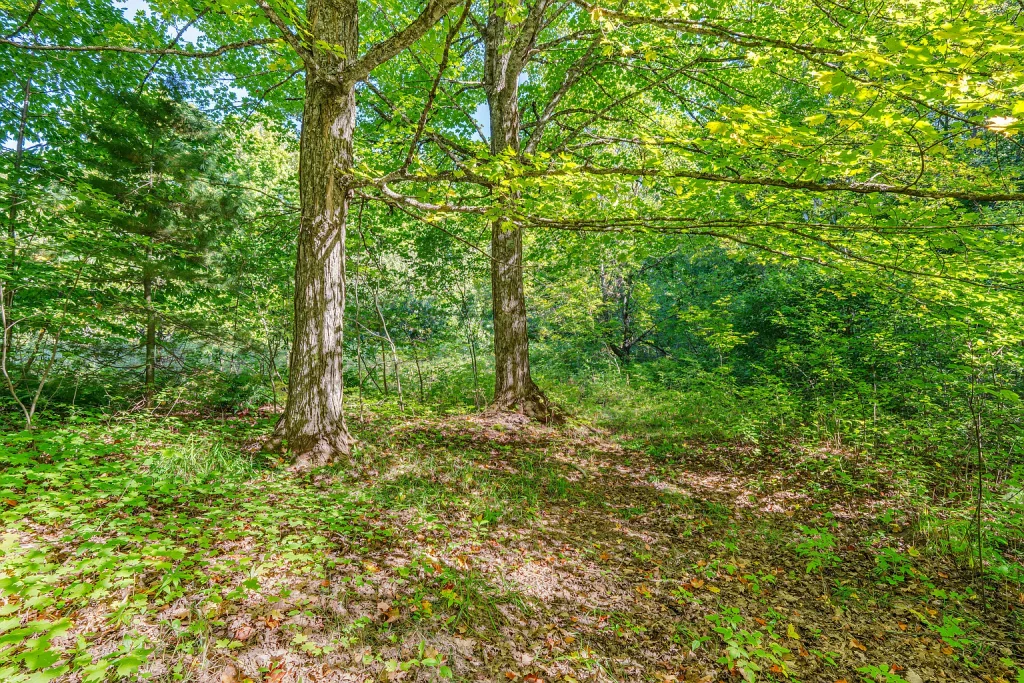
Ten acres provide a significantly different experience from a typical residential lot. Instead of purchasing a small house surrounded by neighboring homes, a buyer would be acquiring a wooded rural property with space for outdoor activities, privacy, and potential future land improvements.
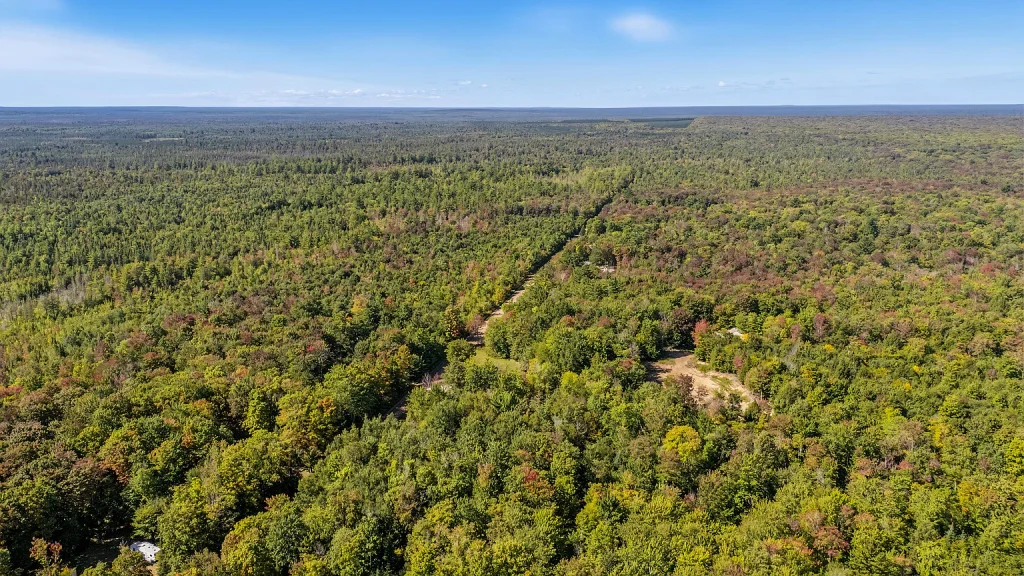
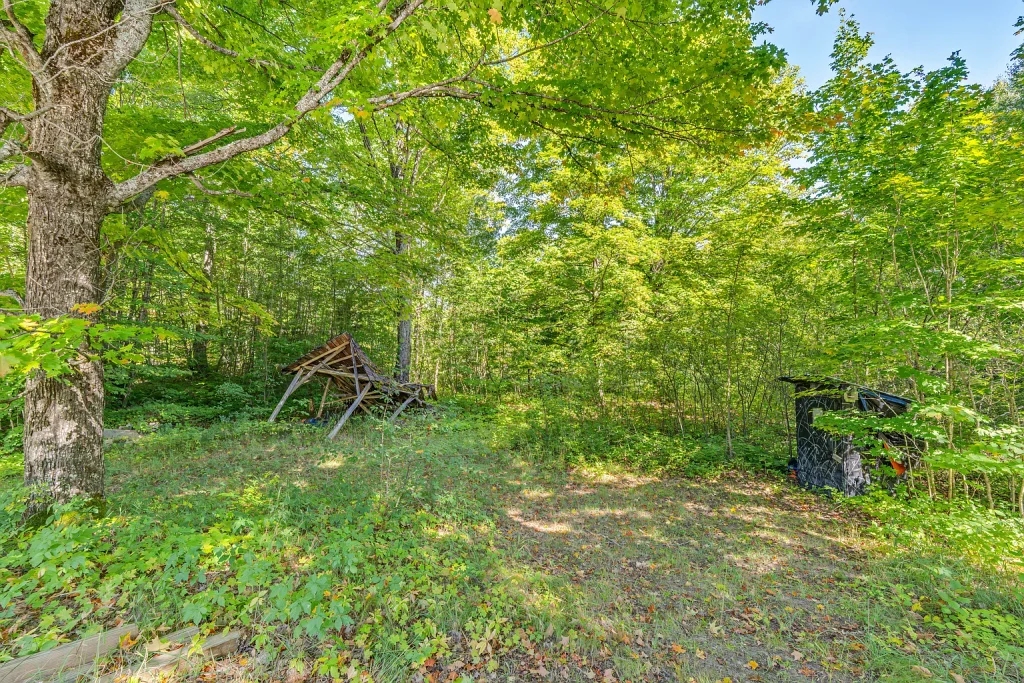
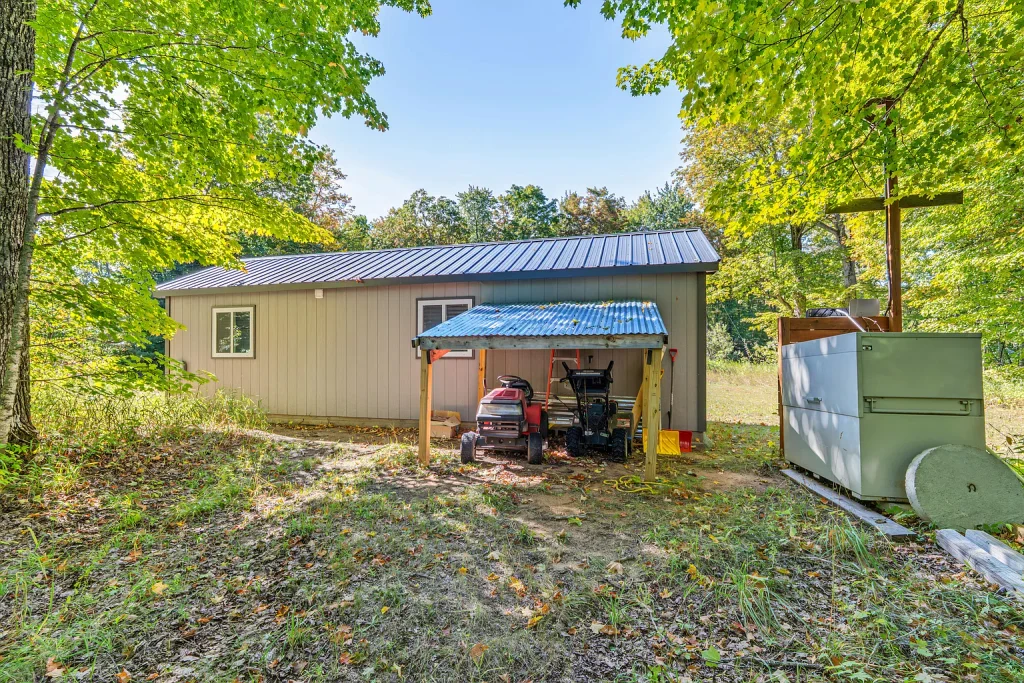
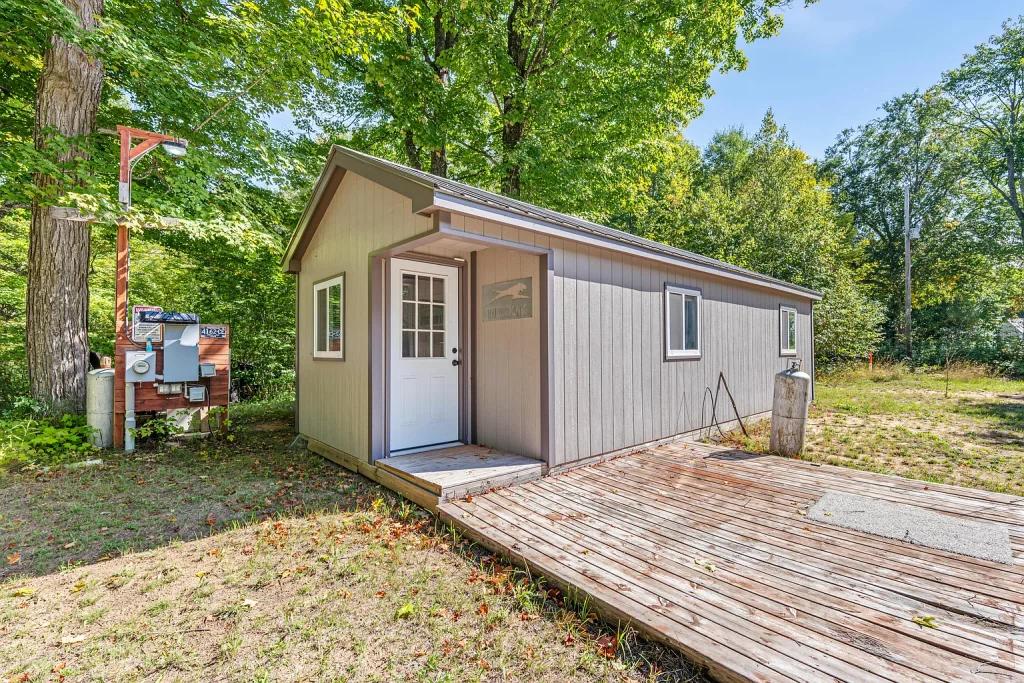
The listing photographs show dense tree coverage, a clearing around the cabin, and a rural setting with relatively little visible development nearby.
For someone interested in a quiet weekend escape, this type of environment may be more important than having a large house.
However, wooded acreage is not automatically usable acreage.
Before purchasing, buyers should investigate the property’s boundaries, terrain, wetlands, drainage, and any restrictions affecting land clearing or future construction. A survey can also help establish exactly where the 10 acres begin and end.
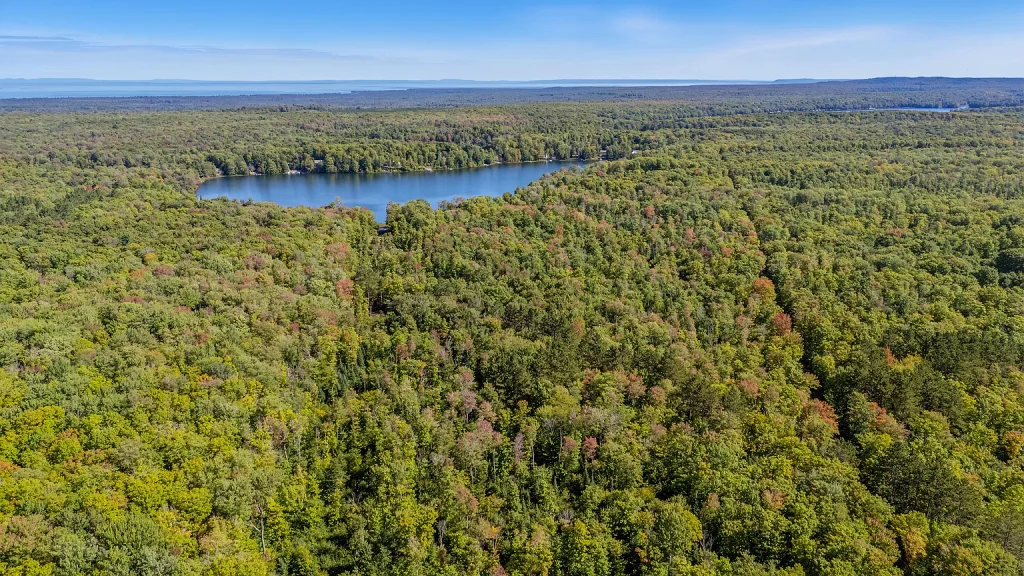
The aerial photographs show a lake within the surrounding landscape, but the listing does not establish that the property has lake frontage, lake access, or ownership rights to that water. Buyers should not assume any waterfront benefits.
Inside the 384-Square-Foot Cabin
According to the listing, the Amish-built cabin was constructed in 2024 and measures approximately 12 feet by 32 feet.
That is a compact footprint, but the layout incorporates several features that may improve its usefulness.
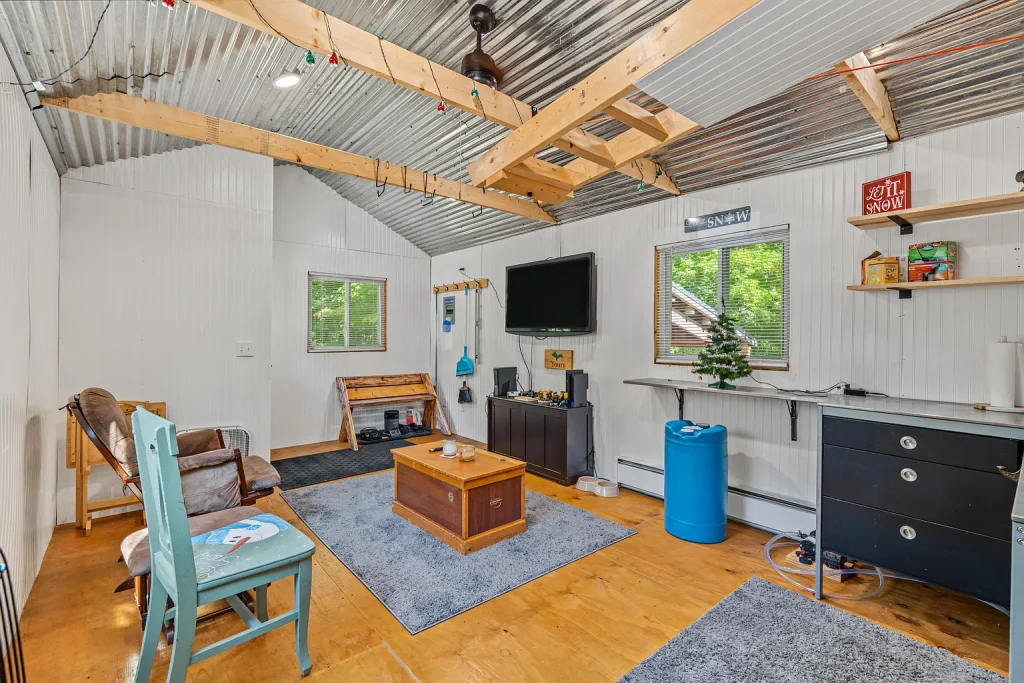
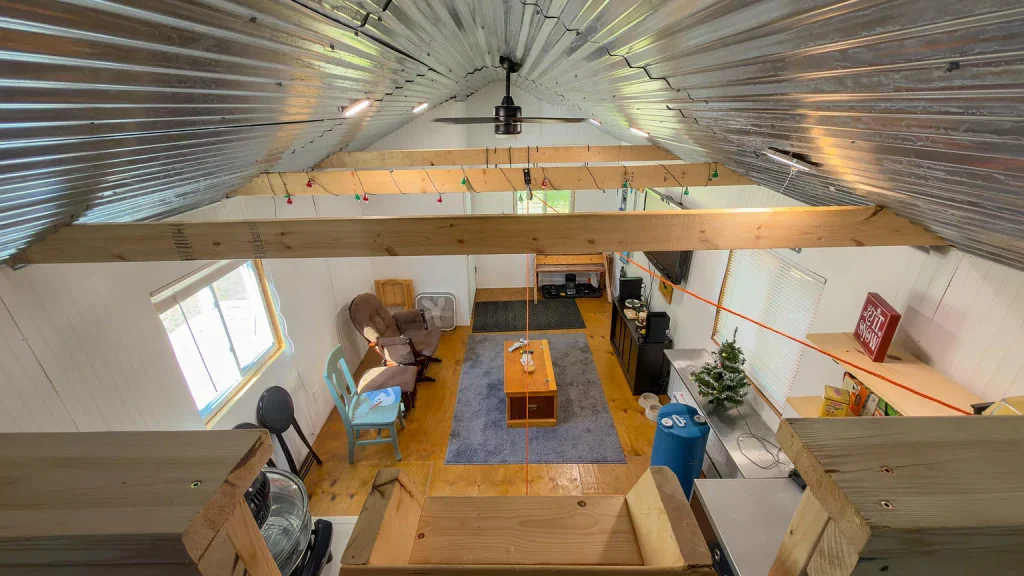
The main level includes a living area, a small kitchen arrangement, one bedroom, and a full bathroom. There is also an upper loft, which adds flexibility for occasional sleeping or storage.
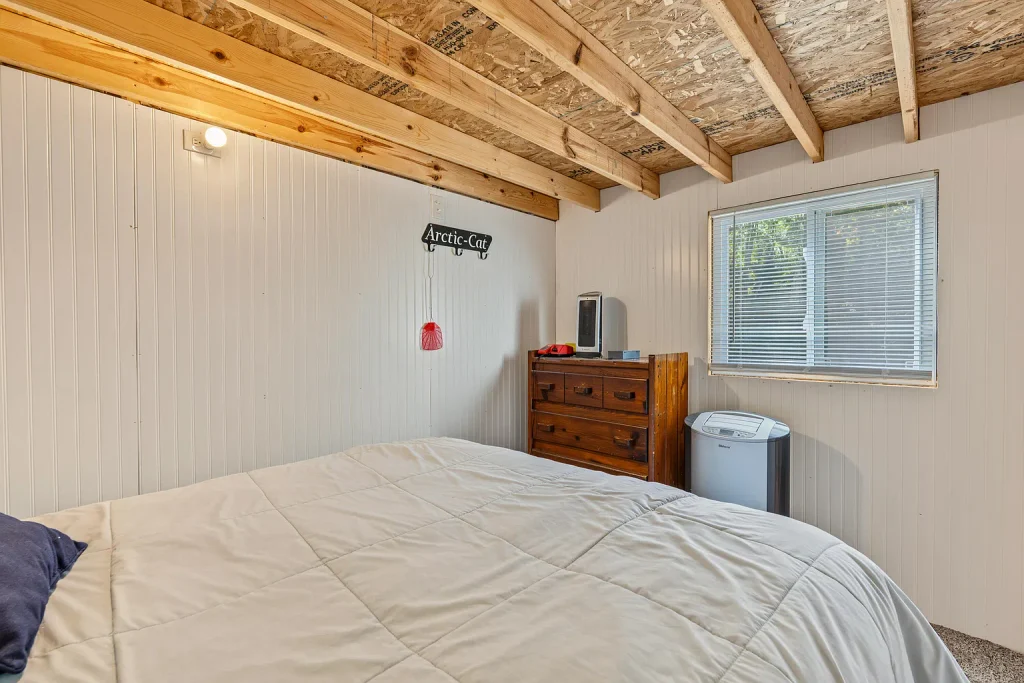
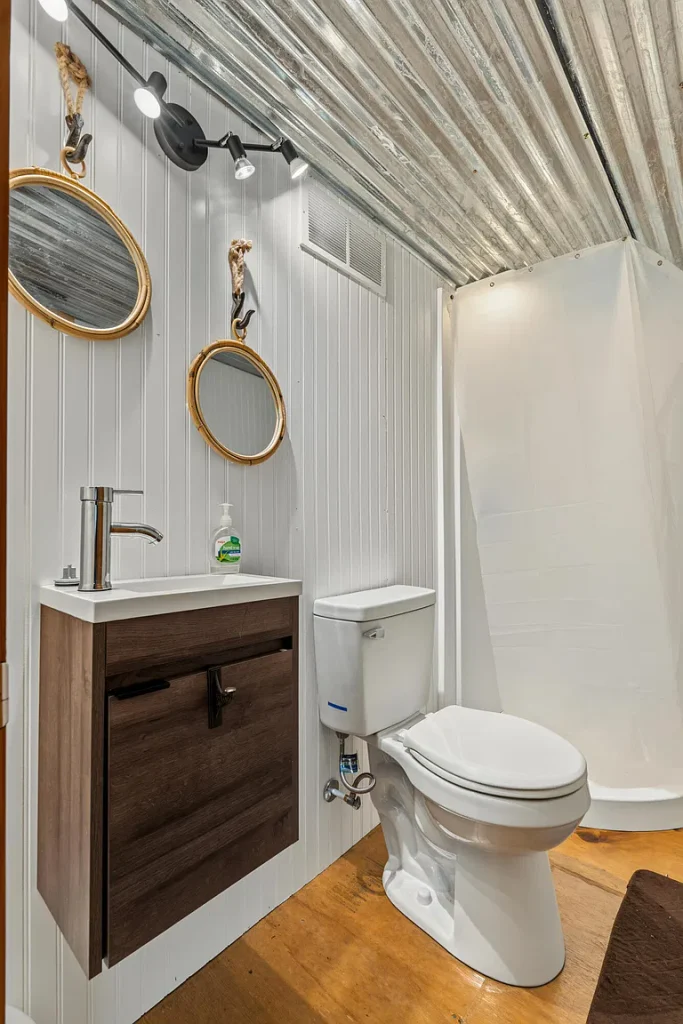
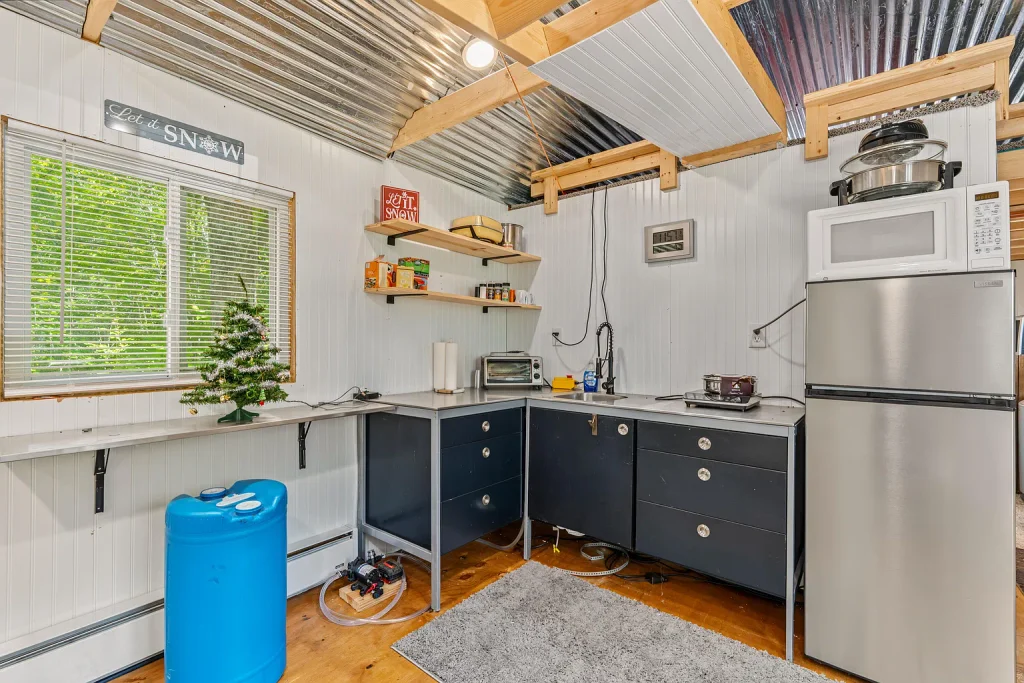
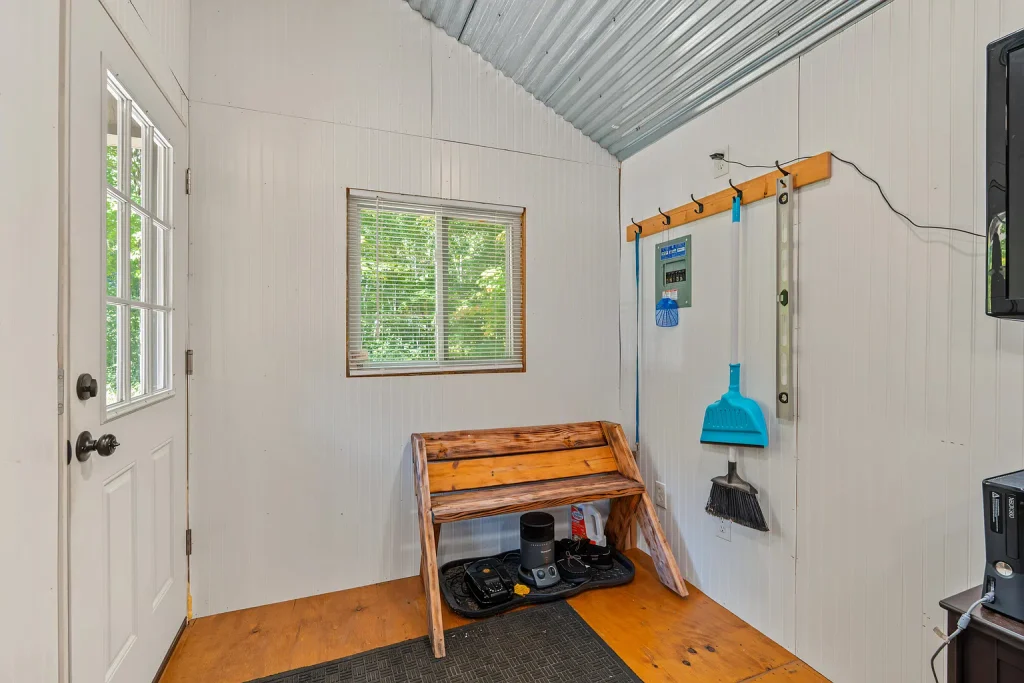
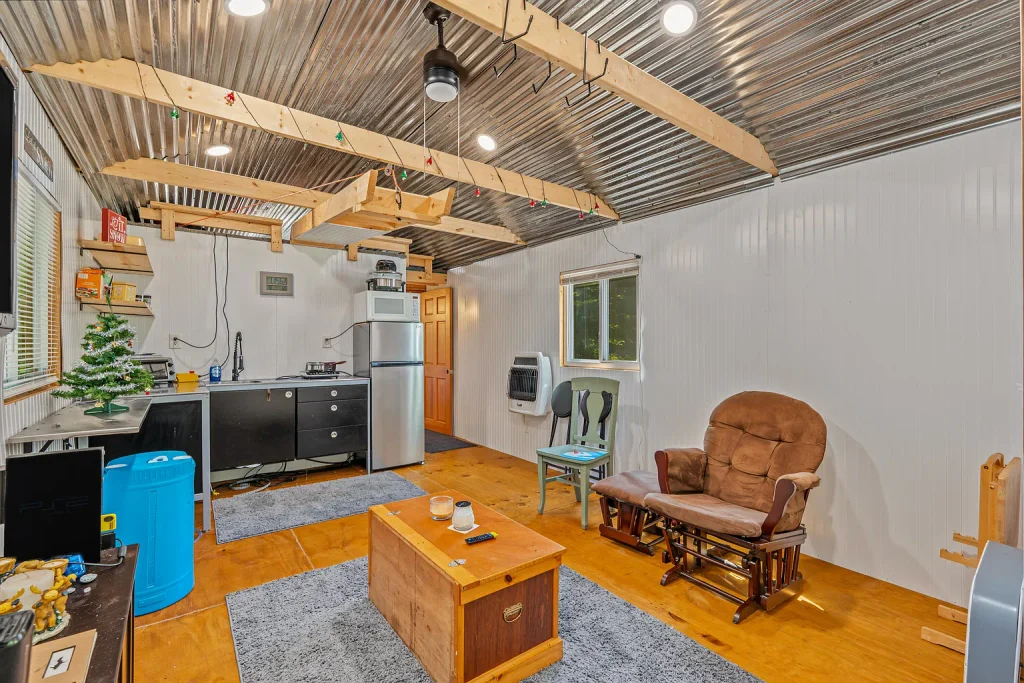
The interior has a practical rustic character, with wood beams, corrugated metal ceiling finishes, white wall paneling, and wood-look flooring.
The kitchen area includes a refrigerator, microwave, sink, and basic counter space. The bathroom contains a toilet, vanity, and shower.
These features make the cabin more functional than a completely unfinished hunting shelter, although the operation of all appliances, plumbing, and electrical components should be confirmed.
The Loft Is Useful, but It Has Limitations
One of the more distinctive interior features is the loft beneath the sloped metal roof.
It may offer additional sleeping space for occasional visitors, but its low ceiling limits standing room and comfortable movement.
Buyers should also verify the loft’s access, structural capacity, emergency escape provisions, and whether it is legally recognized as sleeping space.
It should not automatically be treated as a second bedroom.
For a solo owner or couple using the cabin on weekends, the limited space may be manageable. For a family planning extended stays, the 384-square-foot layout could become restrictive.
Why the Location Appeals to Outdoor Enthusiasts
Eckerman is in Michigan’s Upper Peninsula, a region known for extensive forests, seasonal recreation, and long winters.
The listing describes the cabin as approximately 20 minutes south of Paradise and less than an hour from the Mackinac Bridge. Those are seller-provided travel estimates, so actual driving times should be checked.
The property’s location could appeal to buyers interested in:
- Snowmobiling and winter weekend trips
- Hunting and wildlife observation
- Hiking and exploring wooded land
- ATV and outdoor recreation
- A quiet seasonal retreat away from busier residential areas
Any hunting, trail riding, or ATV use must comply with applicable laws, trail permissions, and property restrictions. Ownership of wooded land does not automatically provide access to neighboring recreational trails.
The listing also states that W North Road is county-maintained and plowed year-round.
That is potentially important in a region with substantial winter snowfall, but buyers should verify the county’s maintenance responsibility and determine who must clear snow from the private driveway and cabin entrance.
The Biggest Catch: Water and Wastewater
The cabin may look ready for a weekend visit, but the water system requires particularly close investigation.
The listing description mentions a pump water setup, while the structured property details list the water source as “None.”
Those statements are not necessarily contradictory. The cabin may use a manually filled or stored-water arrangement rather than a drilled well or municipal water connection.
However, they do mean buyers should not assume the property has a permanent, potable, pressurized water supply.
Important questions include:
- Where does the cabin’s water originate?
- Is water stored in a tank and supplied by a pump?
- Is the system suitable for drinking, cooking, and showering?
- How is the system protected against freezing?
- Does the water setup operate reliably throughout winter?
- Would a well be permitted, feasible, and affordable if the buyer wanted one?
The wastewater situation also needs attention.
The listing describes an existing wastewater system previously used for a camper, while the structured information identifies a holding tank.
A holding tank is different from a conventional septic system with a drain field. It generally requires periodic pumping and may involve ongoing service costs.
Buyers should request permits, installation records, tank capacity information, and maintenance history. The local health department should be consulted to confirm whether the system is approved for the cabin’s intended use.
These issues could significantly affect the property’s practicality as a full-time residence.
Heating and Winter Readiness
The cabin reportedly has electric heating with propane backup.
Having two possible heating sources may be useful in northern Michigan, but it does not guarantee that the building is prepared for continuous winter occupancy.
The photographs show metal interior ceiling finishes and exposed structural elements. Those features create a distinctive cabin appearance, but photographs cannot establish insulation quality or energy efficiency.
Before buying, investigate the insulation in the roof, walls, and floor, along with window performance, ventilation, and heating capacity.
It is also important to understand whether the propane equipment operates independently during a power outage.
A buyer who plans to use the cabin during heavy snow or freezing temperatures should calculate the costs of heating, snow removal, propane delivery, and protecting the plumbing.
Is $90,000 a Reasonable Price?
The property’s price history shows:
| Date | Listing Event | Price |
|---|---|---|
| September 20, 2026 | Listed for sale | $100,000 |
| October 23, 2026 | Price reduced | $90,000 |
The reduction represents a 10% decrease from the original asking price.
At $90,000, the property works out to approximately $234 per square foot of reported cabin space.
That number can be misleading when considered on its own.
Unlike a typical small residential home, this sale also includes 10 acres of land. The asking price reflects a combination of the cabin, land, access, and whatever improvements are included.
Dividing the price by acreage produces approximately $9,000 per acre, but that is not a meaningful raw-land valuation because the cabin and improvements are part of the purchase.
A better way to assess value would be to compare the property with recent sales of similar small cabins on wooded acreage in Chippewa County and surrounding Upper Peninsula communities.
Buyers should also account for any expenses needed to improve the water system, wastewater arrangement, insulation, or year-round usability.
The lower asking price is worth noticing, but it does not by itself prove that the property is undervalued.
What Buyers Should Inspect Before Making an Offer
A property like this can look simple on paper, but rural cabins often have systems and access arrangements that differ substantially from conventional homes.
Before committing, buyers should investigate the following:
1. Water supply: Confirm how water is delivered, stored, pumped, and made safe for drinking.
2. Wastewater permits: Verify the holding tank’s capacity, legal status, and expected pumping costs.
3. Road access: Confirm legal access rights, county road maintenance, and winter driveway responsibilities.
4. Electrical service: Determine whether the service is active, properly installed, permitted, and sufficient for heating needs.
5. Heating and insulation: Evaluate the cabin’s ability to maintain safe indoor temperatures during Upper Peninsula winters.
6. Loft safety: Inspect its structural support, access, headroom, and compliance with applicable requirements.
7. Land boundaries: Obtain reliable boundary information and investigate easements, wetlands, and potential encroachments.
8. Financing and insurance: Ask lenders and insurers whether the small building size and unconventional water or wastewater systems affect eligibility.
9. Personal property: Confirm which appliances, furnishings, equipment, and outdoor items are actually included in the sale.
10. Intended use: Check whether the cabin is permitted for the buyer’s planned seasonal, recreational, rental, or permanent residential use.
These checks are especially important when purchasing a relatively new structure that may not have the same utility arrangements as a standard residence.
Who Might Find This Property Appealing?
This cabin may be a particularly interesting option for someone who prioritizes acreage, outdoor recreation, and a manageable building footprint.
A snowmobile enthusiast could appreciate having a rural place to stay during winter trips. A hunter or nature lover might value the surrounding woodland. A buyer seeking a weekend getaway may prefer a small, relatively new cabin over an older house requiring extensive renovation.
However, the property may be less suitable for buyers who need a conventional water system, abundant indoor space, easy year-round living, or a home that readily qualifies for standard financing.
The best fit is likely someone comfortable with the practical responsibilities of owning a small rural cabin.
Final Thoughts: A Newer Cabin With Land, but Not Without Compromises
At $90,000, this Eckerman property offers an appealing combination of 10 wooded acres, a 2024 cabin, one bedroom, a bathroom, and loft space.
The reported year-round road access and existing electrical service are meaningful features for a recreational property in Michigan’s Upper Peninsula.
But the water and wastewater arrangements are central to the buying decision.
For the right owner, this could become a useful weekend basecamp with plenty of surrounding woodland. For someone expecting the convenience of a conventional full-time home, the additional systems and seasonal responsibilities may outweigh the advantages.
The most important question is not simply whether $90,000 seems inexpensive. It is whether the property can support the buyer’s intended use without unexpected costs or restrictions.






View the Original Property Listing
For the latest asking price, availability, additional photographs, and listing agent information:
View 33048 W North Rd, Eckerman, MI on Zillow
Disclaimer
This article is provided for general educational and informational purposes only. It is based on listing information supplied in October 2026 and has not been independently verified through a property inspection, title search, or public-record review. Prices, availability, features, and property conditions may change. Readers should consult qualified real estate, inspection, legal, and financing professionals before making a purchase decision. This article is not an offer to sell property or a recommendation to purchase it.