
Remote real estate in Southeast Alaska occupies a unique niche in the American housing landscape. When an acreage parcel featuring direct marine access, historical significance, and physical proximity to world-class sportfishing lists for under $150,000, it naturally captures the attention of outdoorsmen, historic preservationists, and off-grid enthusiasts.
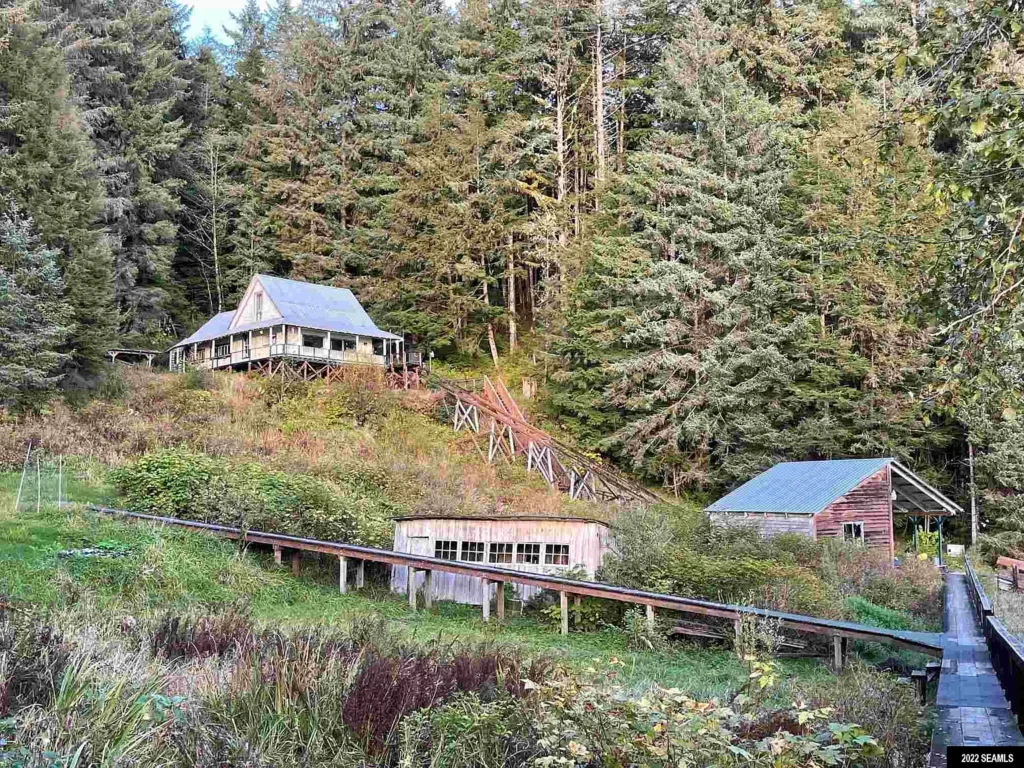
Located in the historic settlement of Loring, Alaska—approximately 20 miles by water from Clover Passage near Ketchikan—this 1.064-acre property presents a rare off-grid opportunity offered at an asking price of $140,000.Comprising two distinct legal parcels (Lot A and Lot 4 of the resubdivision of Lot 16, U.S. Survey 4569 and U.S. Survey 2109), the estate includes the historic “Heckman House,” a two-story, 1,000-square-foot frame residence featuring three bedrooms and one bathroom.
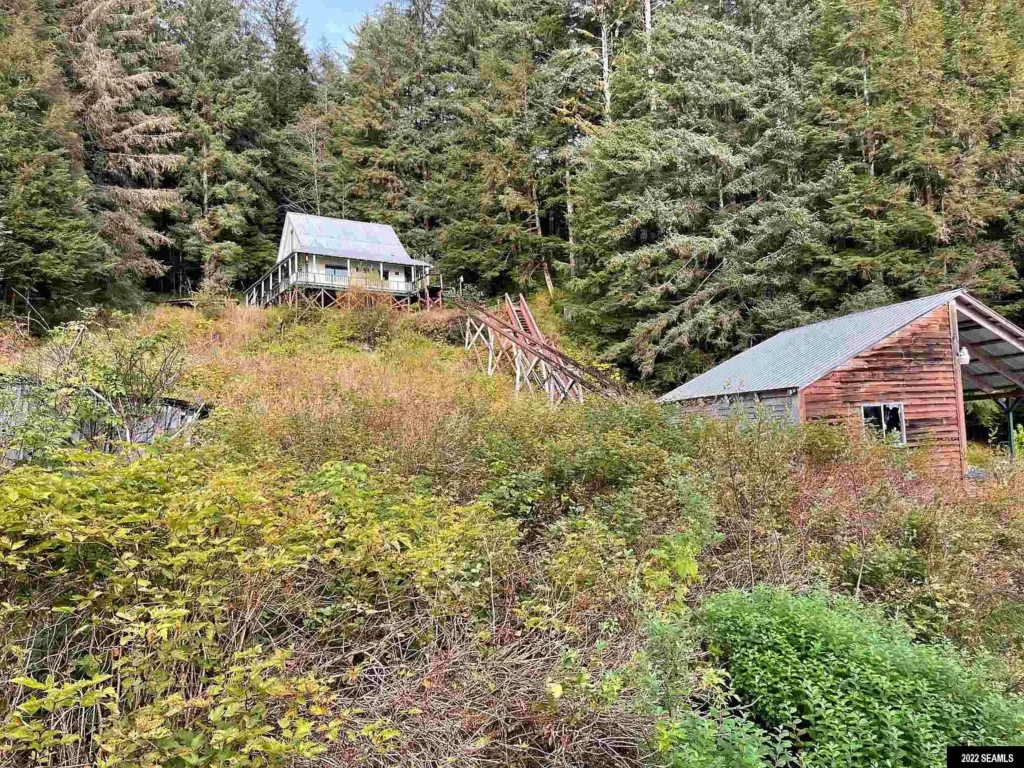
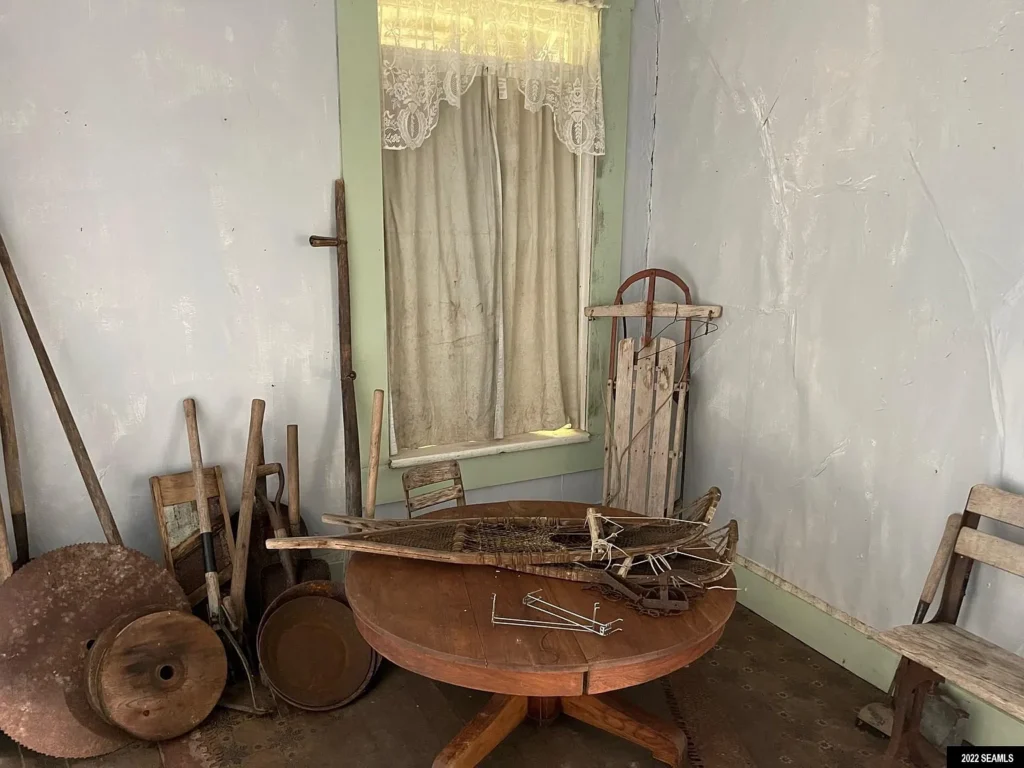
The Heckman House carries significant historical provenance.Reported to date back to the early days of Loring, the cabin served as the home for the superintendent of the local salmon cannery established in the 1880s. However, prospective buyers must evaluate this property through a realistic, analytical lens. This is explicitly not a turnkey, move-in-ready home.The residence and auxiliary improvements have experienced substantial deferred maintenance over decades and require extensive capital, labor, and logistical planning before becoming suitable for regular residential occupancy.
This long-form analysis provides an objective evaluation of the property at Legal Address Only in Loring, Alaska. By deconstructing the asking price, land layout, historic structure, off-grid utility requirements, marine transportation logistics, potential risks, buyer suitability, and essential due diligence steps, this report aims to help buyers make an informed, grounded decision.
Property Specifications and Core Listing Data
Establishing the baseline facts from official borough records, survey maps, and listing disclosures provides essential context before analyzing the financial and physical aspects of the estate.
- Property Address:Legal Address Only, Loring, Alaska 99901
- Borough / Region:Ketchikan Gateway Borough / Loring Settlement (West Arm of Behm Canal)
- Listing Price:$140,000
- Property Type:Single-Family Residence / Remote Off-Grid Cabin
- Land Area:1.064 Acres (46,347.84 square feet)
- Legal Description:Lot A and Lot 4, Resubdivision of Lot 16, U.S. Survey 4569 and U.S. Survey 2109
- Living Area:1,000 square feet (Interior finished livable area)
- Bedrooms / Bathrooms:3 Bedrooms, 1 Bathroom
- Stories / Building Style:Two-Story Traditional Wooden Frame Residence
- Year Built:Officially listed as 1950 (Historical records report construction origin in the 1880s)
- Price Per Square Foot: $140.00 per sq. ft.
- Price Per Acre: $131,578.95 per acre
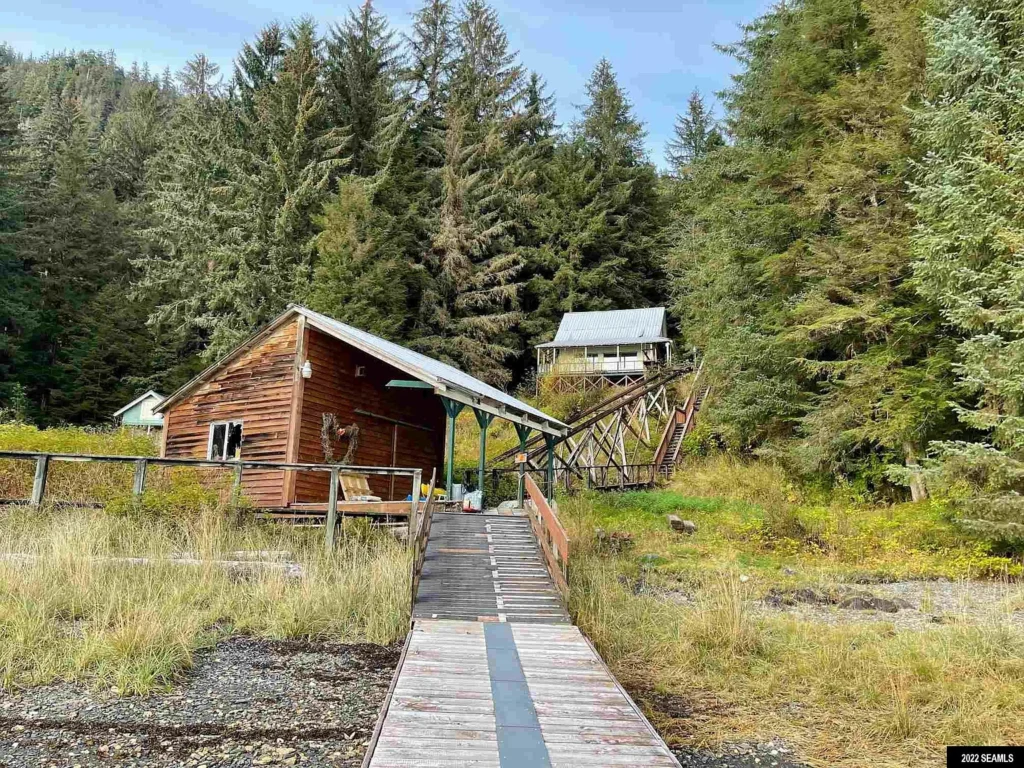
- Outbuildings:Secondary storage shed located on Lot 4 near the public dock
- Flooring:Original wide-plank hardwood
- Primary Heat Source:Wood-burning stove in the main living room
- Roofing Material:Metal roofing
- Exterior Material:Wood siding
- Property Condition:Existing / High deferred maintenance (Fixer / Full restoration required)
- Utilities Status: 100% Off-Grid. No public electricity, municipal water, or public sewer connections.Septic tank system indicated on property record.
- Access Type: Boat or floatplane access only; direct physical proximity to the State of Alaska public dock
- Tax Assessed Value:$68,500 (Ketchikan Gateway Borough assessment)
- Annual Property Taxes:$391.00 per year
- Zoning Classification:Ketchikan-FD (Future Development / Unrestricted Borough Rural Land)
- Listing Terms:Cash Only
- MLS Identification:SEAMLS #22898
- Market Date:Relisted on August 20, 2026
The Numbers and Price Analysis
Evaluating real estate in roadless Southeast Alaska requires separating land value from structural improvements while factoring in the significant cost of marine logistics. Standard suburban appraisal models do not apply here; valuation depends heavily on marine access, dock infrastructure, historical provenance, and required structural remediation.
Asking Price and Baseline Metrics
The estate is offered at an asking price of $140,000.With 1,000 square feet of interior space and 1.064 acres of land, the primary baseline calculations are as follows:
- Price Per Square Foot: $140,000 ÷ 1,000 sq. ft. = $140.00 per square foot
- Price Per Acre: $140,000 ÷ 1.064 acres = $131,578.95 per acre
- Total Square Footage of Land: 1.064 × 43,560 = 46,347.84 square feet
- Land Cost Per Square Foot: $140,000 ÷ 46,347.84 sq. ft. = $3.02 per square foot of land
At $140 per square foot for the structure, the raw price metric appears reasonable when compared to general West Coast housing averages.However, because the structure suffers from heavy deferred maintenance, that $140 per square foot reflects an entry price for a historic shell rather than a move-in-ready living space.
Conversely, $131,579 per acre might seem elevated if evaluated as raw land. However, this acreage is not bare dirt on an isolated island without access. It includes two platted legal lots, direct proximity to a state-maintained deep-water public dock, a secondary storage shed, an installed septic tank, and a standing two-story historic timber frame.
Price History and Market Velocity
Tracking the listing’s price history provides clear insights into market dynamics, seller expectations, and the specialized nature of remote Alaskan real estate:
- October 16, 2022:Listed for sale at $250,000 ($250.00 per sq. ft.).
- August 4, 2023:Price reduced by $30,000 (-12.0%) to $220,000 ($220.00 per sq. ft.).
- October 8, 2023:Listing temporarily removed from the market.
- August 20, 2026:Relisted for sale at $140,000 ($140.00 per sq. ft.).
- Total Cumulative Price Reduction:$110,000 price drop (-44.0% total discount from initial peak listing price).
The property’s pricing journey illustrates a classic trend in off-grid Alaskan real estate. Initial pricing at $250,000 proved too high for a market where buyers must account for boat-only transport and extensive structural renovation. The dramatic 44% reduction to $140,000 shifts the estate into a far more realistic valuation tier, acknowledging the capital investment a buyer must make post-closing.
Tax Assessment vs. Asking Price Discrepancy
Public records from the Ketchikan Gateway Borough show a total tax-assessed valuation of $68,500, generating an annual property tax bill of $391.00.
- Difference Between Asking Price and Assessed Value: $140,000 – $68,500 = $71,500
- Assessment Ratio: The borough tax assessment represents approximately 48.9% of the asking price.
In rural Alaska, municipal tax assessments regularly lag behind asking prices for improved waterfront acreage. Borough assessors rarely perform physical site walks of off-grid properties accessible only by water, relying instead on conservative standardized formulas.
Annual Carrying Overhead
One of the most compelling financial aspects of this property is its exceptionally low holding cost:
- Annual Property Taxes:$391.00 per year
- Monthly Property Tax Burden: $391 ÷ 12 months = $32.58 per month
- HOA Fees:$0.00 (Not in a subdivision, no association dues)
With no municipal water, sewer, or electric bills and an annual tax bill under $400, the property costs less than $33 per month to hold. For a buyer planning a multi-year, phased restoration project, these low carrying costs eliminate the monthly financial pressure that usually accompanies real estate renovation projects.
The Cash Terms Requirement
The listing disclosures explicitly mandate Cash Terms Only.
Understanding why traditional bank financing is unavailable is crucial for prospective buyers. Standard mortgage programs (such as Conventional, FHA, or VA loans) enforce strict Minimum Property Requirements (MPRs). They will not issue loans on properties that:
- Lack direct, year-round road access.
- Suffer from un-remediated, severe deferred structural maintenance.
- Lack active, functional indoor plumbing, central heating, and potable water systems.
- Require boat or floatplane transportation for basic appraiser access.
As a result, a buyer must possess full liquid cash capital for the $140,000 purchase price, plus additional cash reserves to fund marine transport, structural materials, and off-grid infrastructure buildouts.
Land and Multi-Lot Layout Analysis
The property spans 1.064 acres across two distinct legal parcels: Lot A and Lot 4, created by the resubdivision of Lot 16 under U.S. Surveys 4569 and 2109.
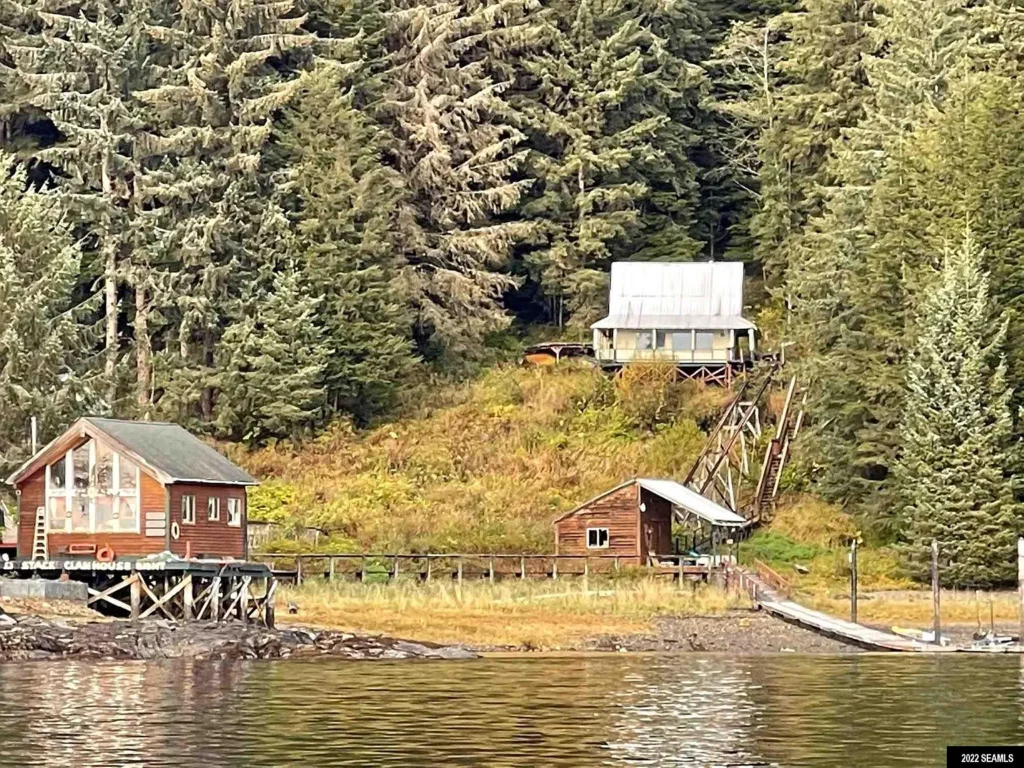
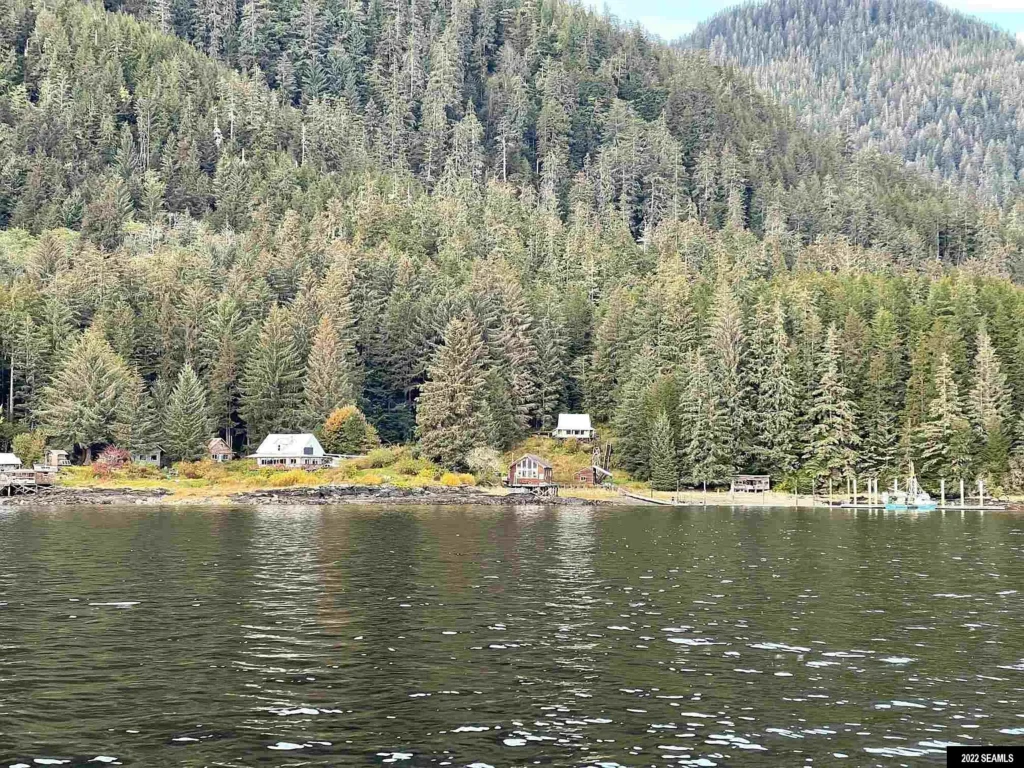
- Lot A (Residential Parcel):Contains the primary historic Heckman House.It sits on wooded, gently sloping ground that elevates the residence above high storm-tide lines, offering privacy and natural elevation.
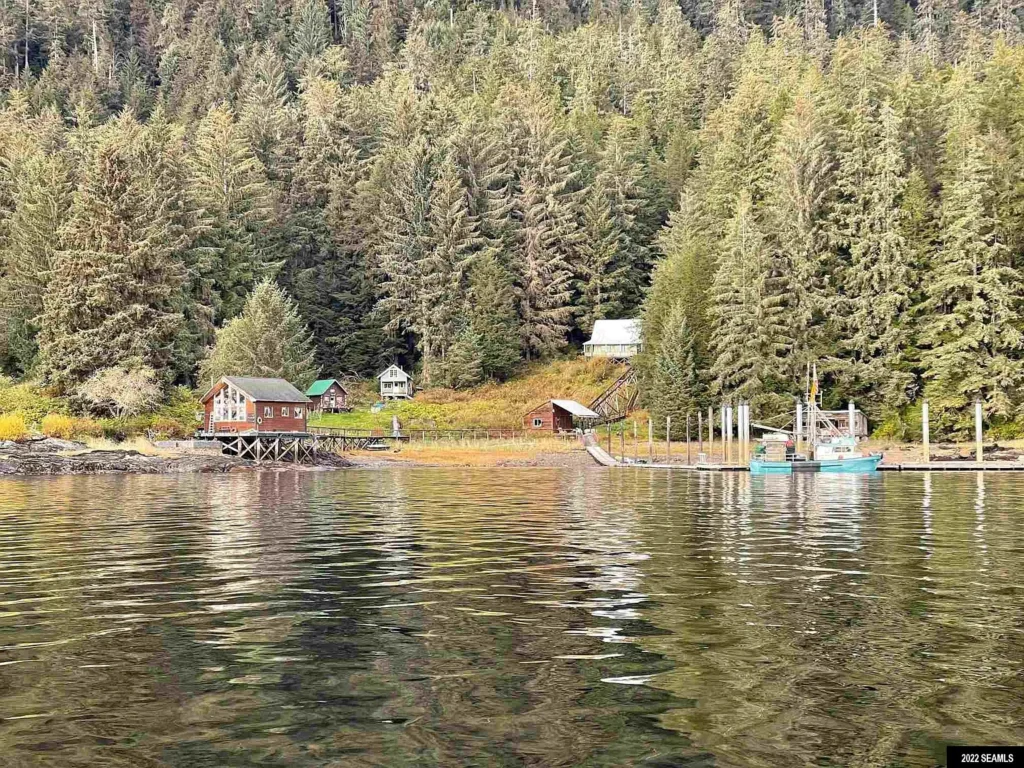
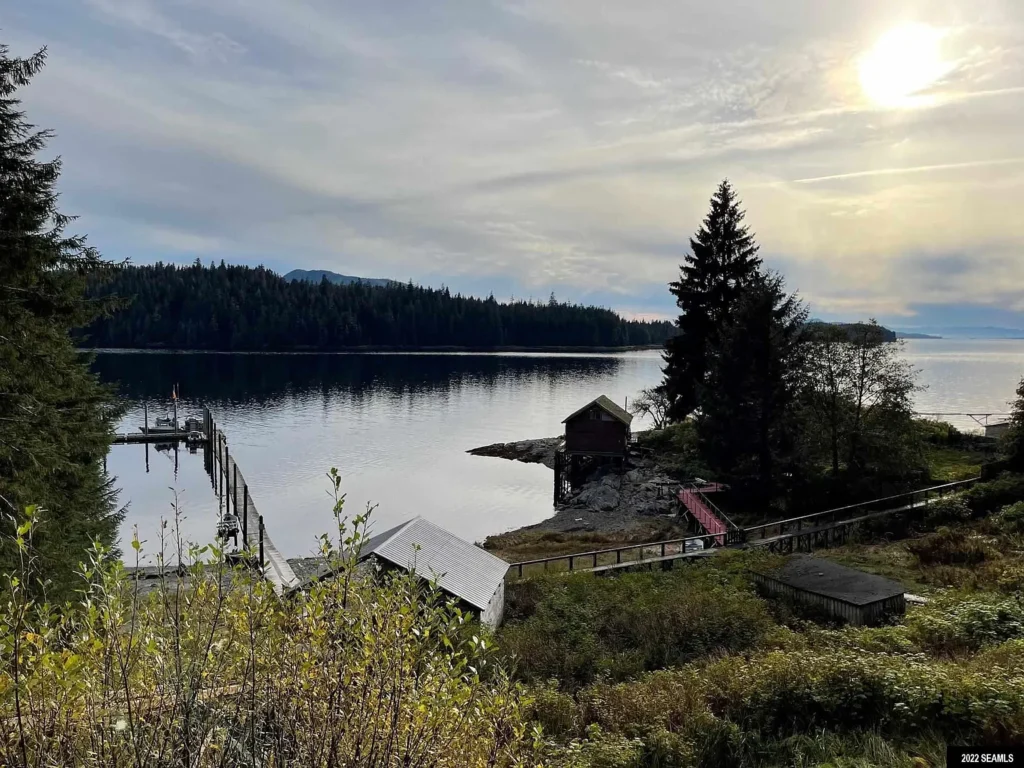
- Lot 4 (Logistics Parcel):Situated near the water and adjacent to the State of Alaska public dock, Lot 4 acts as a private staging hub.It features an existing storage shed, giving the owner a secure place near the water to store outboard motors, fuel drums, tools, crab pots, and marine supplies right off the dock before moving them up to Lot A.
The Strategic Value of the Dual-Lot Configuration
In remote coastal Alaska, land value is heavily tied to marine logistics. Many off-grid waterfront properties require owners to anchor boats offshore in exposed waters, haul supplies across slippery, boulder-strewn intertidal beaches, or fight extreme 15-to-25-foot tidal swings just to land groceries.
This property avoids those physical hurdles through its two-lot layout.Lot A serves as the residential site, while Lot 4 provides physical staging right at the marine access point.
The Public Dock Advantage
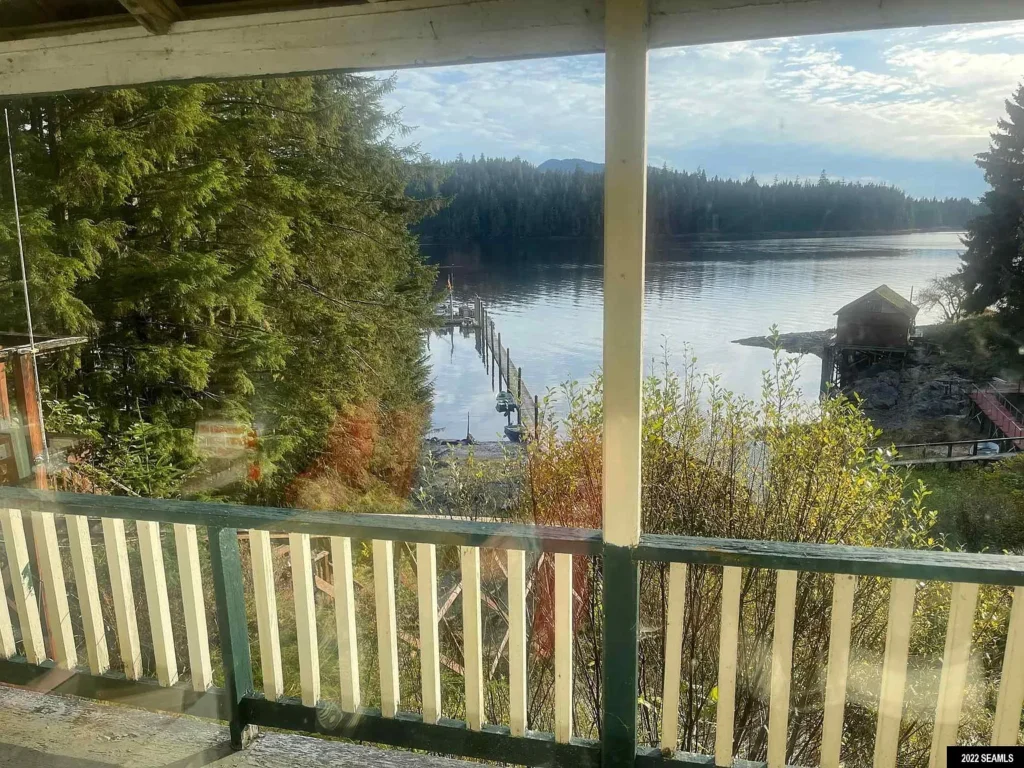
The presence of the State of Alaska public dock adjacent to the property is one of its greatest physical assets.
In Southeast Alaska, permitting and constructing a private deep-water floating dock can easily cost between $40,000 and $80,000, involving complex state and federal environmental reviews (such as U.S. Army Corps of Engineers permits). Having a well-maintained public dock steps away provides:
- Year-round moorage options for skiffs, aluminum cabin cruisers, and supply boats.
- A stable, safe unloading platform for passengers, heavy tools, building supplies, and equipment.
- A designated floatplane landing dock for visiting guests, emergency flights, or air-charter cargo deliveries.
Historical Context: Loring and the Heckman House
To appreciate the intrinsic value of this estate, a buyer must understand the rich maritime and commercial history of Loring.
The Cannery Era in Behm Canal
Located in the West Arm of Behm Canal, roughly 20 miles north-northeast of Clover Passage, Loring was established in the late 19th century as one of the earliest commercial salmon fishing centers in Southeast Alaska.In the 1880s, long before Ketchikan grew into the primary urban hub of Revillagigedo Island, Loring was home to a major salmon cannery that processed millions of pounds of fish annually.
Provenance of the Heckman House
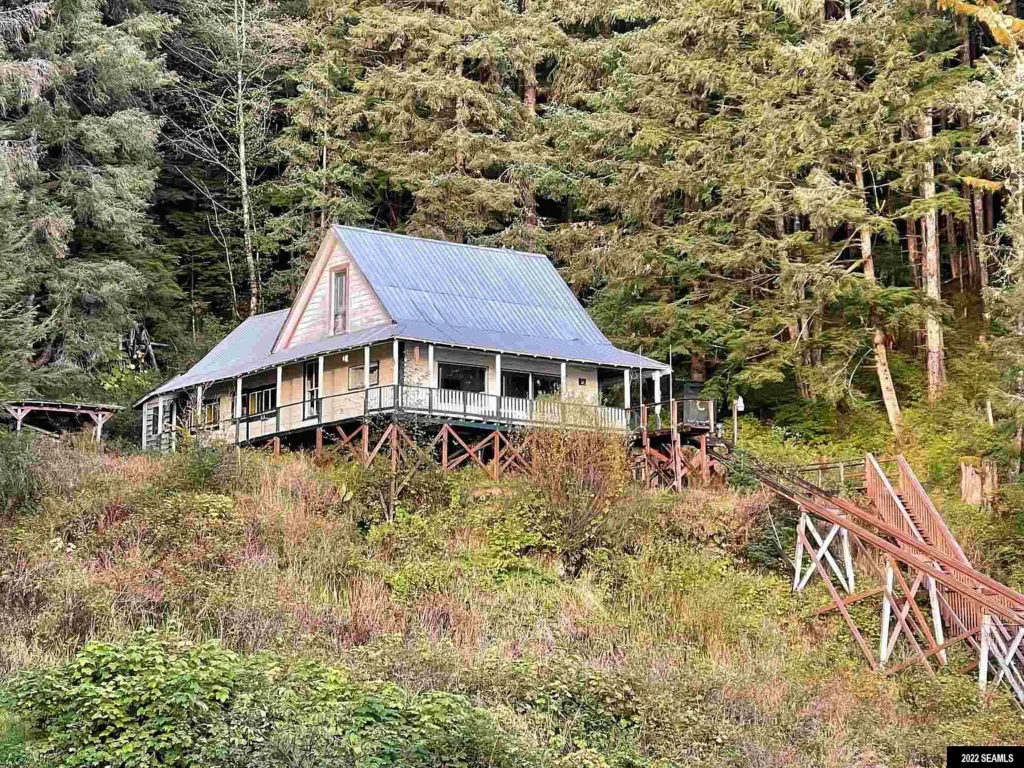
The cabin on Lot A is known historically as the Heckman House.According to local historical records, the home served as the official residence for the superintendent of the Loring salmon cannery established in the 1880s.
J.R. Heckman was a pivotal figure in Alaskan commercial fishing history, renowned for pioneering innovative trap-fishing methods and helping shape early industrial salmon processing in the territory.While official borough tax records list a construction year of 1950 (a common default placeholder date in Alaskan rural records), local history establishes that the structure’s framing dates back to the height of the 1880s cannery era.
For buyers who value historic preservation, owning the cannery superintendent’s residence offers tangible cultural provenance that cannot be replicated by modern lumber kit builds.
Home and Infrastructure Analysis
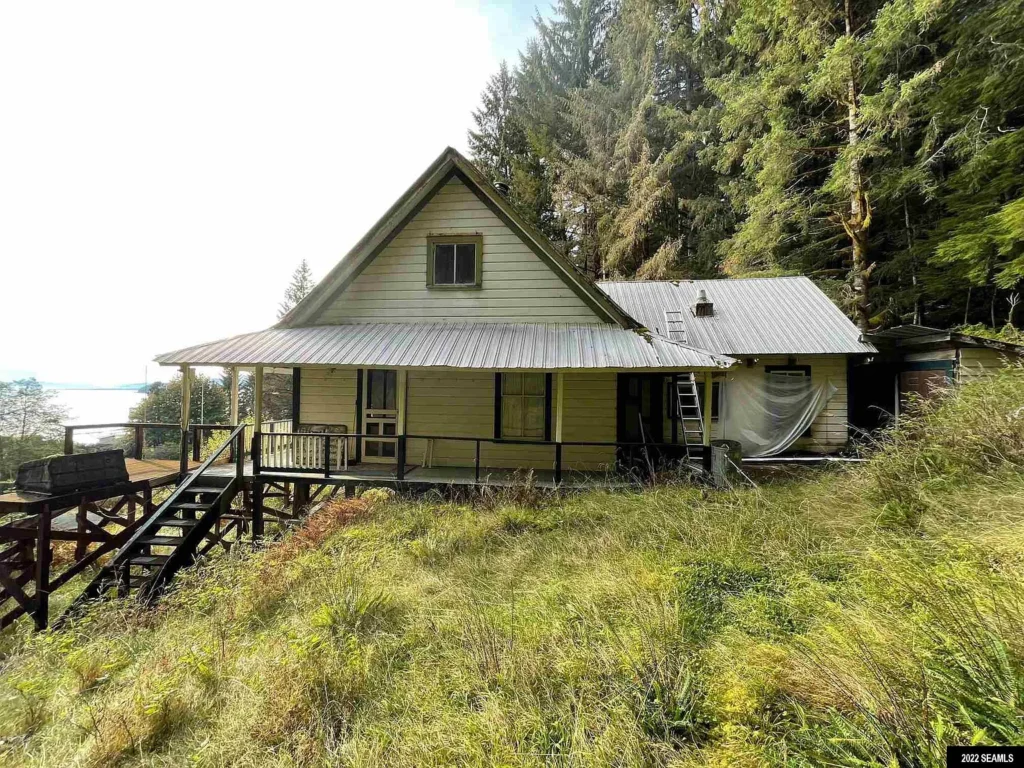
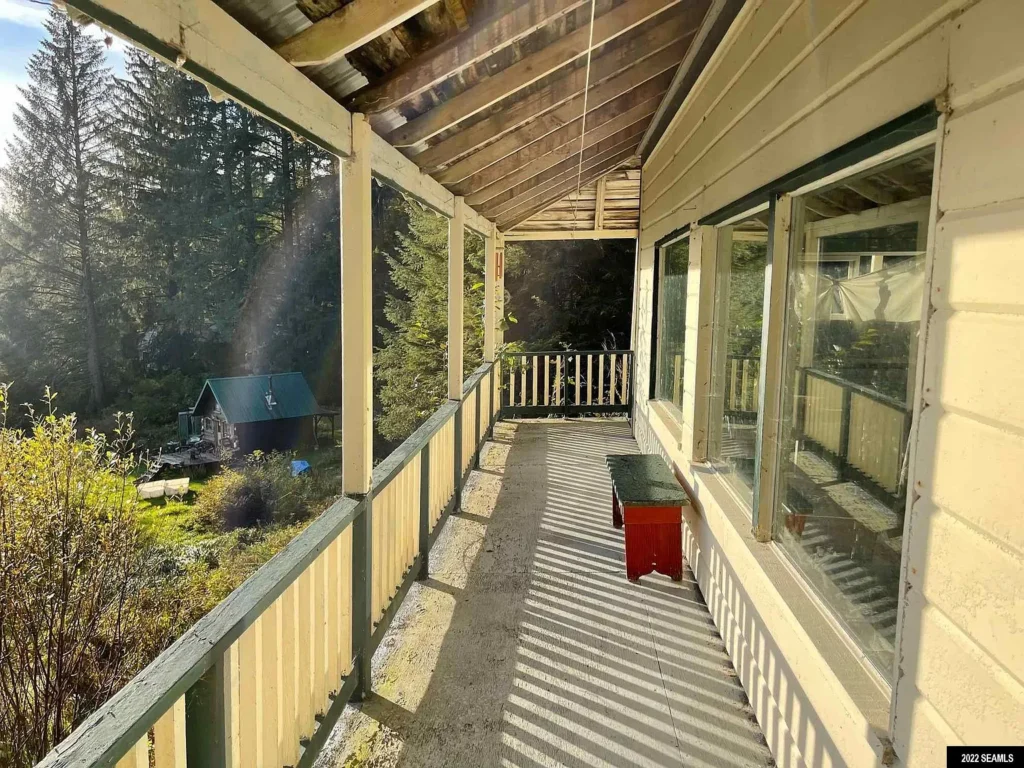
The primary structure is a 1,000-square-foot, two-story wooden frame cabin with three bedrooms and one full bathroom.
Architectural Layout and Interior Features
- Main Floor:Designed around a central living room anchored by a wood-burning stove. The main level houses the kitchen space, living area, bathroom framing, and access to the upper floor.
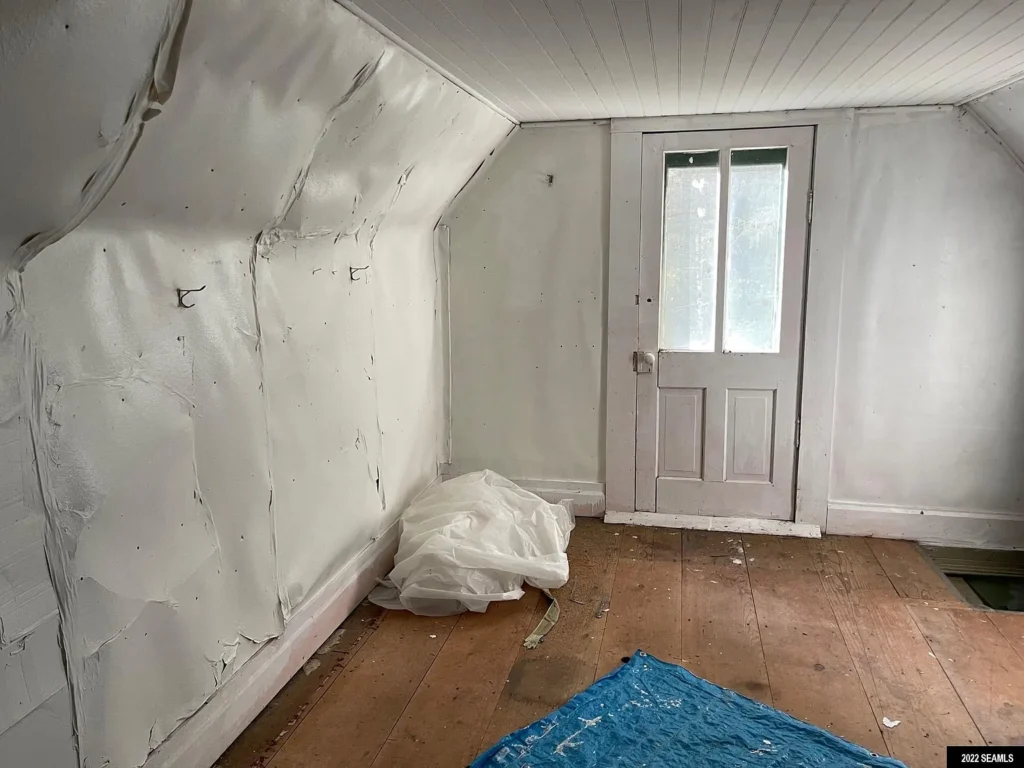
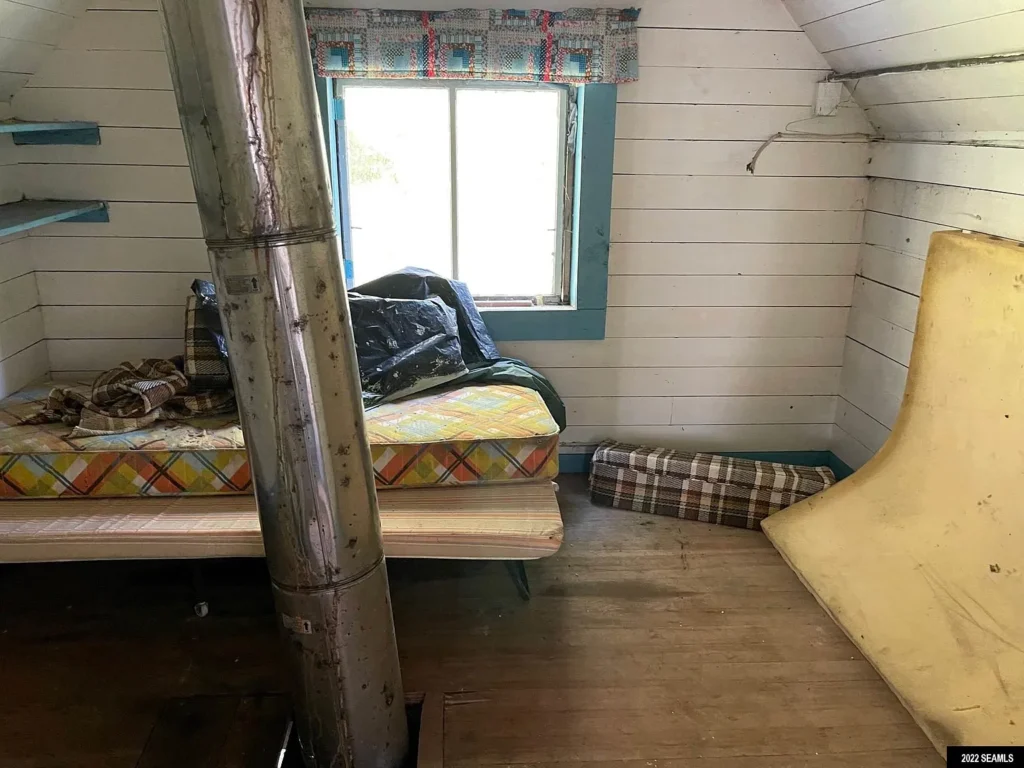
- Upper Floor:A classic two-story gable layout containing three bedrooms under sloped rooflines.
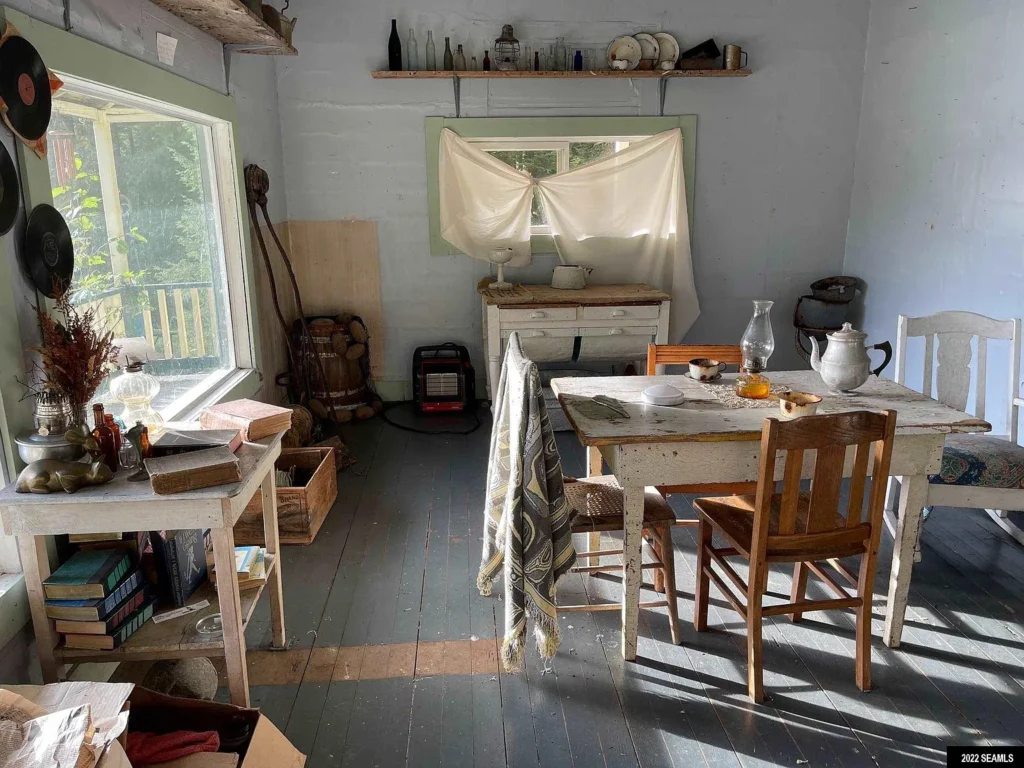
- Flooring:The interior retains original wide-plank hardwood flooring, offering a solid base for sanding, refinishing, and restoration.
- Roofing:Outfitted with a metal roof. In Southeast Alaska’s temperate rainforest environment, metal roofs are essential for shedding heavy snow loads, preventing moss buildup, and keeping interior spaces dry.
Evaluating Deferred Maintenance: Restoration Requirements
The listing disclosures explicitly warn prospective buyers: “This is not a turnkey property. The cabin and other improvements have experienced considerable deferred maintenance and will require substantial work before the property is ready for regular occupancy.”
Restoring a historic 1,000-square-foot frame home in a rainforest climate requiring boat access demands a clear, methodical construction plan:
- Foundation and Piling Inspection: Historic coastal homes in Alaska were built on wooden pilings, cedar blocks, or stone piers. A buyer must inspect the crawl space to check for post settling, ground moisture rot, and floor joist integrity. Replacing or leveling pilings with pressure-treated timber or concrete footings is typically step one.
- Structural Framing and Envelope:While the metal roof protects the structure from above, decades of salt air and high annual precipitation mean exterior wood siding, window frames, fascia boards, and door sills must be inspected for rot and water intrusion.
- Interior Refinishing & Insulation: The cabin requires modern insulation (such as spray foam or rockwool batts), vapor barriers, electrical wiring, plumbing supply lines, and interior wall finishes to convert the historic shell into a comfortable, year-round residence.
Off-Grid Utility Systems Assessment
The property is 100% off-grid.There are no municipal power grids, public water mains, or city sewer pipes in Loring. Re-establishing full residential functionality requires building self-contained utility systems.
1. Off-Grid Electrical Power
To power lights, water pumps, refrigeration, and communications, a buyer can install a modern solar-and-battery storage system. A 3kW to 5kW solar array paired with a 10kWh lithium battery bank and a 3,000W inverter will supply clean, quiet power through spring, summer, and autumn. A quiet inverter generator provides backup power during dark winter months.
2. Water Supply Engineering
Southeast Alaska receives significant annual rainfall, making rainwater catchment a reliable water supply method. Roof runoff collected from the metal roof into 500-to-1,500-gallon food-grade cisterns, routed through sediment filters and an ultraviolet (UV) light sterilizer, provides clean, pressurized domestic water. Alternatively, many Loring residents tap into nearby mountain springs using gravity-fed poly pipe.
3. Wastewater Management
The property records list a septic tank on-site. During the inspection period, a buyer should locate the septic tank, inspect tank wall integrity, verify baffle performance, and test the absorption drain field. During early restoration phases, a modern composting toilet can serve as an efficient, low-cost sanitation backup.
Marine Logistics and Transportation Analysis
Understanding how to navigate to and from Loring is crucial for evaluating real estate in Behm Canal.
Travel Routes from Ketchikan
Loring is located approximately 20 miles north-northeast of Clover Passage, which marks the northern terminal of Ketchikan’s paved road system (North Tongass Highway).
- By Skiff or Cabin Cruiser:
- Launch Point: Knudson Cove Marina or Clover Pass Resort at the end of North Tongass Highway.
- Transit Route:Travel north through Clover Passage into the West Arm of Behm Canal, steering directly into Loring Harbor.
- Transit Time: 45 to 75 minutes in an 18-to-24-foot aluminum skiff or enclosed cabin cruiser, depending on sea conditions and engine horsepower.
- By Floatplane:
- Launch Point: Floatplane docks along Ketchikan’s Tongass Narrows or Ward Cove.
- Transit Time:A 10-to-15-minute scenic flight landing directly alongside Loring’s public float dock.
Material Transport Logistics for Restoration Work
Transporting tools, lumber, insulation, cement, and supplies to a roadless property requires careful planning:
- Personal Skiff Hauling: Small tools, generator fuel, fasteners, and modest lumber loads can be hauled incrementally in a 20-foot heavy-gauge aluminum skiff equipped with a reliable outboard motor.
- Charter Barge Runs: For major restoration phases involving heavy framing lumber, roofing, or heavy equipment, property owners in Behm Canal periodically coordinate shared charter barge runs from Ketchikan to drop material loads directly onto the public dock or beach landing.
Outdoor and Recreational Value: The Naha River Connection
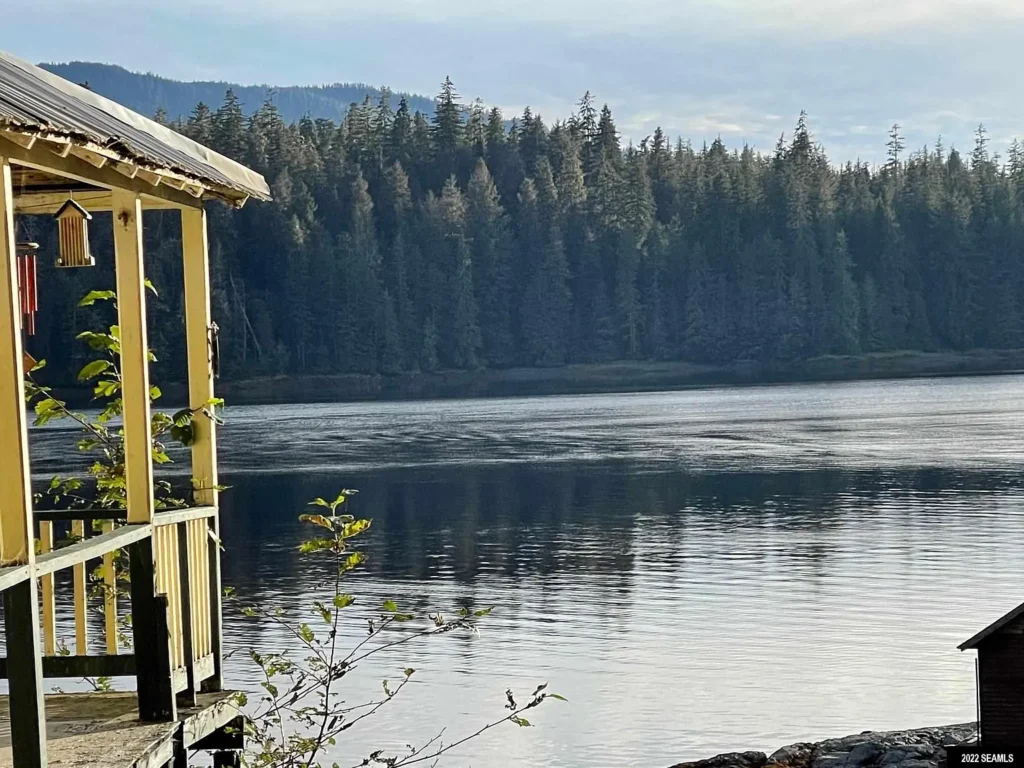
While the historic house offers significant architectural appeal, the setting along Behm Canal provides world-class outdoor recreation.
Proximity to the Naha River Fishery
The property sits approximately five minutes by skiff from the mouth of the world-famous Naha River.
- Steelhead Fishing:The Naha River is celebrated globally as one of Southeast Alaska’s premier spring steelhead fisheries, attracting passionate fly anglers every April and May.
- Salmon Runs:The river and surrounding estuary experience massive annual runs of King (Chinook), Silver (Coho), Pink (Humpy), and Chum salmon, offering world-class sportfishing right outside your front door.
- Saltwater Fishing: The deep waters of Behm Canal offer prime habitat for Pacific Halibut, Lingcod, Yelloweye Rockfish, Dungeness Crab, and Spot Prawns.
Wilderness Exploration
- The Naha River National Recreation Trail:A historic 5.4-mile elevated boardwalk trail winds along the river from Naha Bay past Roosevelt Lagoon to Heckman Lake, offering access to old-growth rainforest, freshwater lakes, and U.S. Forest Service public-use cabins.
- Wildlife Viewing: The area features rich populations of Sitka black-tailed deer, coastal brown bears, black bears, bald eagles, humpback whales, orcas, and harbor seals.
Comparing Restoring History vs. Building Raw Land from Scratch
To determine whether the $140,000 asking price makes financial sense, it is helpful to compare purchasing the Heckman House estate against buying a raw 1-acre remote island parcel in Southeast Alaska and building from scratch.
Hypothetical Raw Remote Land Buildout Scenario (Southeast Alaska)
Consider a buyer purchasing 1 acre of raw, unimproved remote waterfront land near Ketchikan lacking docks or structures:
- Raw Remote Land Purchase Price (1 acre): $50,000
- Permitting & Constructing a Private Deep-Water Floating Dock: $50,000
- Clearing Old-Growth Timber & Excavating Building Pad: $15,000
- Freight Barge Transport for Building Materials from Ketchikan: $18,000
- Constructing a 1,000 sq. ft. Off-Grid Cabin Shell ($200/sq. ft.): $200,000
- Constructing a Secondary Storage Shed near Water: $12,000
- Estimated Total Raw Remote Buildout Cost:$345,000
Subject Property Scenario (Loring Waterfront – Heckman House)
- Listed Purchase Price:$140,000
- Included Assets:1.064 Acres across 2 Legal Parcels + Standing 1,000 sq. ft. Historic Two-Story Frame Cabin Shell + Secondary Storage Shed on Lot 4 + Direct Adjacency to State Public Dock + Installed Septic Tank + 5 Minutes to Naha River Fishery
- Implied Savings: Approximately $205,000 below raw land buildout costs
This comparative analysis illustrates why an improved $140,000 historic estate represents compelling value. While the Heckman House requires substantial restoration labor, starting with an established historic shell, two legal lots, a storage shed, and adjacent public dock access saves over $200,000 compared to developing bare island ground from scratch.
Why This Property May Stand Out
Highlighting the primary strengths of this property illustrates why it represents a notable opportunity in the Alaskan market:
- Rich Historical Provenance:The original 1880s superintendent’s residence of the historic Loring Cannery, offering rich maritime heritage.
- Substantial $110,000 Price Discount:Relisted at $140,000 (a 44% drop from its 2022 initial price), aligning the purchase price with required restoration work.
- Direct Access via State Public Dock:Proximity to the public float dock eliminates the $50,000+ cost of permitting and building a private floating dock.
- Two Legal Parcels (Lot A & Lot 4):Features a secondary lot (Lot 4) right at the water with an existing storage shed for marine equipment and fuel storage.
- World-Class Sportfishing Setting:Located 5 minutes by skiff from the renowned Naha River steelhead and salmon fishery.
- Ultra-Low Annual Taxes:Borough property taxes of just $391 per year ($32.58/month) keep holding overhead minimal.
- Authentic Architectural Detail:Original wide-plank hardwood floors, metal roofing, wood stove, and historic two-story frame construction.
Potential Drawbacks and Risk Factors
An objective real estate evaluation must analyze physical limitations so prospective buyers can prepare adequately.
- Substantial Deferred Maintenance:The cabin requires major structural, foundation, roofing, siding, and interior restoration work before regular occupancy is possible.
- Strict Cash-Only Terms:Conventional residential mortgages are unobtainable due to condition, off-grid status, and lack of road access.
- Boat or Floatplane Access Only: No road connections; all travel and material transport require navigating 20 miles of open marine water from Clover Passage.
- Off-Grid Systems Installation Needed:Buyer must install solar, battery, generator, and water catchment systems from scratch.
- Marine Logistics Costs: Transporting lumber, concrete, tools, and supplies by skiff or charter barge requires time, physical labor, and freight expenses.
- Weather-Dependent Travel: Winter storms and gale-force winds in Behm Canal can temporarily restrict boat travel to Ketchikan.
Who Is This Property Best For?
Matching property characteristics with buyer profiles clarifies who will derive the highest utility from this Loring estate.
Ideal Buyer Candidates
- Hands-On Off-Grid DIY Builders:Buyers with carpentry skills, marine boat handling experience, and tools who want a rewarding restoration project in a wilderness setting.
- Historic Preservation Enthusiasts:Individuals passionate about 19th-century Alaskan history who want to restore the historic superintendent’s house of the Loring Cannery.
- Passionate Anglers and Outdoorsmen:Fishermen seeking a private base camp 5 minutes from the Naha River’s legendary steelhead and salmon runs.
- Value-Driven Remote Land Bankers:Buyers seeking a 1.06-acre waterfront estate adjacent to a public dock with minimal $33/month tax holding costs.
Who Should Consider Looking Elsewhere?
- Turn-Key Vacation Buyers:Anyone wanting a move-in-ready home requiring zero construction or maintenance work.
- Buyers Requiring Road Access or Urban Services:Individuals who want paved streets, electrical grids, municipal water, or quick access to retail stores.
- Buyers Relying on Bank Mortgage Financing:Anyone who does not possess full liquid cash capital for the purchase and restoration.
What Buyers Should Verify Before Purchasing
Executing thorough due diligence protects buyers from unexpected expenses in remote Alaska. Prospective buyers should complete the following technical verification steps prior to closing:
- Perform an In-Person Site Inspection:Travel by skiff or floatplane from Ketchikan to Loring with a qualified builder or contractor to evaluate the Heckman House foundation, pilings, subfloor joists, roof framing, and wall studs.
- Inspect Lot 4 and the Storage Shed:Examine the condition of the storage shed near the public dock and verify boundary markers between Lot A, Lot 4, and public land.
- Verify State Dock Access Rules:Confirm State of Alaska public dock usage guidelines, moorage limits, and seasonal float maintenance schedules with the Alaska Department of Transportation & Public Facilities (DOT&PF).
- Inspect the Existing Septic System:Locate the septic tank on Lot A, inspect tank wall integrity, and check drain field absorption performance.
- Audit Title and Survey Maps:Retain a title company or real estate attorney to review U.S. Survey 4569 and 2109 maps, verifying clear title and unencumbered water access rights.
- Calculate Marine Freight and Skiff Logistics: Obtain price quotes from Ketchikan marine charter companies and barge operators for hauling building materials to Loring.
- Verify Ketchikan Gateway Borough Tax Records:Confirm current tax assessment figures ($68,500 assessed value; $391/year taxes) and zoning guidelines with the borough assessor.
Final Verdict
The historic Heckman House estate in Loring, Alaska, represents a compelling restoration opportunity in the Inside Passage.Offered at $140,000 for 1.064 acres across two legal parcels, a 1,000-square-foot historic frame cabin, a secondary storage shed, and direct adjacency to the State of Alaska public dock, its value proposition is clear.
By providing an established historic building shell, two legal lots, and direct public dock access 5 minutes from the Naha River, the property eliminates hundreds of thousands of dollars in dock construction and raw land development costs.The recent $110,000 price drop aligns the asking price with the physical realities of the cabin’s deferred maintenance, and the ultra-low $391 annual property tax liability ensures minimal ongoing holding costs.
The primary trade-offs stem from its remote realities: access requires navigating 20 miles of marine water by boat or floatplane, the cabin requires a major structural and interior overhaul, and the purchase requires full liquid cash capital.
For hands-on builders, historic preservationists, passionate anglers, or remote wilderness investors seeking an authentic piece of Alaskan heritage under $150,000, this Loring estate is well worth a skiff trip, structural walkthrough, and detailed due diligence review.







Listed on Zillow